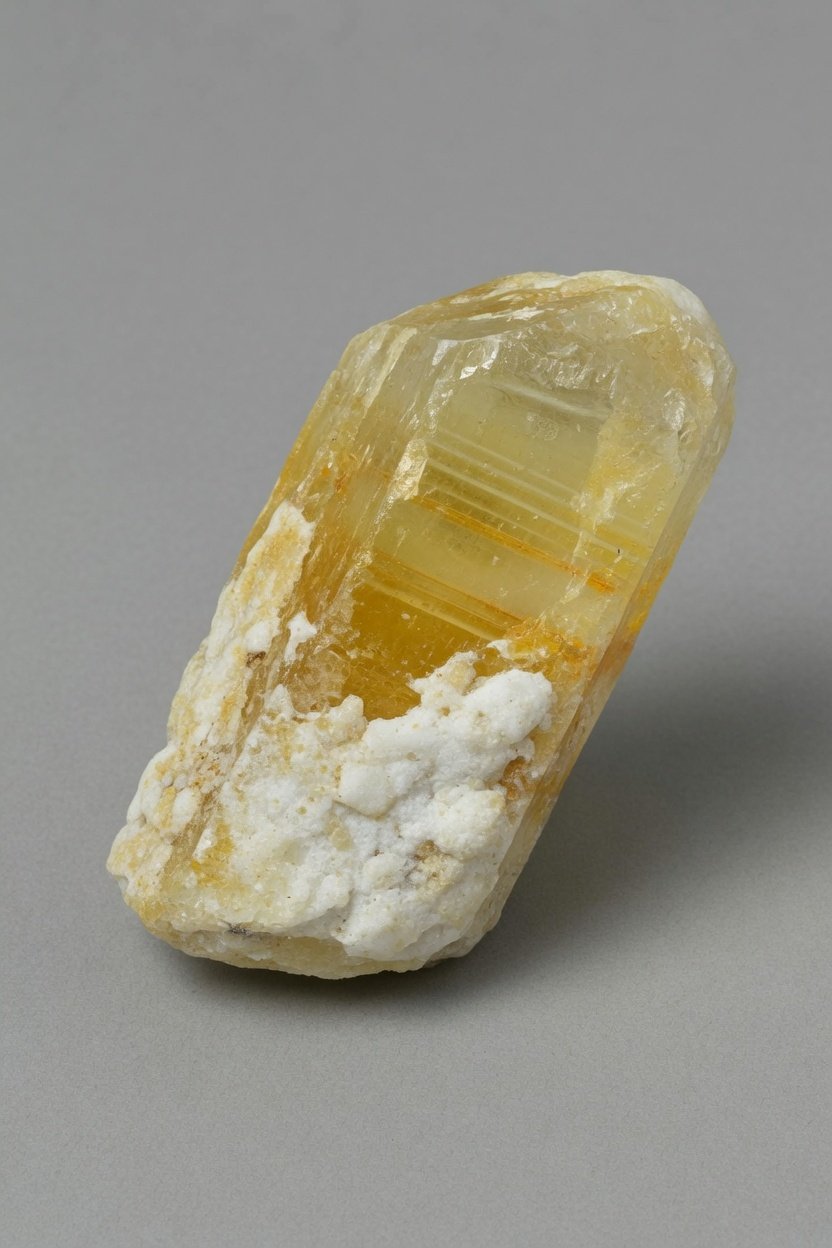
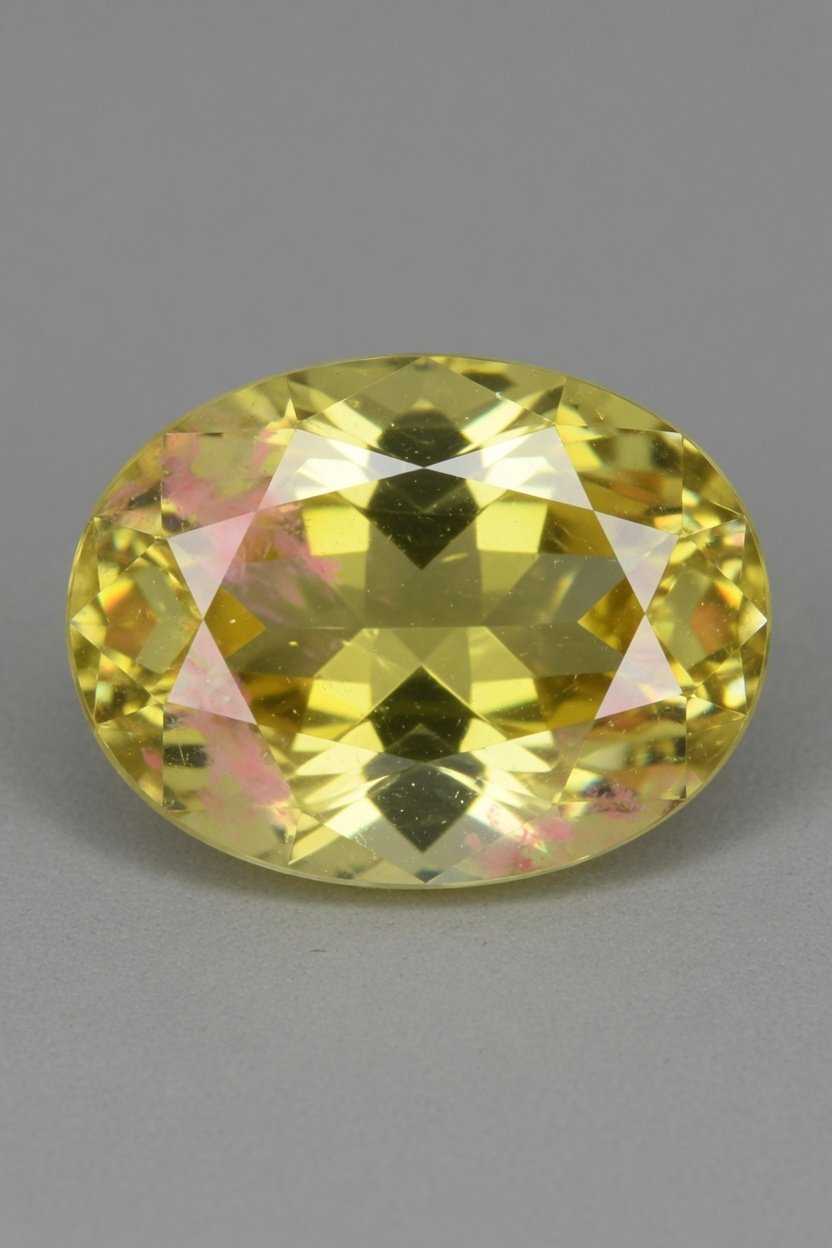
Scapolite enters the jeweler’s bench as a study in quiet radiance, its prismatic crystals catching light in soft yellows, warm pinks, and occasional violet flashes that shift with every angle. Formed deep in metamorphic and igneous environments, the stone rewards careful cutting with a lively vitreous gleam that feels both ancient and fresh. Silversmiths who work with it quickly learn its temperament: it rewards patience and precise technique.
Physical Properties Scapolite belongs to a solid-solution series between marialite and meionite, producing a tetragonal crystal system with a Mohs hardness of 5 to 6 and a specific gravity between 2.50 and 2.74. Its refractive index ranges from 1.54 to 1.58, giving faceted stones noticeable brilliance when cut to correct proportions. The mineral exhibits perfect cleavage in two directions, which makes it more brittle than its hardness number suggests. Color arises from trace elements and can include colorless, white, gray, yellow, orange, pink, violet, and blue. Luster is vitreous to slightly greasy, and transparency varies from fully transparent in gem-grade material to translucent in denser specimens. Because the stone can contain fluid inclusions or experience thermal shock, it must always be set after all soldering and polishing steps are complete; direct torch heat risks cracking or clouding the interior. For care, avoid ultrasonic cleaners and sudden temperature changes; store separately to prevent abrasion from harder gems.
Origin and Sourcing Primary commercial deposits lie in the pegmatites of Madagascar, the marble-hosted veins of Tanzania, and the metamorphic terrains of Brazil and Canada. Madagascar yields the well-known golden and yellow varieties prized for their clarity, while Tanzania supplies pink and violet stones that show strong pleochroism. Mining is typically hard-rock extraction from narrow adits and small open cuts where miners follow crystal-lined pockets. Rough is hand-sorted at the site, then transported to cutting centers where only a small percentage meets gem quality. Ethical sourcing programs now track parcels from these regions to ensure fair labor practices and minimal environmental disturbance.
History and Significance Scapolite received its modern name in the early nineteenth century from Greek words meaning “shaft” and “stone,” reflecting its common prismatic habit. Earlier specimens were often misidentified as feldspar or quartz until chemical analysis distinguished the group. In East African communities the pink and violet varieties have long been valued as protective talismans carried during travel, while yellow stones from Madagascar were traded along caravan routes for their warm, sun-like glow. Today the mineral appears in museum collections as an example of complex silicate chemistry and as a reminder that gem species once overlooked can become favored once their optical properties are understood.
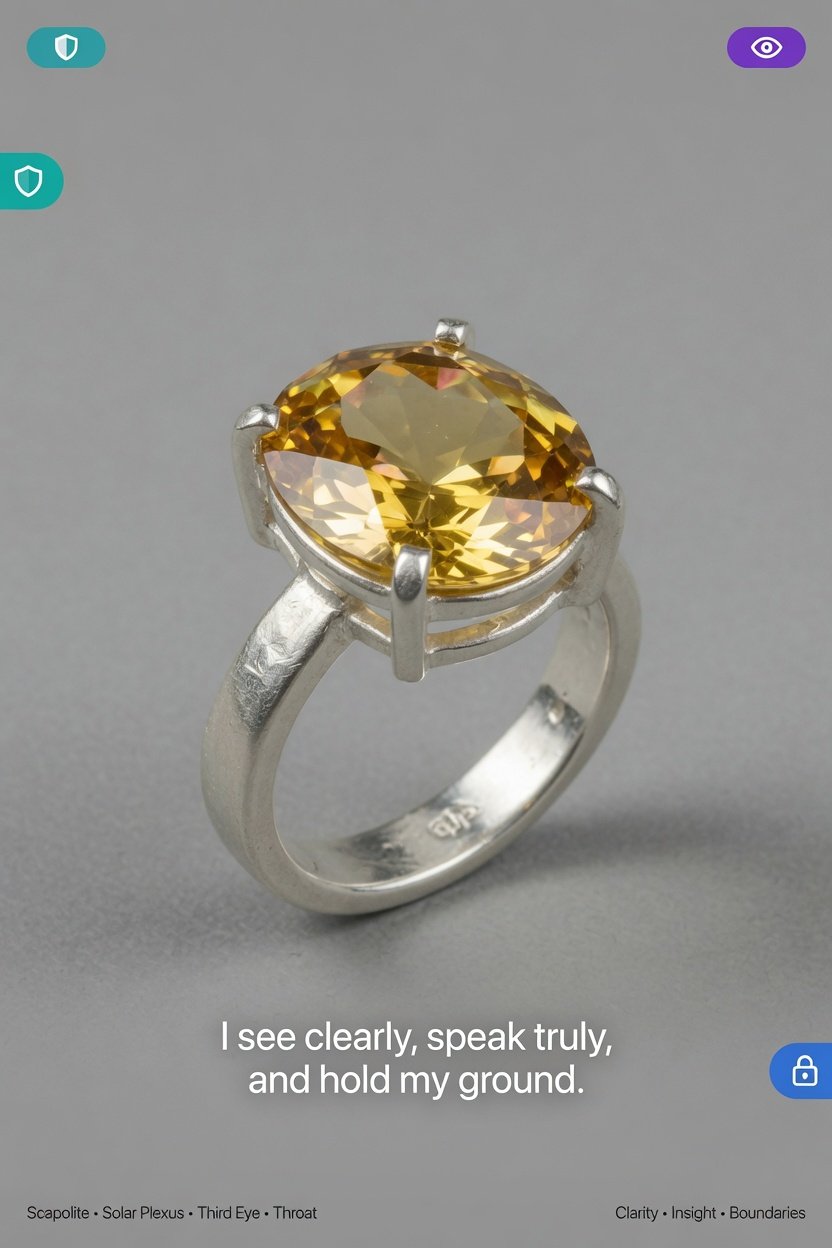
In Jewelry and Silversmithing Transparent scapolite is almost always faceted to showcase its color and brilliance, most often in oval, cushion, or emerald cuts that maximize light return. Its moderate hardness and perfect cleavage require the setter to avoid pressure on cleavage planes; prong settings in sterling silver are preferred because they hold the stone securely with minimal metal contact. Because the material can fracture under rapid heating, every piece must be completely soldered, pickled, and polished before the stone is set. Once mounted, a final gentle cleaning with mild soap and a soft brush preserves the vitreous surface. Designers often pair scapolite with oxidized silver to emphasize its warm tones or with bright silver to highlight cooler pink and violet hues.
Identifying Scapolite in the Field In hand specimen, scapolite forms stubby to elongated tetragonal prisms with a distinctive square cross-section and striations parallel to the c-axis. Hardness tests with a steel knife produce a white powder rather than the brownish streak of feldspar. Under magnification, many crystals show fine parallel zoning or tiny fluid inclusions that create a subtle silk. A drop of dilute hydrochloric acid produces no effervescence, distinguishing it from carbonate minerals. When in doubt, refractive index readings on a refractometer quickly separate scapolite from quartz or topaz.
Quick Facts
Common names: Scapolite, Wernerite
Chemical formula: (Na,Ca)₄(Al,Si)₃Si₆O₂₄(Cl,CO₃,SO₄)
Mohs hardness: 5–6
Specific gravity: 2.50–2.74
Color: Colorless, white, yellow, pink, violet, blue
Crystal system: Tetragonal
Luster: Vitreous to greasy
Transparency: Transparent to translucent
Common cuts: Faceted ovals, cushions, emerald cuts; occasional cabochons
Common treatments: None routinely applied
Best silver setting: Prong
Birthstone month (if any): None
Main sources: Madagascar, Tanzania, Brazil, Canada
Meaning & Intentions
CLARITY
Scapolite’s transparent golden and yellow varieties are traditionally carried or worn to clear mental fog and support focused decision-making. In meditation practices the stone is held or placed on a desk so its steady light reminds the user to examine situations without distortion. Silversmiths set these stones in simple prong rings that keep the crystal close during daily work.
Chakra: Solar Plexus — confidence and clear perception INSIGHT
Violet and pink scapolite are used to heighten intuitive awareness and encourage honest self-examination. Practitioners place the stone near journals or altars to invite deeper understanding of personal patterns. When set in pendants the color rests near the heart, serving as a quiet prompt toward inner truth.
Chakra: Third Eye — intuition and inner vision BOUNDARIES
Blue-gray scapolite is valued for reinforcing personal limits and shielding against unwanted emotional intrusion. Wearers keep the stone in a pocket or bracelet during difficult conversations. The mineral’s natural prismatic structure visually echoes the idea of a protective framework.
Chakra: Throat — authentic expression and protection Affirmation: "I see clearly, speak truly, and hold my ground." AT A GLANCE: Chakra: Solar Plexus, Third Eye, Throat Element: Air Energy: Receptive Zodiac: Libra, Scorpio Planet: Mercury Affirmation: "I see clearly, speak truly, and hold my ground."
Related Stones
Explore more stones from the Gemstone Library: Sunstone · Alexandrite · Citrine