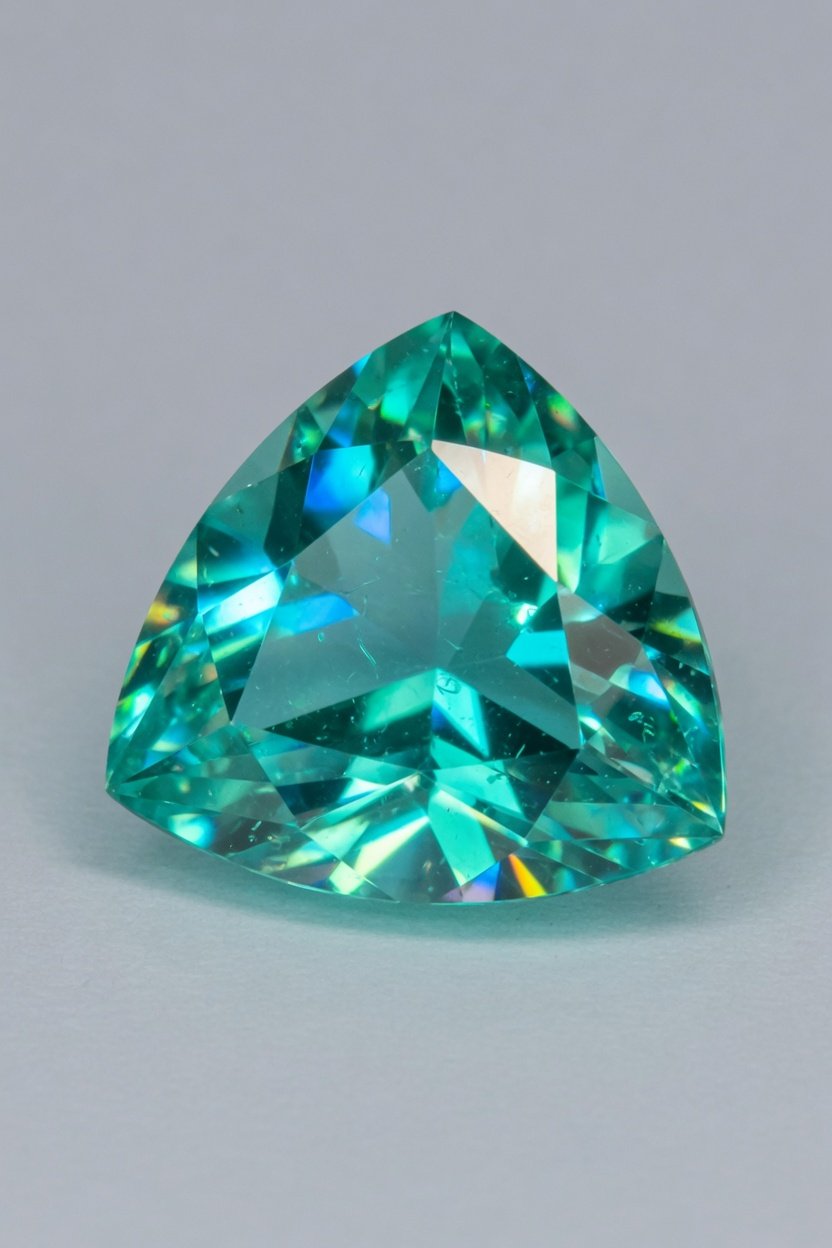
Paraiba tourmaline erupts into view with an otherworldly neon glow that shifts between electric blue and vivid green, the result of copper ions trapped deep within its crystal lattice. Few gems command such instant recognition or command such prices, yet this tourmaline variety remains surprisingly approachable for skilled silversmiths who understand its unique requirements. Its brilliance rewards precise cutting and thoughtful setting that lets the color sing.
Physical Properties Paraiba tourmaline registers 7 to 7.5 on the Mohs scale and exhibits a specific gravity between 3.0 and 3.2, placing it in the durable range for everyday jewelry while still requiring careful handling during fabrication. The stone’s trigonal crystal system produces long prismatic habits that lapidaries orient to maximize the neon transmission along the c-axis. Because copper-bearing tourmaline can shift color under prolonged heat, the stone must be set only after all soldering operations are complete; ultrasonic cleaners and sudden temperature changes should also be avoided to preserve the vivid hue.
Origin and Sourcing The original and most celebrated deposits lie in the state of Paraíba, Brazil, where pegmatites formed roughly 500 million years ago concentrated copper and manganese in tourmaline crystals. Subsequent finds in Nigeria and Mozambique have expanded supply, yet Brazilian material remains the benchmark for saturation and price. Miners extract the crystals from narrow veins using hand tools and controlled blasting, then sort rough by color zoning before export.
History and Significance Discovered in the late 1980s near São José da Batalha, the stone quickly earned cult status among collectors who had never before seen tourmaline in such saturated turquoise tones. Its name now functions as a color descriptor across the trade, even when applied to similar copper-bearing material from Africa. Culturally, the gem symbolizes joyful expression and creative risk, qualities that resonate with contemporary silversmiths seeking distinctive focal points.
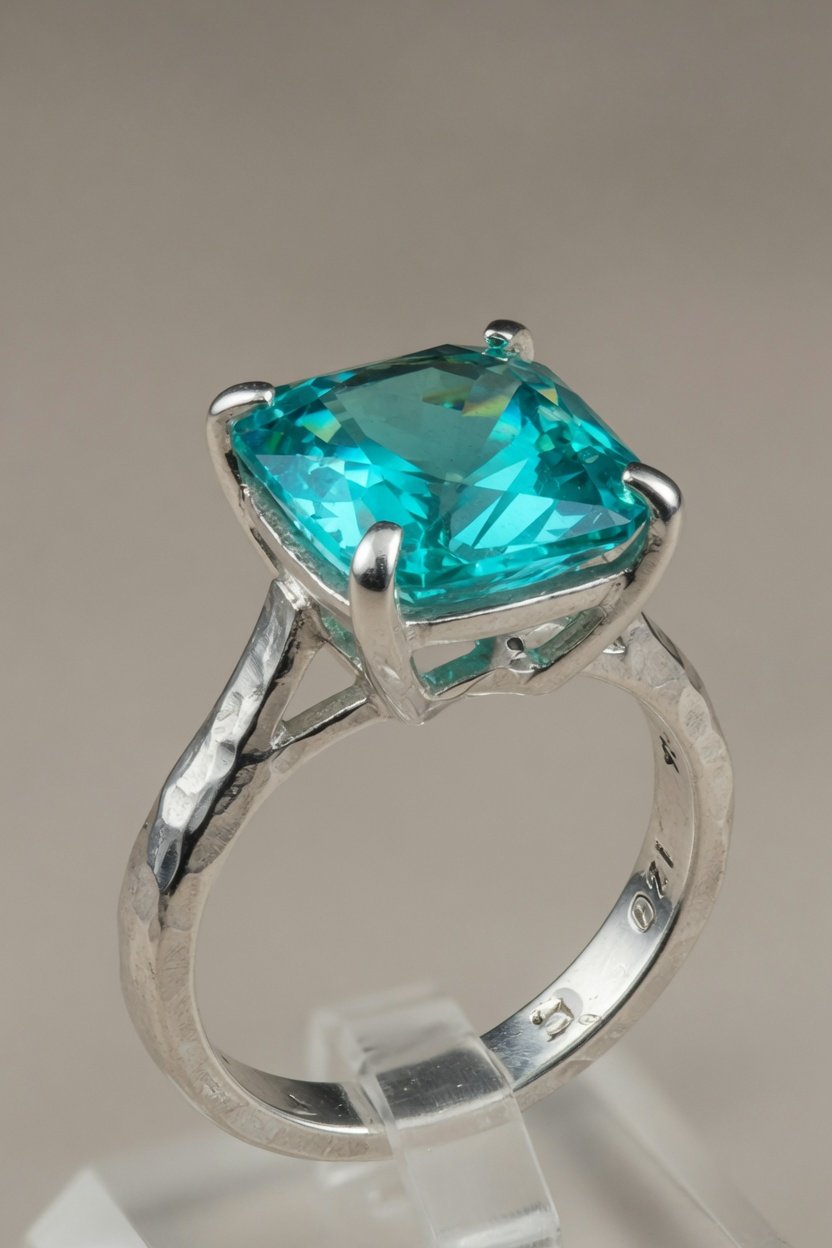
In Jewelry and Silversmithing Silversmiths favor faceted Paraiba tourmaline in prong or bezel settings that allow light to enter from multiple angles and intensify the neon effect. The stone’s moderate toughness means it tolerates normal wear yet must be protected from torch heat; all soldering, annealing, and pickling steps are therefore completed before the gem is seated. Flush or low-profile designs further reduce the chance of abrasion along the girdle.
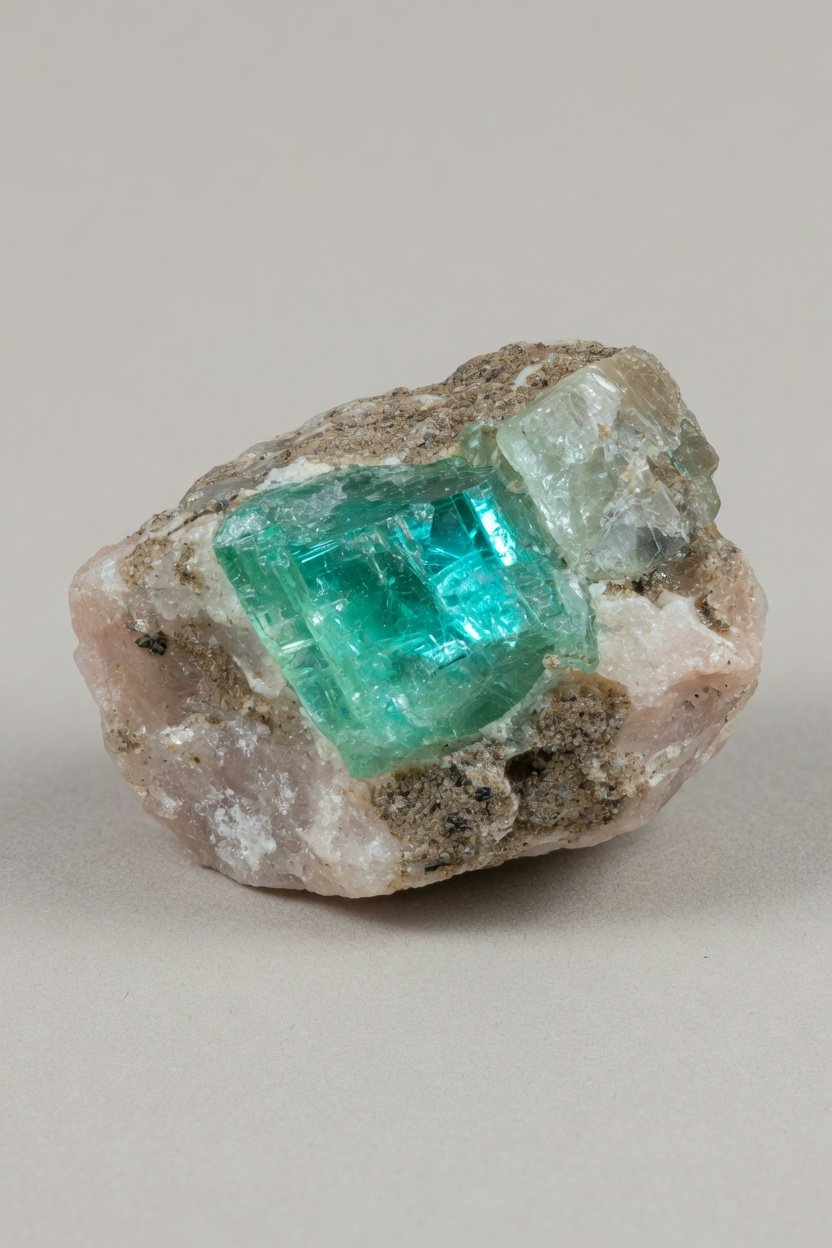
Identifying Paraiba Tourmaline in the Field In rough form the crystals appear as elongated prisms with a distinctive blue-green body color visible even through matrix staining. A quick Chelsea filter test shows strong red transmission in copper-rich specimens, while refractive index readings between 1.62 and 1.64 and strong birefringence help separate it from similar-looking apatite or beryl. Surface luster is vitreous to sub-adamantine, and natural crystals often display subtle color zoning parallel to the c-axis.
Quick Facts
Common names: Paraiba tourmaline, neon tourmaline
Chemical formula: Na(Li,Al)3Al6(BO3)3Si6O18(OH)4 with Cu
Mohs hardness: 7–7.5
Specific gravity: 3.0–3.2
Color: Neon blue-green to turquoise
Crystal system: Trigonal
Luster: Vitreous
Transparency: Transparent
Common cuts: Brilliant, emerald, cushion
Common treatments: Heat to enhance color
Best silver setting: Contemporary prong
Birthstone month (if any): None
Main sources: Brazil, Nigeria, Mozambique
Meaning & Intentions
CREATIVE SPARK
Paraiba tourmaline is carried or worn to ignite fresh ideas and dissolve creative blocks that stall artistic projects. Silversmiths place the faceted stone at the center of a pendant so the wearer remains visually connected to its electric energy throughout the day, reinforcing the courage to experiment with new techniques and materials.
Chakra: Throat – supports clear expression and truthful communication CLARITY VISION
The stone’s intense color is believed to sharpen mental focus and illuminate hidden patterns during problem-solving or design work. When set in a ring or brooch, the gem acts as a portable reminder to pause, observe, and choose the next precise step rather than rushing forward.
Chakra: Third Eye – enhances insight and intuitive decision-making BOUNDARY PROTECTION
Paraiba tourmaline is used to create energetic boundaries that keep distracting influences at bay during concentrated bench time. Wearers report that the stone helps maintain steady concentration when deadlines press or when the workshop environment grows chaotic.
Chakra: Root – grounds creative energy and maintains stability Affirmation: "My vision shines with clarity and courage." AT A GLANCE: Chakra: Throat, Third Eye, Root Element: Water Energy: Receptive Zodiac: Pisces, Cancer Planet: Neptune Affirmation: "My vision shines with clarity and courage."
Related Stones
Explore more stones from the Gemstone Library: Apatite · Aquamarine · Grandidierite