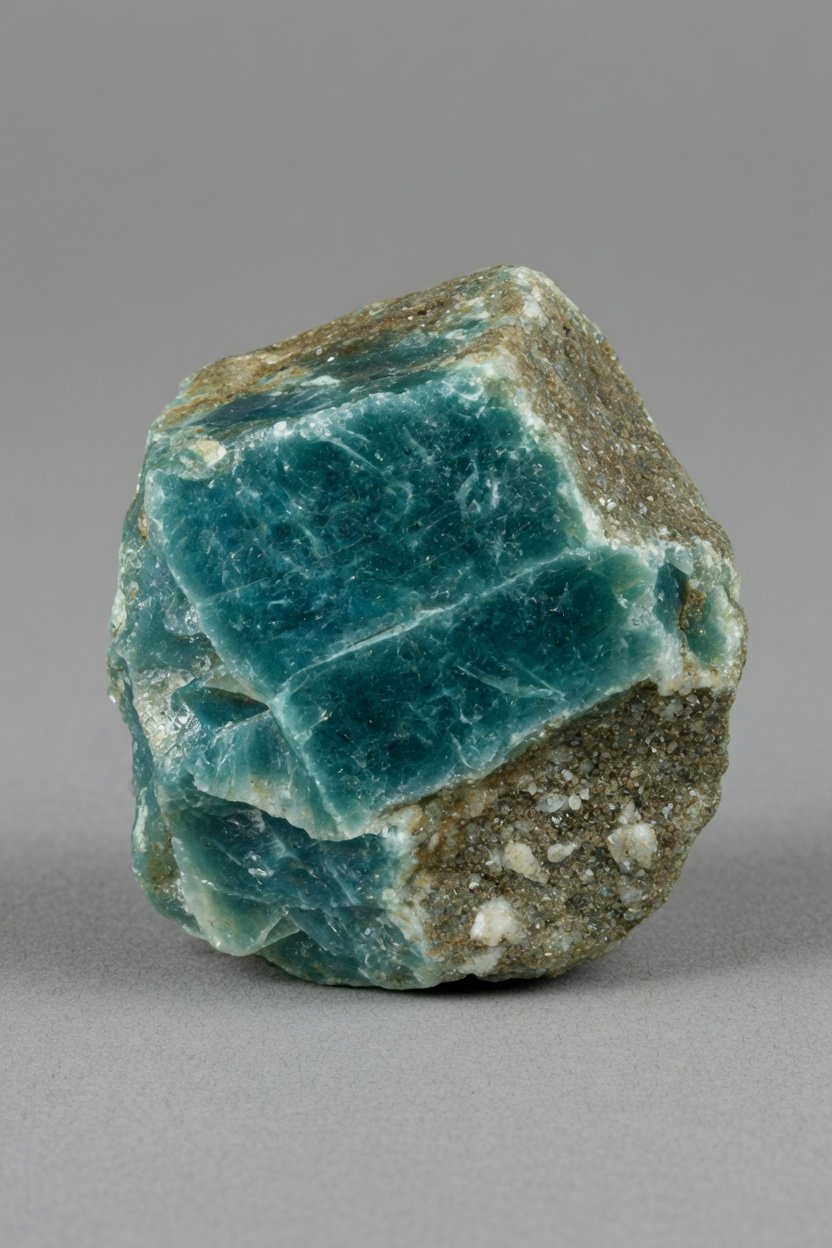
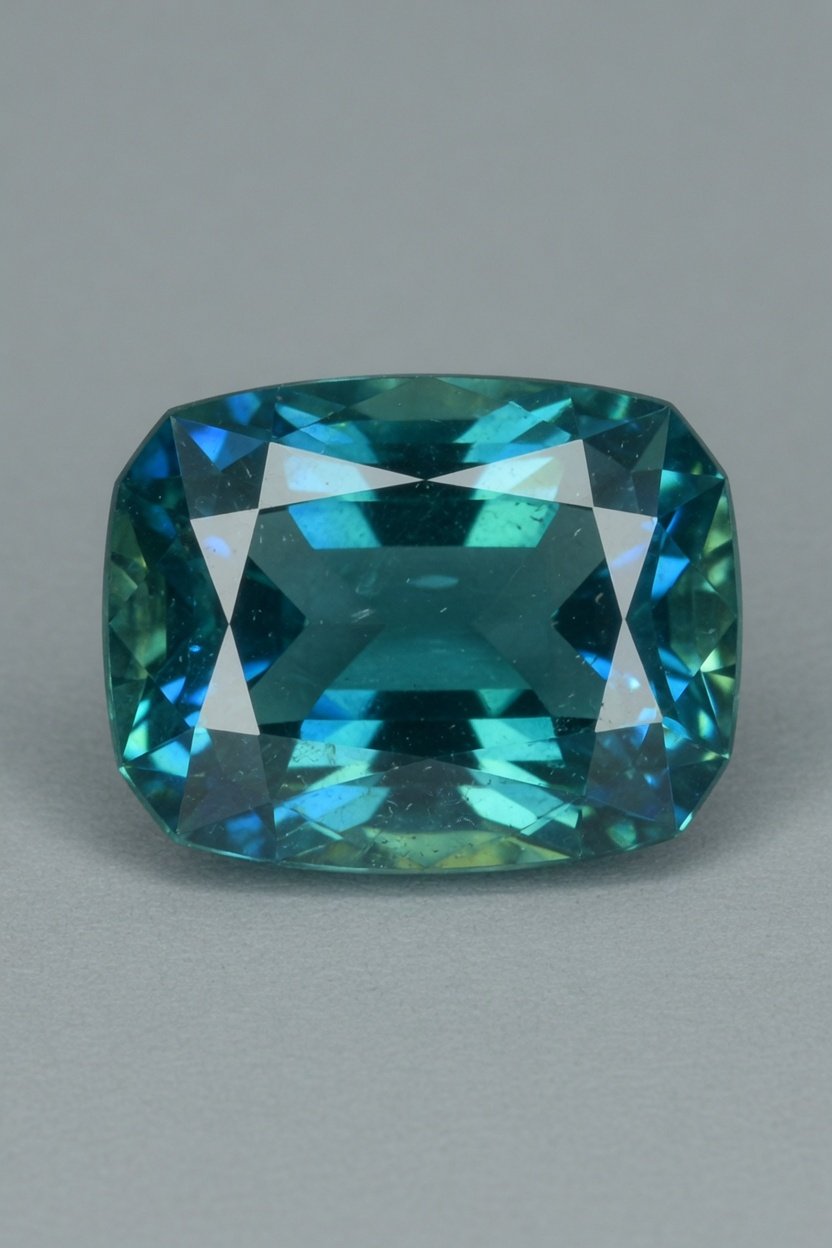
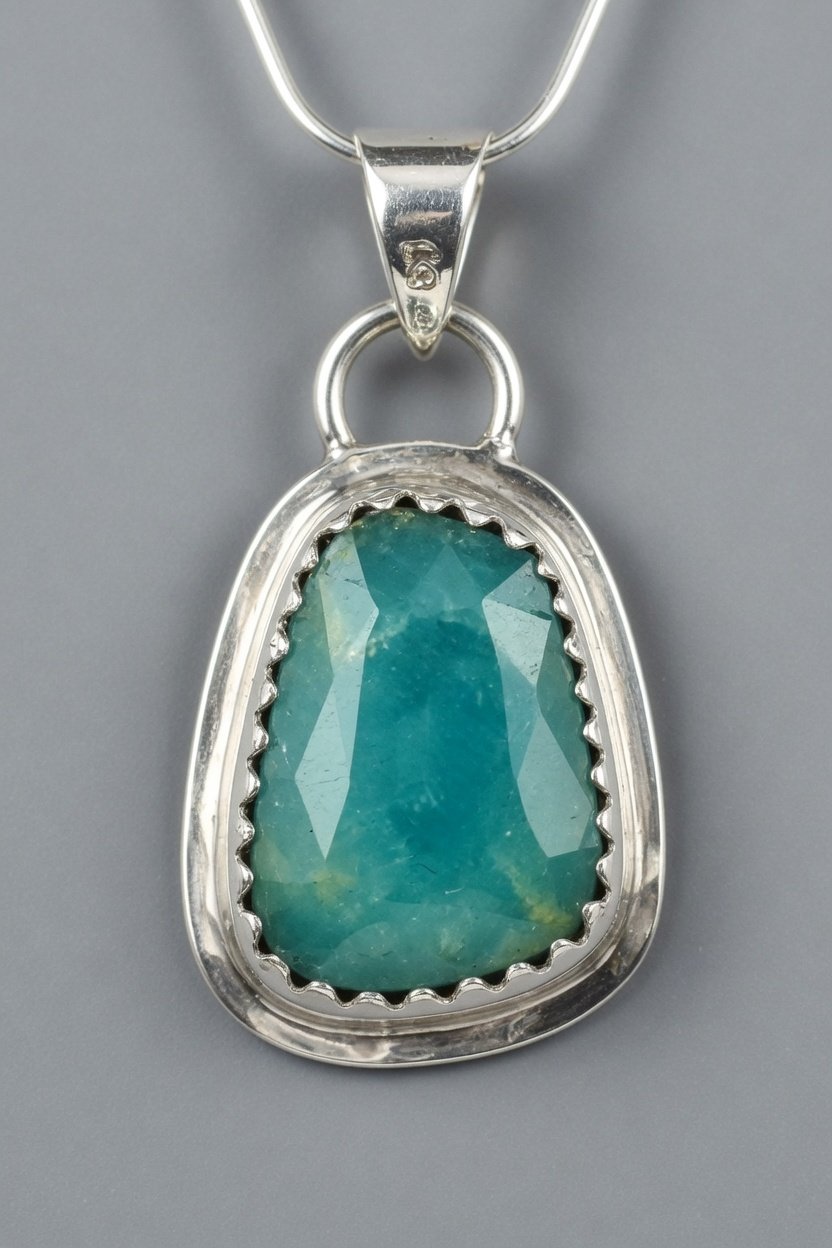
Grandidierite emerges from the earth as one of the rarest and most captivating gems, its deep teal-blue depths shifting with every angle of light like a fragment of untouched ocean captured in stone. This orthorhombic treasure, prized by collectors and artisans alike, demands careful handling once it reaches the silversmith’s bench. Its striking color and exceptional clarity make it a standout choice for custom jewelry that honors both natural beauty and skilled craftsmanship.
Physical Properties Grandidierite registers 7.5 on the Mohs scale, giving it respectable durability for everyday wear while still requiring thoughtful protection from hard knocks. Its specific gravity hovers near 2.99, and the mineral exhibits a vitreous luster with excellent transparency in the finest specimens. Because the stone can fracture along its distinct cleavage planes when exposed to sudden temperature changes, it must always be set into silver after all soldering and polishing steps are complete. Avoid ultrasonic cleaners and prolonged direct sunlight to preserve its vivid hue over decades of use.
Origin and Sourcing The majority of gem-quality grandidierite comes from southern Madagascar, where narrow veins in pegmatite formations yield the transparent material favored by cutters. Smaller deposits appear in Sri Lanka and Namibia, yet Madagascar remains the benchmark source for stones that display the saturated teal-blue prized in the trade. Rough material is extracted through careful hard-rock methods that preserve the delicate crystals before they reach lapidaries. Ethical sourcing ensures that local communities benefit from the stone’s value while protecting fragile habitats.
History and Significance First described in 1902 and named for the French naturalist Alfred Grandidier, the mineral remained largely unknown outside mineralogical circles until the late twentieth century. Its scarcity kept it from widespread jewelry use until modern mining techniques revealed enough clean crystals for faceting. Today grandidierite symbolizes rarity and quiet strength, appealing to those who value stones with genuine geological stories rather than mass-market appeal.
In Jewelry and Silversmithing Silversmiths set grandidierite exclusively after all heat work is finished, typically choosing low-profile bezels or prongs that shield its cleavage planes. The stone’s strong pleochroism—showing blue, green, and colorless depending on orientation—rewards precise cutting and careful orientation in the final piece. Its vitreous surface takes a high polish that contrasts beautifully with oxidized silver textures. Routine care involves gentle wiping with a soft cloth and storage away from other gems to prevent abrasion.
Identifying Grandidierite in the Field In matrix, grandidierite appears as elongated prismatic crystals with a distinctive bluish-green cast and a hardness that resists scratching by quartz. Its strong pleochroism becomes evident when the crystal is rotated under light, shifting from deep teal to pale green. Collectors confirm identity by checking for the absence of the copper-based chemistry found in similar-looking minerals such as apatite or tourmaline.
Quick Facts
Common names: Grandidierite
Chemical formula: (Mg,Fe)Al₃(BO₃)(SiO₄)O₂
Mohs hardness: 7.5
Specific gravity: 2.98–3.00
Color: Teal-blue to blue-green
Crystal system: Orthorhombic
Luster: Vitreous
Transparency: Transparent to translucent
Common cuts: Faceted oval, cushion, emerald
Common treatments: None
Best silver setting: Bezel or prong after soldering
Birthstone month (if any): None
Main sources: Madagascar, Sri Lanka, Namibia
Meaning & Intentions
CLARITY
Grandidierite sharpens mental focus and helps wearers cut through confusion during decision-making or creative work. Silversmiths often incorporate the stone into pieces intended for daily wear so its steady energy remains close during long bench sessions. The gem’s cool teal tones visually reinforce a sense of calm precision that supports clear thinking under pressure.
Chakra: Throat — supports honest communication and self-expression PERCEPTION
The stone’s strong pleochroism mirrors the ability to see situations from multiple angles, encouraging deeper insight and awareness. Wearers report that holding or wearing grandidierite during meditation heightens intuitive observation without overwhelming the senses. Its rarity itself becomes a reminder to value moments of genuine understanding when they appear.
Chakra: Third Eye — awakens intuitive vision and pattern recognition PROTECTION
Grandidierite forms an energetic boundary that guards against scattered thoughts and external negativity. Artisans set the stone after all torch work to preserve both its physical integrity and its symbolic role as a steadfast shield. The cool blue-green color visually signals safety and grounded presence throughout the day.
Chakra: Root — anchors stability and personal boundaries Affirmation: "I see clearly and stand protected." AT A GLANCE: Chakra: Throat, Third Eye, Root Element: Water Energy: Receptive Zodiac: Sagittarius Planet: Neptune Affirmation: "I see clearly and stand protected."
Related Stones
Explore more stones from the Gemstone Library: Chalcedony · Amazonite · Blue Lace Agate