Demantoid garnet captivates with its vivid emerald-green fire and exceptional brilliance, a rare andradite variety that seems to hold liquid light within its facets. This stone’s high refractive index produces a sparkle that outshines many other green gems, drawing silversmiths and collectors alike to its distinctive allure.
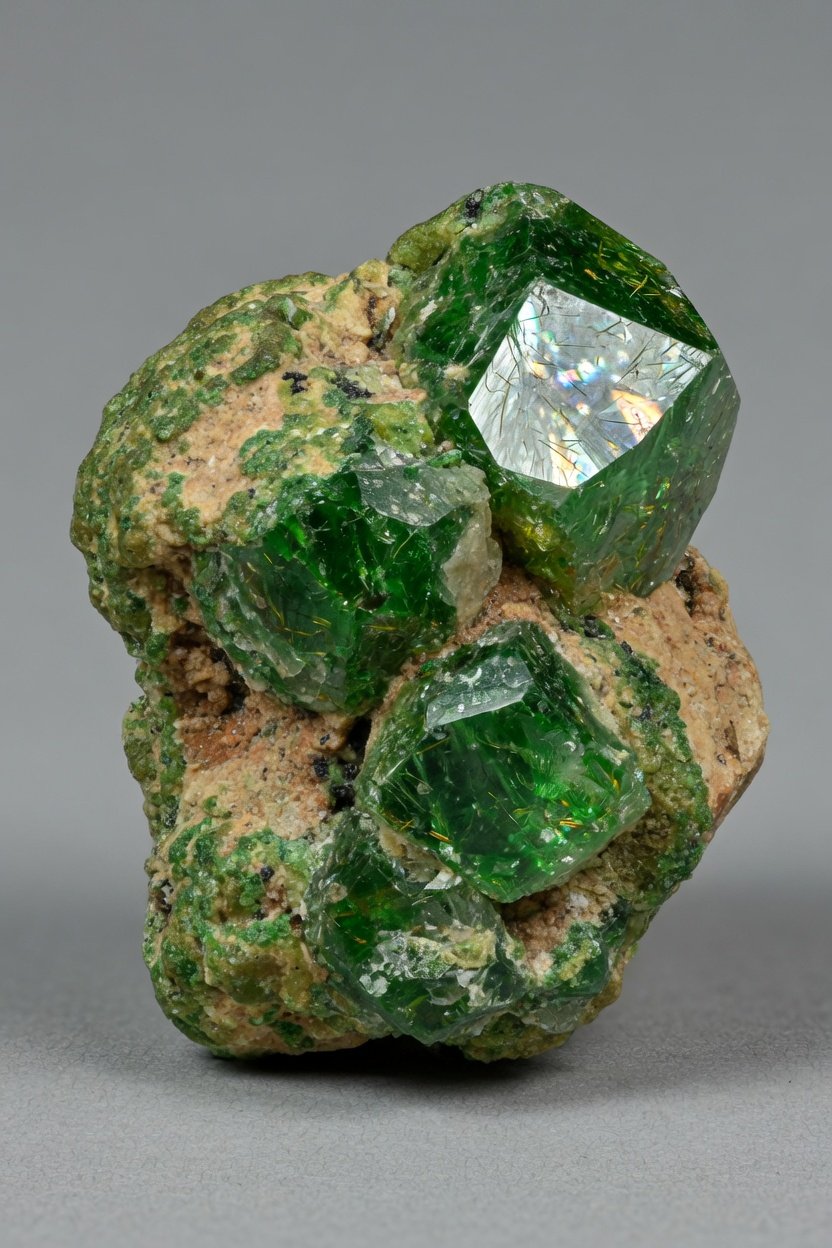
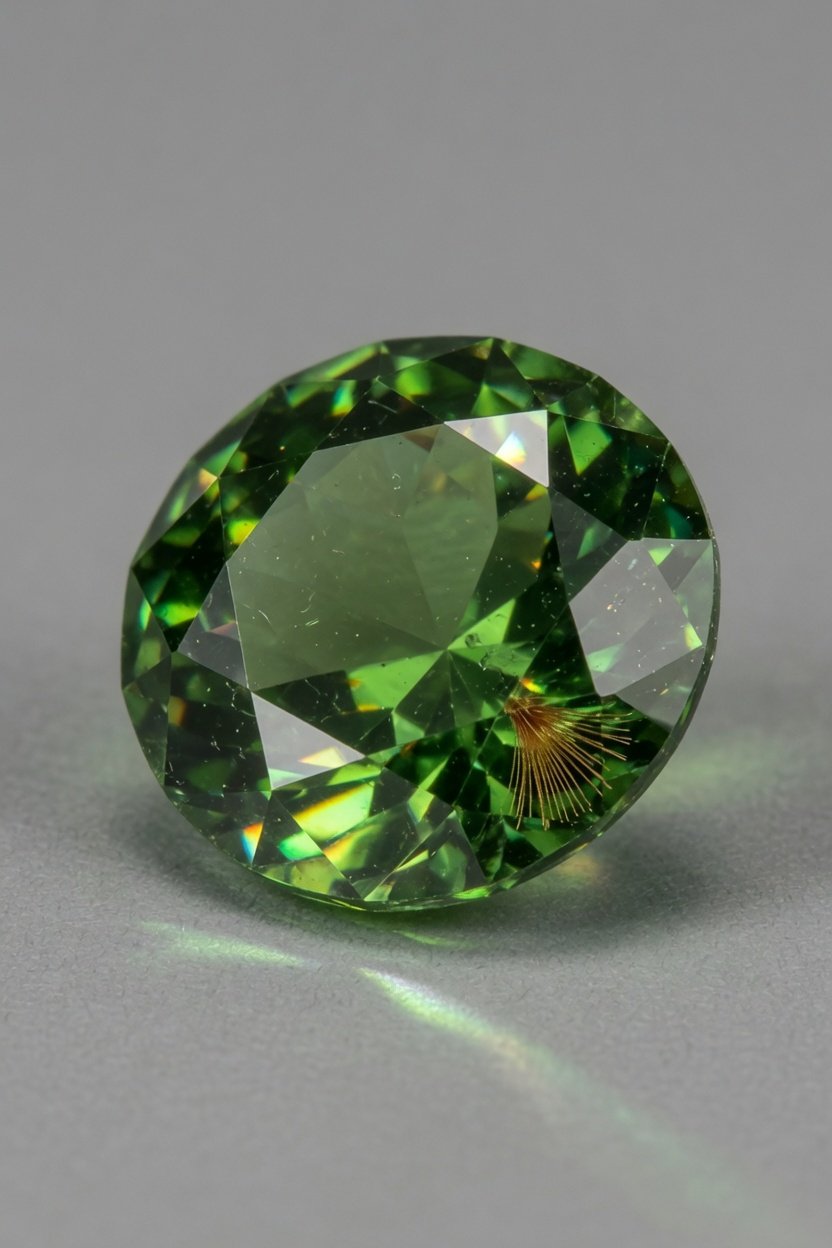
Physical Properties Demantoid garnet belongs to the andradite species with the chemical formula Ca₃Fe₂(SiO₄)₃. It registers 6.5–7 on the Mohs scale and displays a specific gravity of 3.80–3.93. The stone’s adamantine to sub-adamantine luster creates intense light return, while its cubic crystal system yields transparent to translucent material often marked by radiating horsetail inclusions of byssolite. These inclusions, when fine and centered, enhance value rather than detract. Because demantoid can suffer thermal shock along subtle cleavage planes, always set the stone after all soldering and polishing steps are complete; avoid prolonged heat or ultrasonic cleaning that might stress internal fractures.
Origin and Sourcing Primary deposits lie in Russia’s Ural Mountains, where the mineral was first discovered in the mid-nineteenth century, followed by significant finds in Namibia’s Erongo region and Madagascar’s alluvial gravels. Russian material typically shows the strongest horsetail inclusions and deepest green hue, while Namibian stones often appear slightly more yellowish-green and occur in marble-hosted pockets. Alluvial mining in Madagascar yields smaller but exceptionally clean crystals. Ethical sourcing emphasizes traceable rough from these three regions, with Russian production now limited and Namibian output steady from small-scale operations.
History and Significance First documented in the Urals in 1855, demantoid quickly gained favor among Russian aristocrats and Fabergé jewelers who prized its diamond-like dispersion. European cutters later adopted the stone for intricate faceting that maximized its fire. In the twentieth century, demantoid fell into relative obscurity until renewed interest from collectors revived its status as a connoisseur gem. Its name, derived from the Dutch “demant” meaning diamond, reflects the historical recognition of its superior brilliance.
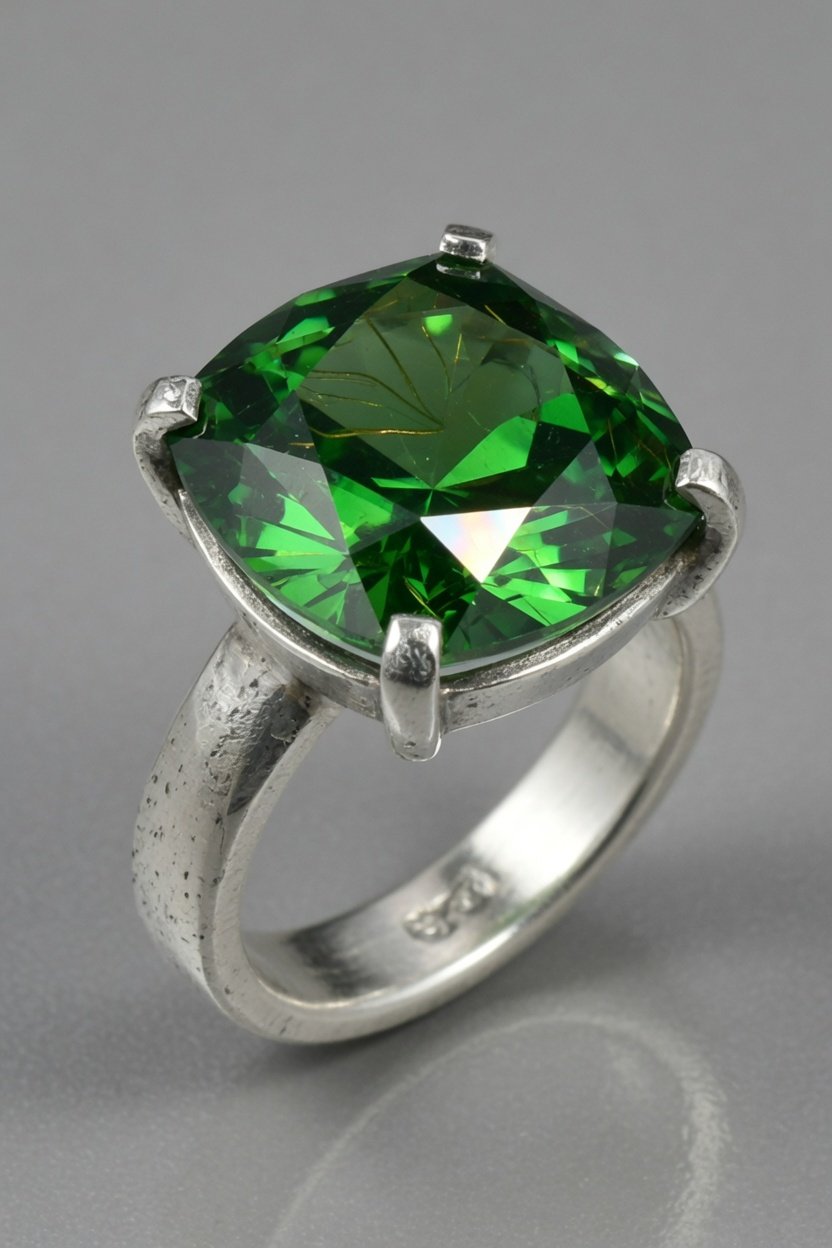
In Jewelry and Silversmithing Silversmiths favor demantoid for its ability to ignite white metal with green flashes. The stone is almost always faceted to release its adamantine luster; round brilliants and ovals are most common. Contemporary prong settings allow maximum light entry while protecting the girdle. Because the garnet’s color can appear slightly darker in low light, designers often pair it with high-polish silver to bounce extra illumination back into the stone. Always complete all soldering before setting; post-setting cleanup with mild soap and a soft brush is recommended. Avoid steam or harsh chemicals that could loosen inclusions.
Identifying Demantoid Garnet in the Field In rough form, demantoid appears as lustrous green dodecahedral crystals embedded in serpentine or marble matrix. A quick visual check for the diagnostic horsetail inclusion under strong light distinguishes it from chrome diopside or emerald. Its high specific gravity gives a noticeably heavy feel compared with similarly colored tourmaline. Conchoidal fracture and lack of pleochroism further confirm identity. When purchasing, request a loupe examination for the characteristic radiating fibers that prove natural origin and add character to each stone.
Related Stones
Explore more stones from the Gemstone Library: Agate · Alexandrite · Amazonite