Coral forms slowly beneath clear seas where tiny polyps build branching colonies that harden into vivid red and pink branches over decades. These organic structures carry the warmth of ancient sunlight filtered through water and have long been prized for their natural glow when polished. Silversmiths turn to coral when they need a stone that feels alive against cool metal.
Physical Properties Coral is composed of calcium carbonate secreted by marine polyps, resulting in a dense, fine-grained material with a Mohs hardness of 3 to 4 that makes it workable yet easily scratched. Its specific gravity ranges from 2.6 to 2.7, and it displays a waxy to vitreous luster when polished. Because coral contains residual water and organic matter, it must always be set after all soldering and heat work is complete; exposure to open flame or prolonged ultrasonic cleaning can cause cracking or discoloration, so gentle steam cleaning or mild soap is recommended for care.
Origin and Sourcing Precious red coral grows in the Mediterranean Sea along the coasts of Italy, Spain, and North Africa, while other varieties are harvested from the waters around Japan, Taiwan, and parts of the Pacific. Divers collect mature branches by hand from depths between 30 and 300 meters to protect the slow-growing colonies. Modern regulations limit harvest to sustain these marine habitats, and reputable suppliers now trace coral to verified sustainable zones.
History and Significance Ancient Mediterranean cultures valued coral as a protective amulet against storms and illness, with Roman and Greek sailors carrying polished branches on voyages. In Renaissance Italy coral beads became symbols of status and were incorporated into rosaries and court jewelry. Across Pacific cultures coral branches were traded along ancient routes and used in ceremonial objects that connected sea and land.
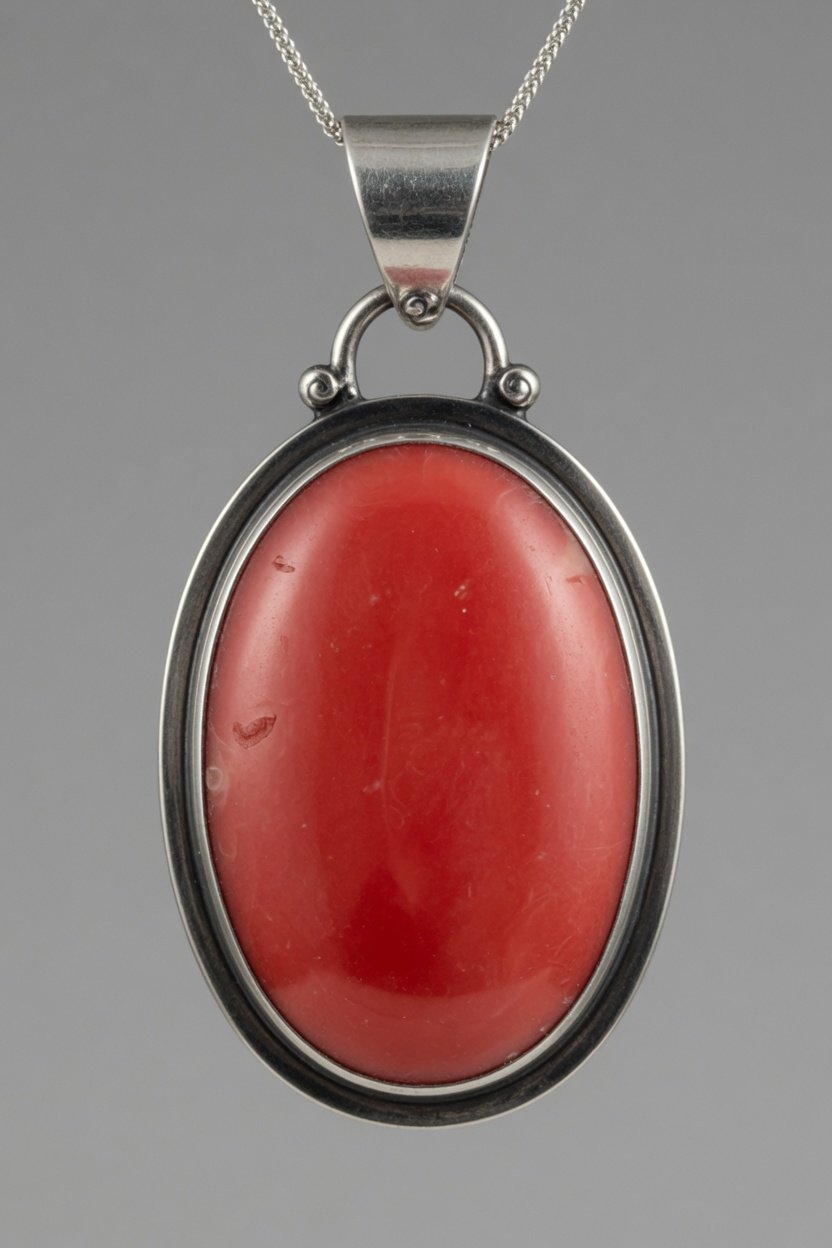
In Jewelry and Silversmithing Silversmiths typically cut coral into cabochons or beads that highlight its natural color gradients and fine texture. The stone is secured in bezel settings that cradle its softer surface without pressure points. Coral pairs beautifully with oxidized silver, allowing the warm tones to stand out against darker metal while the bezel protects the edges during wear.
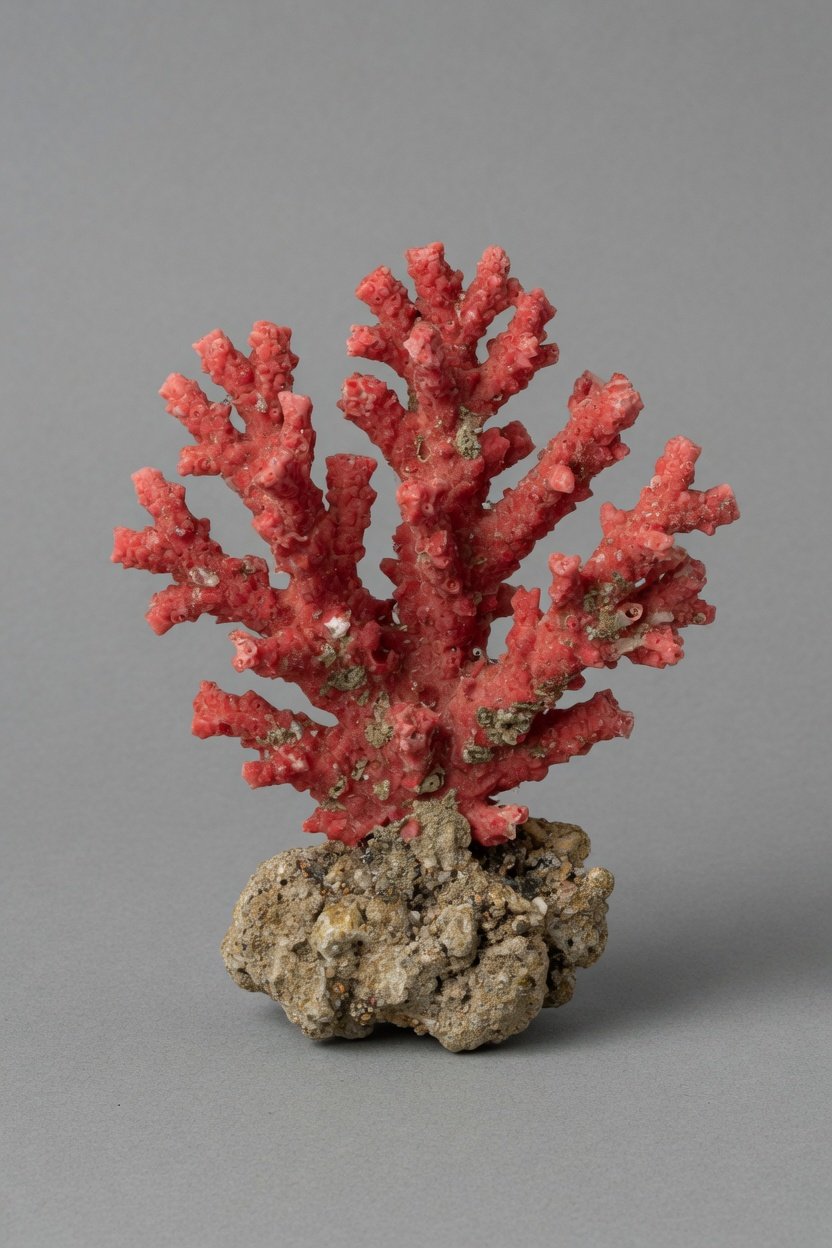
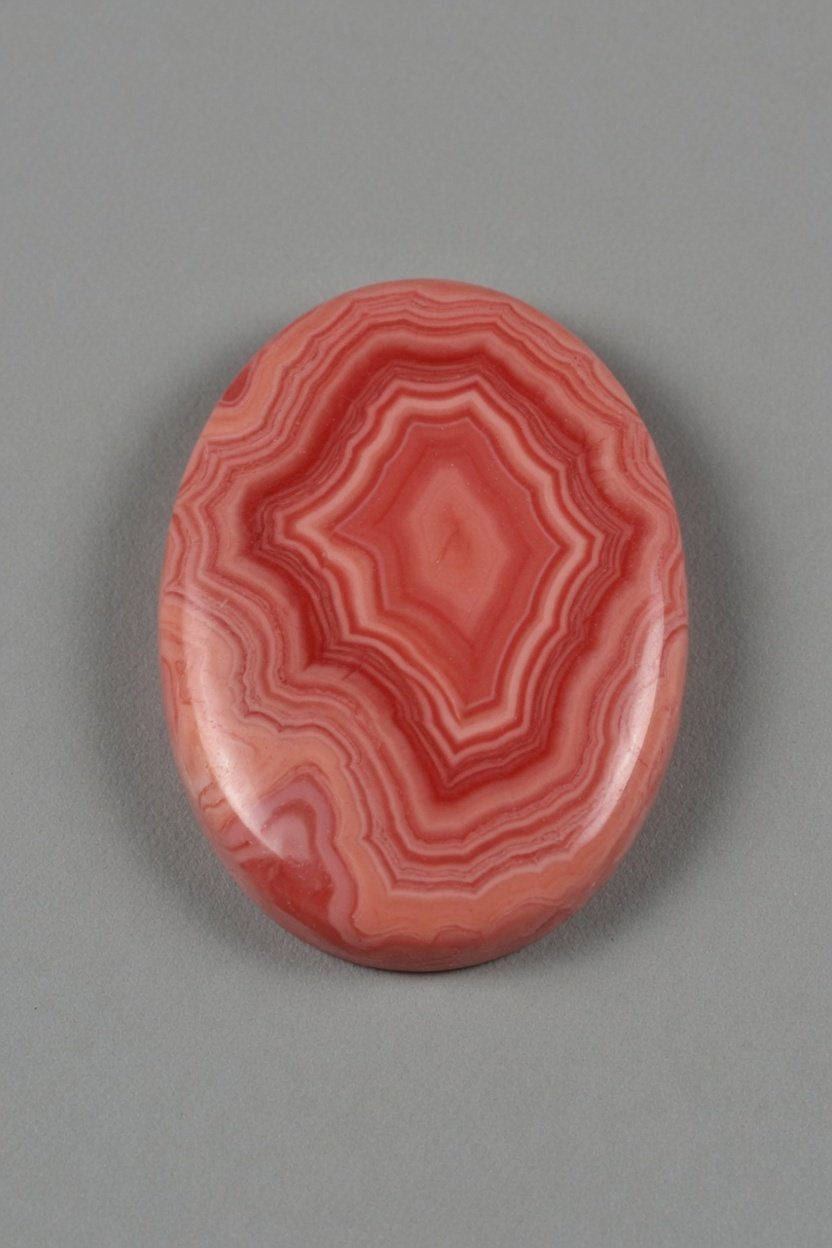
Identifying Coral in the Field In rough form coral shows branching structures with a matte, slightly porous surface and a distinctive white core when broken. Polished pieces reveal concentric growth rings and a uniform color without crystalline sparkle. A simple test involves touching the material to the lip; genuine coral feels cool at first then warms quickly, unlike plastic imitations that remain at room temperature.
Quick Facts
Common names: Red Coral, Precious Coral, Mediterranean Coral
Chemical formula: CaCO3 (aragonite/calcite with organic matter)
Mohs hardness: 3–4
Specific gravity: 2.6–2.7
Color: Red, pink, orange, white, black
Crystal system: None (organic biogenic)
Luster: Waxy to vitreous
Transparency: Opaque
Common cuts: Cabochon, beads, carvings
Common treatments: Bleaching, dyeing
Best silver setting: Bezel
Birthstone month (if any): None (sometimes associated with February)
Main sources: Mediterranean Sea, Japan, Taiwan
Meaning & Intentions
PROTECTION
Coral has long been carried as a guardian against negative energies and physical harm, its dense calcium structure believed to form an energetic shield around the wearer. In silversmithing, a polished coral cabochon set in a protective bezel becomes a wearable talisman that rests against the skin, offering steady reassurance during travel or challenging times.
Chakra: Root – grounding and safety CLARITY
Coral’s clear, vibrant hues are said to sharpen perception and calm scattered thoughts, helping the mind cut through confusion like sunlight through water. When set as a pendant or ring, the stone serves as a focal point during meditation or decision-making, its natural patterns encouraging steady insight without distraction.
Chakra: Third Eye – insight and vision STABILITY
The slow, deliberate growth of coral colonies embodies enduring stability, reminding the wearer that strength builds over time through consistent effort. Silversmiths often place coral in sturdy bezel settings so the stone remains secure and grounded, supporting daily routines and long-term commitments with quiet resilience.
Chakra: Sacral – emotional steadiness Affirmation: "I am steady as coral beneath the waves." AT A GLANCE: Chakra: Root Element: Water Energy: Receptive Zodiac: Pisces Planet: Neptune Affirmation: "I am steady as coral beneath the waves."
Related Stones
Explore more stones from the Gemstone Library: Dendritic Agate · Mahenge Spinel · Paraiba Tourmaline