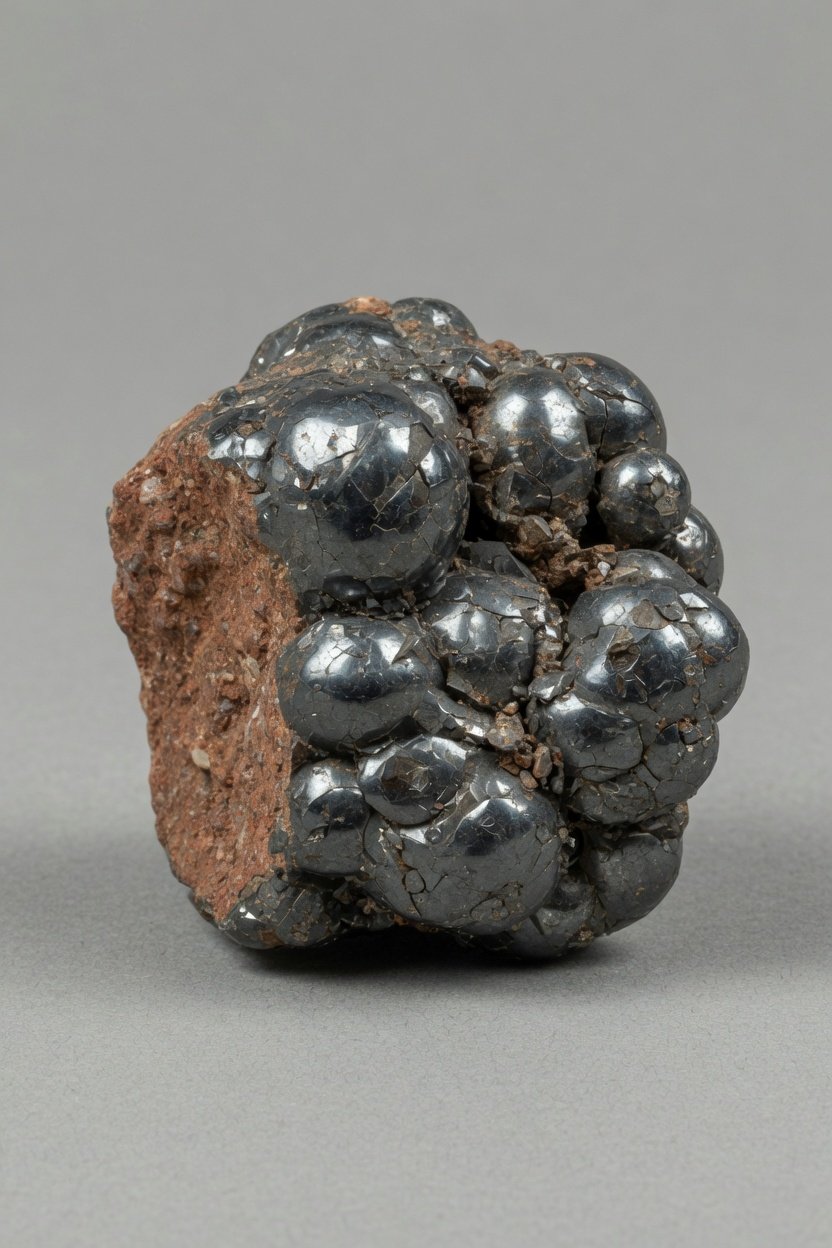
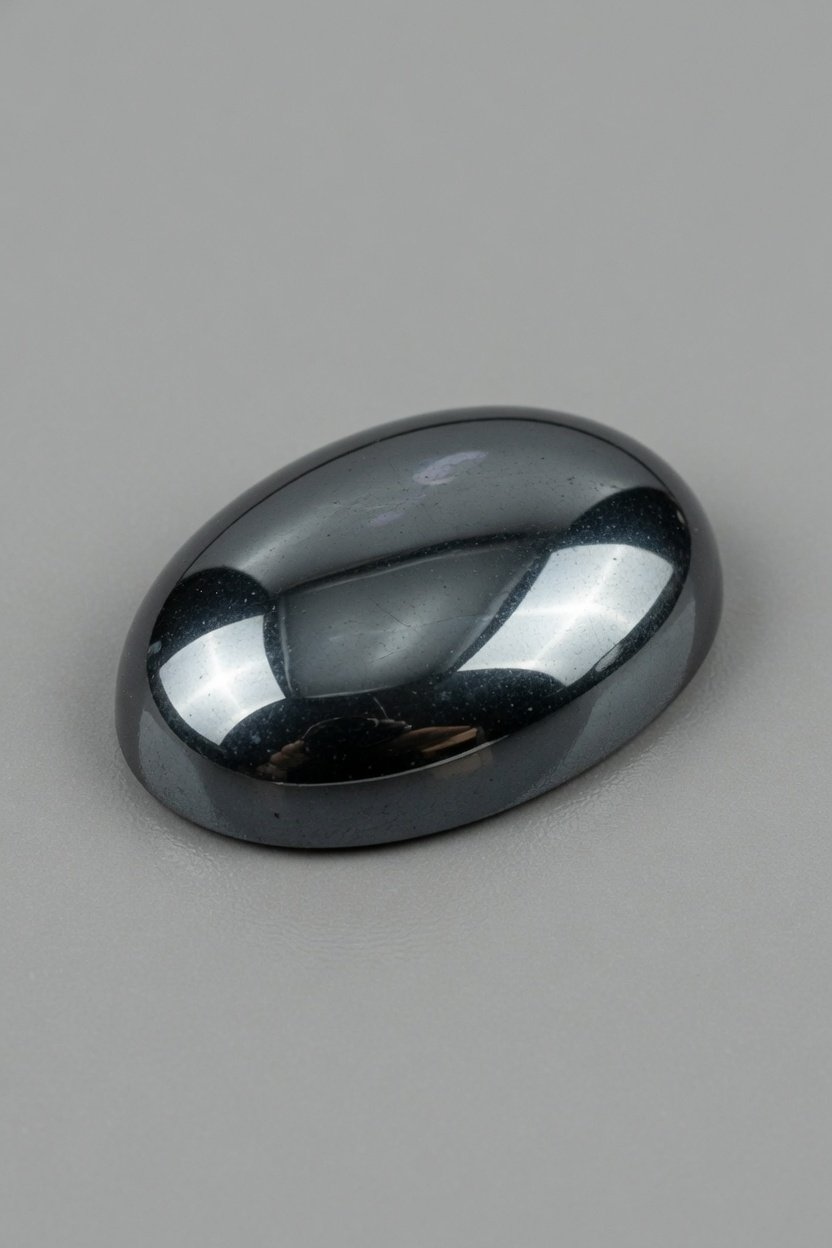
Hematite draws the eye with its dense, mirror-like surface that shifts between gunmetal gray and deep black, often catching light in sharp, steely reflections that hint at its iron-rich nature. This stone has long been prized for its weight and metallic sheen, qualities that make it stand out among gem materials used in silversmithing. Its presence in jewelry carries both visual weight and a grounded feel that silversmiths value when creating substantial pieces.
Physical Properties Hematite is an iron oxide mineral with the chemical formula Fe₂O₃. It registers 5.5–6.5 on the Mohs scale, giving it respectable durability for everyday wear yet requiring care during fabrication. The stone exhibits a metallic to submetallic luster and appears opaque, with colors ranging from steel gray to black; when powdered it shows a distinctive red streak. Specific gravity is high at 5.26, contributing to its satisfying heft in hand. Silversmiths must set the stone only after all soldering is complete to avoid heat damage that can alter its surface or cause cracking along cleavage planes.
Origin and Sourcing Major deposits occur in Brazil, China, South Africa, and parts of North America where iron formations have been concentrated over geological time. Most commercial hematite is extracted from hard-rock mines using adits and ore carts rather than alluvial methods. The mineral forms in sedimentary and metamorphic environments, often alongside other iron ores, and is processed into both rough and polished material for the gem trade.
History and Significance Ancient cultures mined hematite for pigment and for its perceived protective qualities, with evidence of use dating back to Paleolithic times when ground hematite served as red ochre in cave art. Roman soldiers carried polished pieces believed to confer strength in battle. Over centuries the stone moved from utilitarian pigment to ornamental cabochon, its dense metallic appearance lending itself to mourning jewelry in the Victorian era and later to contemporary designs that emphasize its reflective surface.
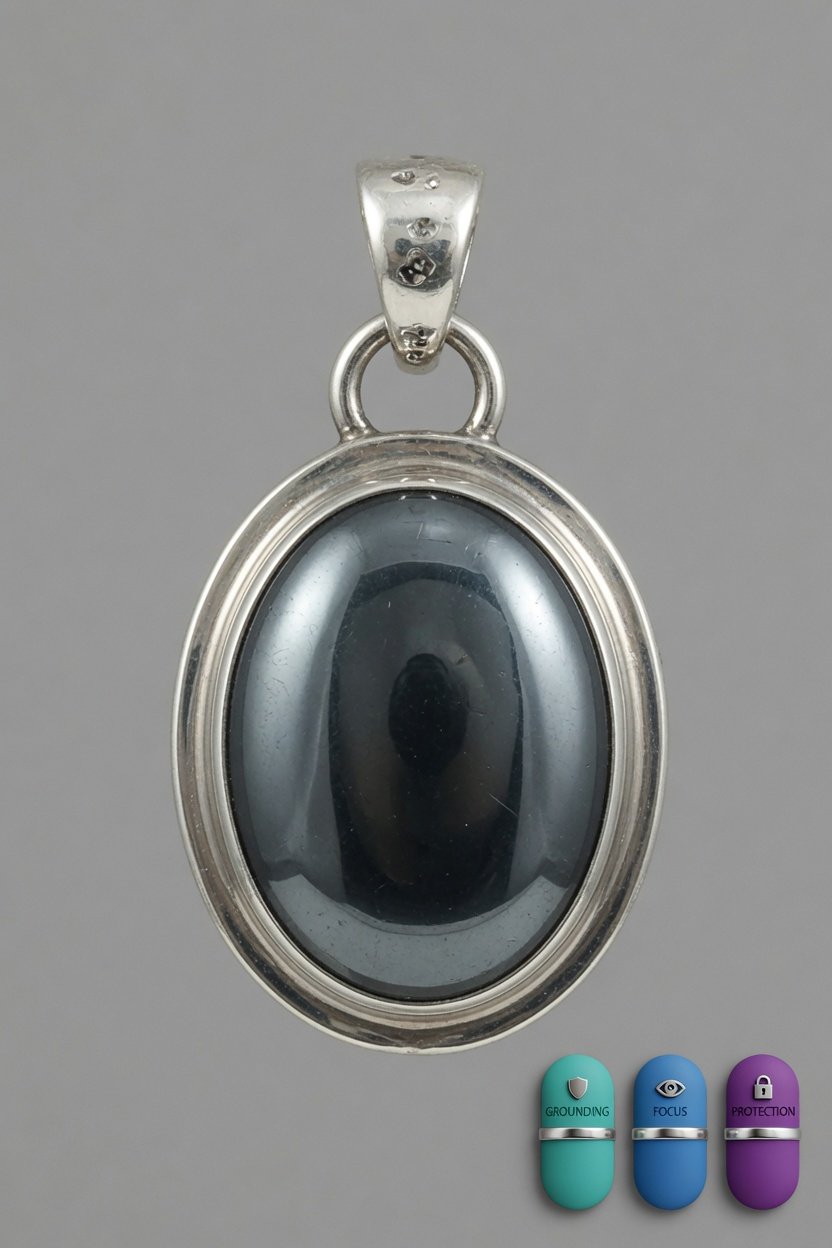
In Jewelry and Silversmithing Hematite is almost always cut as a cabochon to showcase its mirror-like polish and to avoid the fragility of faceting an opaque material. It pairs especially well with sterling silver in bezel settings that protect the edges while allowing the broad, reflective dome to catch light. Silversmiths set the stone after all soldering is complete and avoid prolonged torch exposure that could oxidize or discolor the surface. Care cautions include keeping hematite away from harsh abrasives and storing it separately to prevent scratching softer metals or stones.
Identifying Hematite in the Field In the field, hematite is recognized by its heavy weight, metallic luster, and the tell-tale red streak left when rubbed against unglazed porcelain. It often occurs in botryoidal or massive forms with a dark, gunmetal exterior that may show thin iridescent films. Unlike similar-looking magnetite, hematite is only weakly magnetic unless heated or treated, and its streak test quickly separates it from other dark oxides.
Quick Facts
Common names: Hematite, Kidney Ore, Specular Iron
Chemical formula: Fe₂O₃
Mohs hardness: 5.5–6.5
Specific gravity: 5.26
Color: Steel gray to black with metallic luster
Crystal system: Trigonal
Luster: Metallic to submetallic
Transparency: Opaque
Common cuts: Cabochon
Common treatments: None typical
Best silver setting: Bezel
Birthstone month (if any): None
Main sources: Brazil, China, South Africa
Meaning & Intentions
GROUNDING
Hematite anchors scattered energy and promotes a sense of physical stability during daily routines. Silversmiths often incorporate the stone into heavy pendants or cuffs that rest against the skin, allowing the dense mineral to act as a tactile reminder to remain present and centered throughout the day.
Chakra: Root — base of spine, physical security FOCUS
Wearers turn to hematite when mental clarity is needed for detailed tasks or decision-making. The stone’s reflective surface is said to mirror back distractions, helping the user maintain steady attention on work or creative projects such as silversmithing itself.
Chakra: Root — base of spine, physical security PROTECTION
Hematite is traditionally carried or worn to create an energetic boundary against negativity. In jewelry form it sits close to the body in a simple silver bezel, its weight and dark luster reinforcing a feeling of shielded personal space during travel or stressful encounters.
Chakra: Root — base of spine, physical security Affirmation: "I stand steady and protected." AT A GLANCE: Chakra: Root Element: Earth Energy: Receptive Zodiv: Capricorn, Aquarius Planet: Mars Affirmation: "I stand steady and protected."
Related Stones
Explore more stones from the Gemstone Library: Serpentine · Unakite · Andalusite