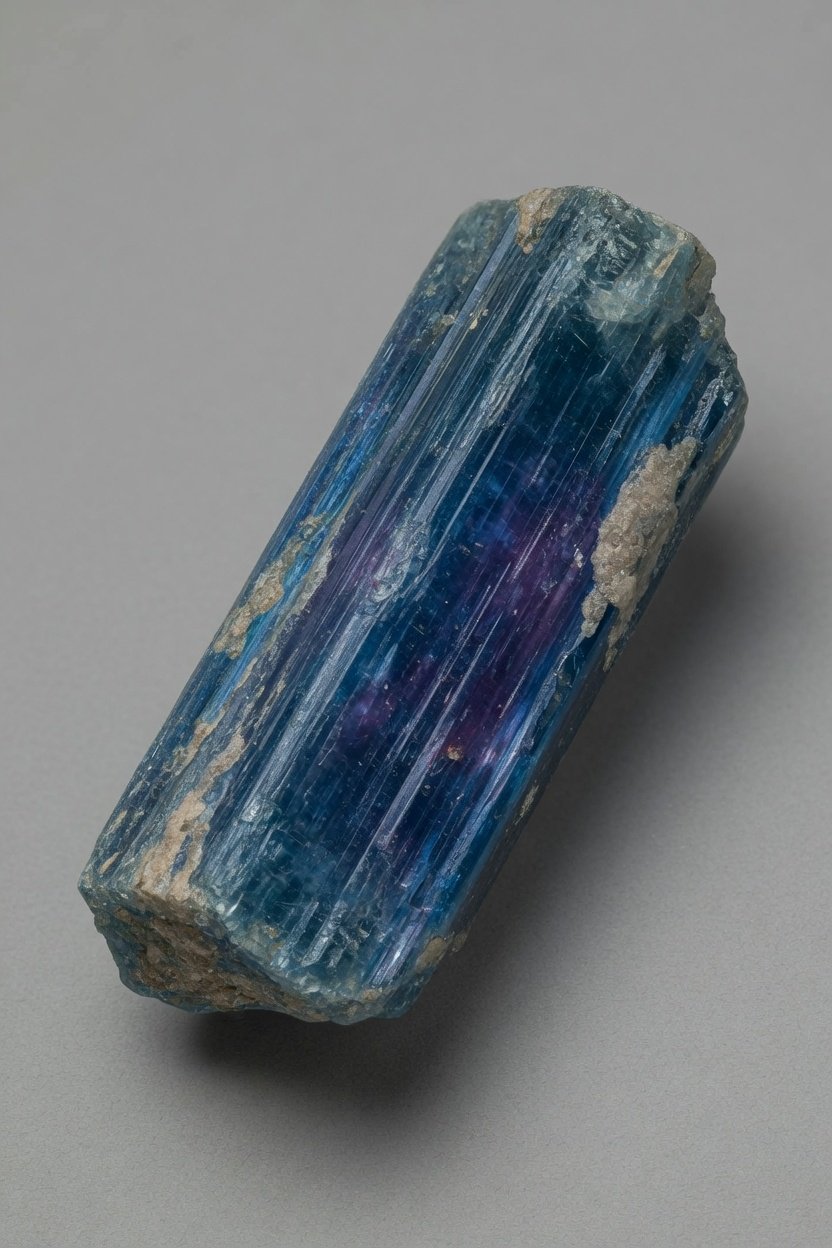
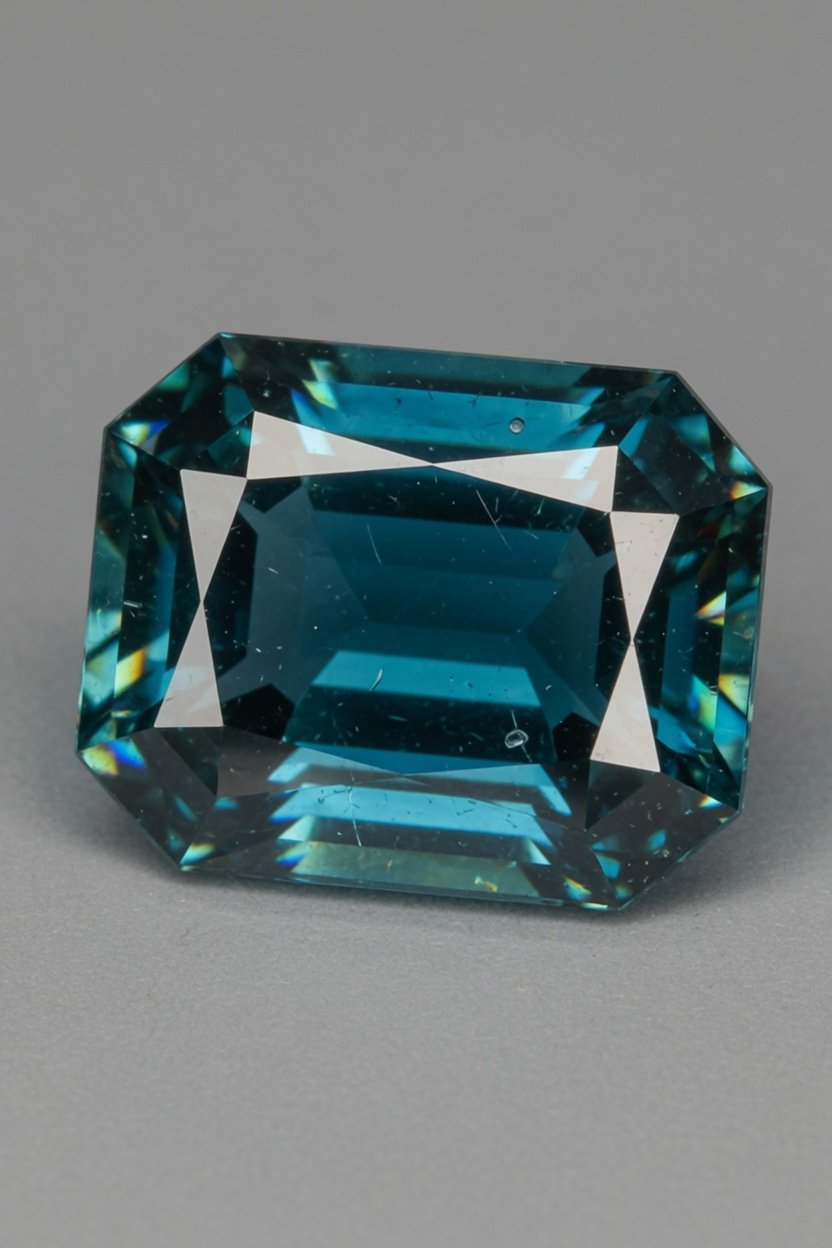
Indicolite, the deep blue variety of tourmaline, emerges from the earth with an electric clarity that catches light like submerged sapphire. Its saturated hue ranges from vivid teal-blue to inky midnight, often showing subtle violet undertones that shift under different angles of illumination. This striking color arises from iron and manganese within the crystal lattice, making each specimen a miniature window into geological pressure and chemistry.
Physical Properties Indicolite belongs to the elbaite species of the tourmaline group. It registers 7 to 7.5 on the Mohs scale, giving it solid durability for everyday jewelry yet requiring care around sudden temperature changes because of possible internal liquid inclusions. Specific gravity falls between 3.0 and 3.2, and its trigonal crystals frequently display strong pleochroism, appearing darker or lighter when viewed from different directions. The stone transmits light with a bright vitreous luster when transparent, though many natural pieces contain fine needle inclusions that create a soft glow rather than full brilliance.
Origin and Sourcing Primary deposits occur in Brazil’s Minas Gerais pegmatites, Madagascar’s highland veins, and pockets in Nigeria and Afghanistan. Miners extract indicolite from hard-rock tunnels where lithium-rich fluids cooled slowly inside granite fissures, forming long prismatic crystals alongside quartz and feldspar. Alluvial weathering occasionally liberates crystals into stream gravels, yet most commercial production still comes from underground adits. Ethical sourcing programs now track rough from these regions to ensure fair labor practices and minimal environmental disturbance during extraction.
History and Significance Ancient Egyptians valued blue tourmaline for amulets thought to ward off nightmares, while 18th-century European lapidaries prized the stone under the name “Brazilian sapphire” until mineralogists distinguished it in the 19th century. In Victorian mourning jewelry, indicolite symbolized calm remembrance. Today collectors seek the rare “electric blue” material from Brazil’s Cruzeiro mine, whose crystals once supplied the finest faceted stones in museum collections.
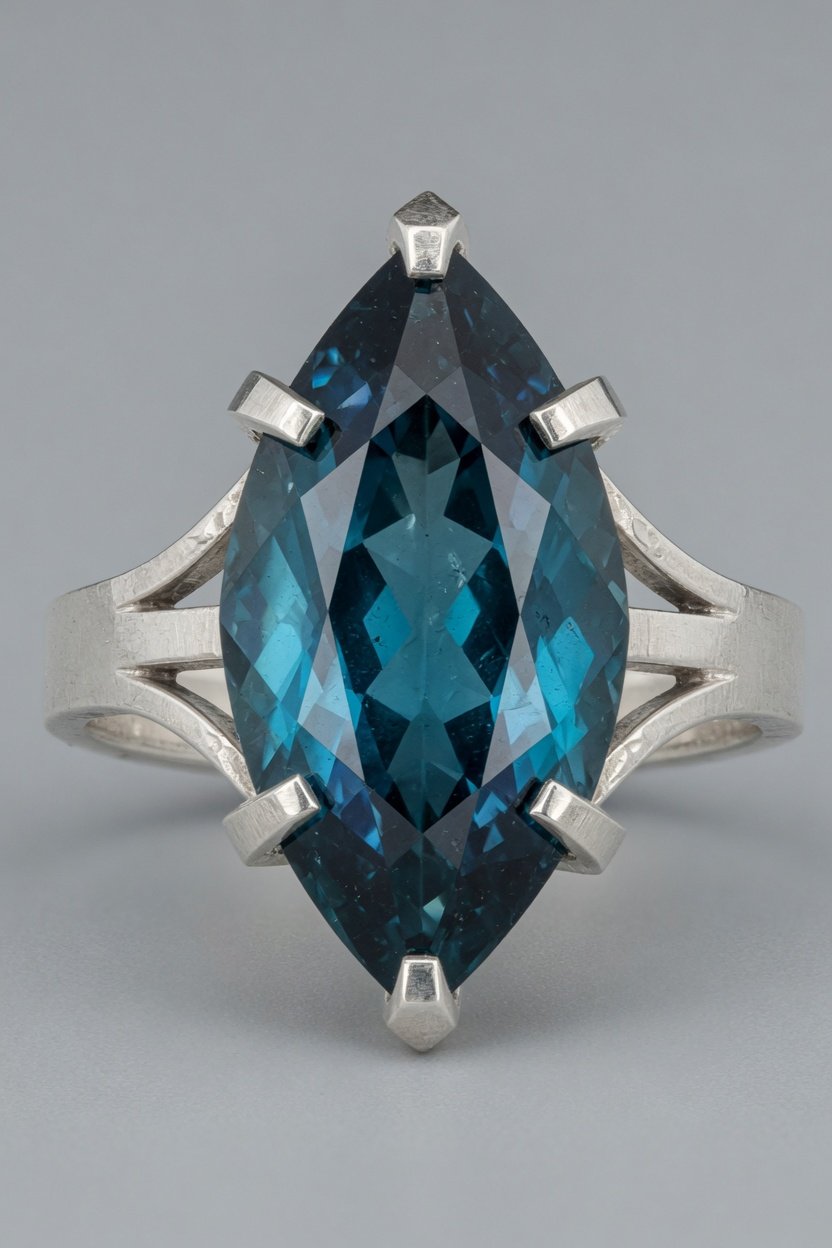
In Jewelry and Silversmithing Faceted indicolite excels in prong or bezel settings that allow light to enter the pavilion. Silversmiths always set the stone after all soldering and pickling steps are complete to protect its color from heat-induced fading or fracture. Daily wear is safe provided the piece avoids hard knocks against metal edges; ultrasonic cleaners are acceptable only if the stone is free of liquid inclusions. A simple wipe with mild soap and soft cloth preserves its vitreous surface.
Identifying Indicolite (Blue Tourmaline) in the Field Look for long, striated prisms with rounded triangular cross-sections and a hardness that scratches quartz but not topaz. A streak plate yields white, and the stone feels noticeably heavier than beryl of similar size. Under a Chelsea filter most indicolite appears red or pinkish, confirming the presence of iron. Always test for pleochroism with a dichroscope before purchase.
Quick Facts
Common names: Indicolite, Blue Tourmaline
Chemical formula: Na(Li,Al)3Al6(BO3)3Si6O18(OH)4
Mohs hardness: 7–7.5
Specific gravity: 3.0–3.2
Color: Deep blue to teal-blue with violet flashes
Crystal system: Trigonal
Luster: Vitreous
Transparency: Transparent to translucent
Common cuts: Faceted (emerald, oval, cushion)
Common treatments: Occasional heat or irradiation
Best silver setting: Contemporary Prong Ring
Birthstone month: October
Main sources: Brazil, Madagascar, Nigeria, Afghanistan
Meaning & Intentions
CLARITY
Indicolite sharpens mental focus and shields the wearer from scattered thoughts during demanding creative work. Silversmiths and designers keep a small polished piece near the bench so its steady blue light reminds them to return to clear intention when details threaten to overwhelm. The stone’s strong pleochroism mirrors the way perspective shifts with each new angle of view.
Chakra: Throat – supports honest expression and calm communication INSIGHT
The stone’s deep transparency invites quiet observation of patterns both internal and external. Practitioners place indicolite on the desk during planning sessions to encourage recognition of subtle connections that might otherwise remain hidden. Its color deepens under focused light, echoing the way insight grows brighter with sustained attention.
Chakra: Third Eye – awakens intuitive perception and inner vision BOUNDARIES
Indicolite reinforces personal limits without aggression, helping the wearer maintain composure when external demands press inward. A faceted stone set in silver is carried during negotiations or studio critiques to anchor resolve and prevent energy drain. The crystal’s natural striations act as visual reminders of structure and protection.
Chakra: Throat – strengthens clear limits while remaining open to dialogue Affirmation: "I see clearly and speak with steady purpose." AT A GLANCE: Chakra: Throat Element: Water Energy: Receptive Zodiac: Libra, Pisces Planet: Neptune Affirmation: "I see clearly and speak with steady purpose."
Related Stones
Explore more stones from the Gemstone Library: Grandidierite · Larimar · Amazonite