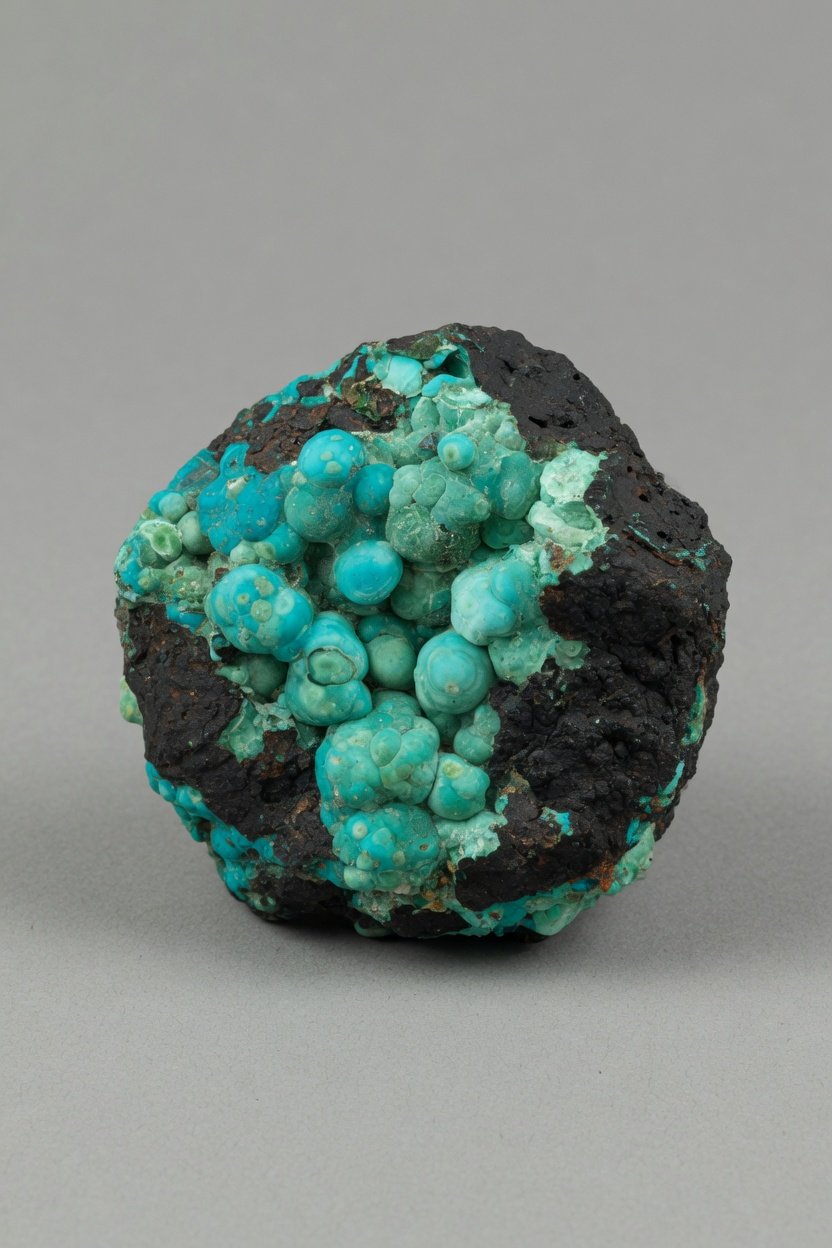
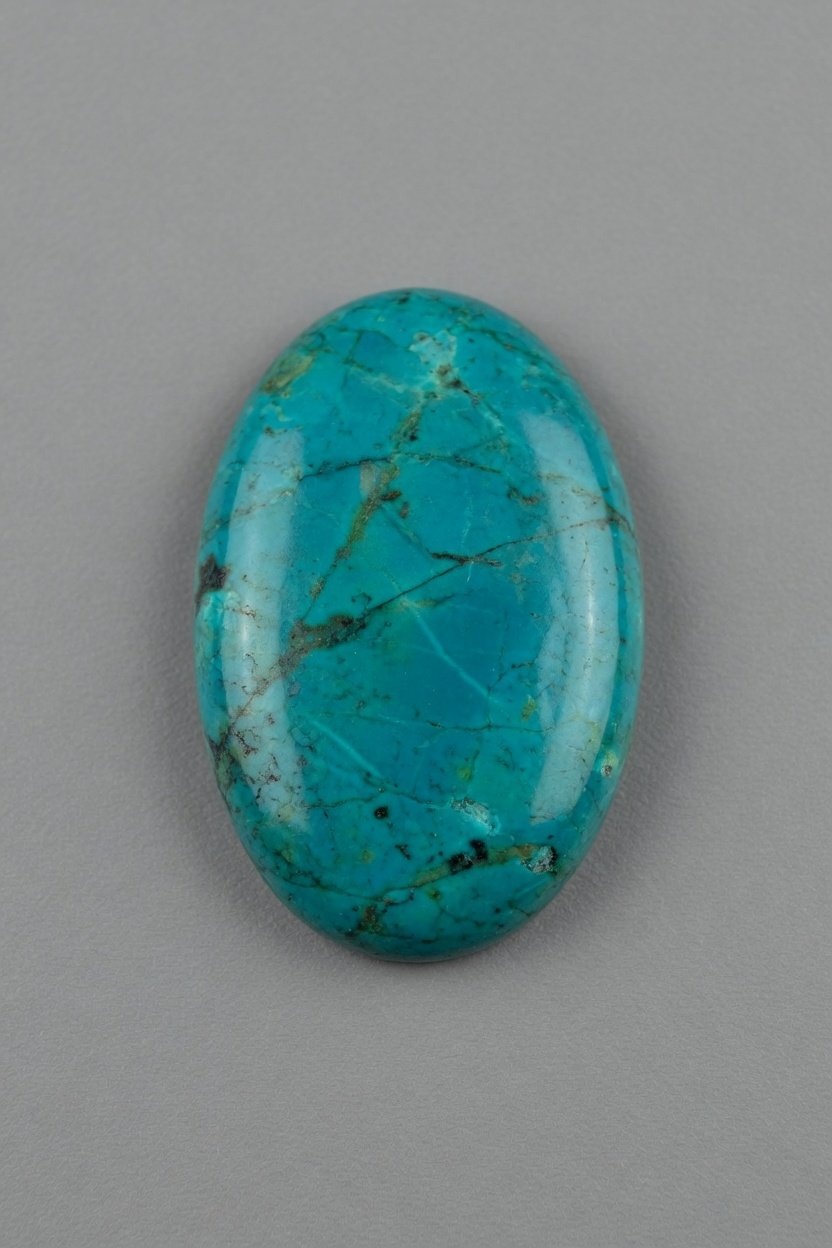
Chrysocolla forms in the oxidized zones of copper deposits where groundwater rich in silica and copper ions slowly precipitates vibrant mineral layers. Its intense blue-green hues and soft, waxy texture immediately draw the eye, evoking the cool depths of desert springs. This copper-bearing silicate rewards careful handling with striking cabochons that capture light in subtle, velvety flashes.
Physical Properties Chrysocolla registers between 2 and 4 on the Mohs scale, placing it among the softer gem materials and requiring gentle abrasion during cutting and polishing. Its specific gravity hovers near 2.0–2.4, and the stone often displays a botryoidal or massive habit with a waxy to vitreous luster. Because it contains significant water and copper carbonate components, it remains heat-sensitive; set the stone only after all soldering and torch work are complete, and avoid ultrasonic or steam cleaners that can cause cracking or color loss.
Origin and Sourcing Primary commercial deposits occur in the southwestern United States, Peru, the Democratic Republic of Congo, and parts of Australia, where chrysocolla forms alongside malachite, azurite, and cuprite in copper-rich veins. Miners extract the material from hard-rock underground adits or open-pit benches, hand-sorting nodules that show promising color and matrix patterns. Rough is typically stabilized with resin at the source to improve durability for lapidary use.
History and Significance Ancient Egyptians and Mesoamerican cultures collected chrysocolla for inlays and pigments, associating its copper-derived color with fertility and protection. In the American Southwest, Native artisans incorporated the stone into ceremonial objects long before European contact. Modern lapidaries value chrysocolla for its ability to record the geological story of copper mineralization in every polished surface.
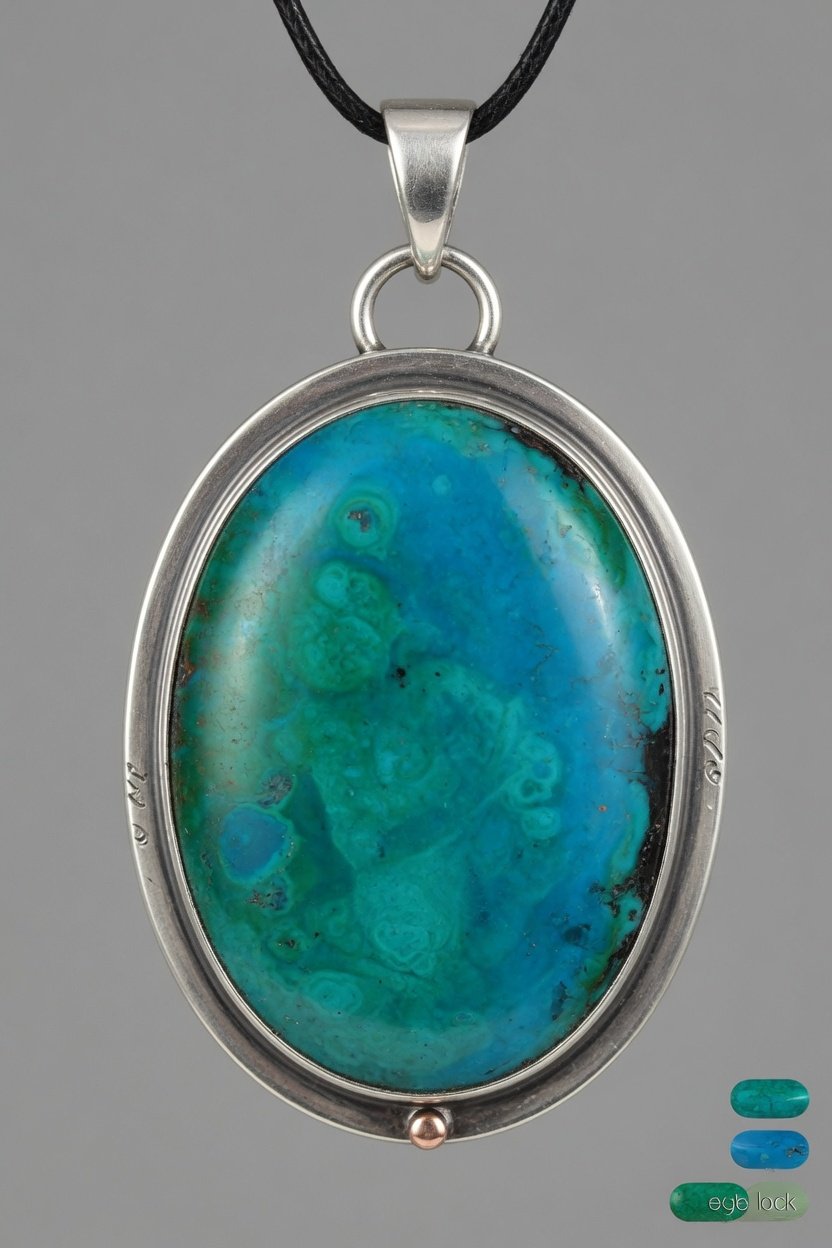
In Jewelry and Silversmithing Silversmiths most often cut chrysocolla into cabochons and set them in bezels that fully support the soft stone. The material pairs especially well with oxidized sterling silver that echoes the stone’s natural matrix tones. Always set the finished cabochon after all soldering operations are complete, then apply a light wax or oil coating to reduce porosity and maintain color depth over time.
Identifying Chrysocolla in the Field In outcrops, chrysocolla appears as soft, sky-blue to turquoise-green masses or botryoidal coatings that effervesce slightly with dilute acid due to associated carbonates. It leaves a pale blue streak, feels slightly greasy, and frequently occurs with black manganese oxides or green malachite rims. Collectors test hardness with a copper penny and note the stone’s tendency to crumble when overly dry.
Quick Facts
Common names: Chrysocolla, copper silicate
Chemical formula: (Cu,Al)₂H₂Si₂O₅(OH)₄·nH₂O
Mohs hardness: 2–4
Specific gravity: 2.0–2.4
Color: Blue-green to turquoise with black matrix
Crystal system: Orthorhombic (usually massive)
Luster: Waxy to vitreous
Transparency: Opaque to translucent
Common cuts: Cabochon
Common treatments: Resin stabilization
Best silver setting: Bezel
Birthstone month (if any): None
Main sources: USA (Arizona), Peru, Congo, Australia
Meaning & Intentions
CALM COMMUNICATION
Chrysocolla supports clear, compassionate speech during difficult conversations by soothing emotional heat and encouraging honest listening. Silversmiths set stabilized cabochons in pendants worn at the throat so the wearer can touch the stone as a tactile reminder to pause and speak from steadiness rather than reaction. The copper content is traditionally linked to heart-centered dialogue that builds trust.
Chakra: Throat — expression and truth
EMOTIONAL CLARITY
The stone’s shifting blue-green patterns mirror the fluid nature of feelings, helping wearers observe emotions without becoming overwhelmed. In meditation jewelry, a polished chrysocolla cabochon set in a simple silver ring serves as a focal point that gently draws attention back to present-moment awareness when thoughts spiral. Regular handling is said to dissolve old emotional residue stored in the body.
Chakra: Heart — compassion and release
PROTECTIVE BOUNDARIES
Chrysocolla is used to reinforce personal limits while remaining open to supportive relationships. Artisans create protective talismans by bezel-setting matrix-rich cabochons in cuff bracelets so the wearer feels the cool weight against the wrist during challenging interactions. The stone’s copper chemistry is thought to transmute negativity into grounded strength.
Chakra: Root — stability and safety
Affirmation: "I speak my truth with calm clarity and honor my boundaries." AT A GLANCE: Chakra: Throat Element: Water Energy: Receptive Zodiac: Taurus, Virgo Planet: Venus Affirmation: "I speak my truth with calm clarity and honor my boundaries."
Related Stones
Explore more stones from the Gemstone Library: Amazonite · Apatite · Blue Lace Agate