Anyolite, known for its striking red ruby crystals set against a vivid green zoisite matrix, draws immediate attention in any silversmithing studio. The stone’s natural contrast creates bold visual statements once properly mounted. Its composite nature demands careful handling throughout the jewelry-making process.
Physical Properties Anyolite combines chromium-rich ruby corundum with zoisite, resulting in a Mohs hardness of 6.5–7 that varies across the specimen. The material shows vitreous luster on polished faces and often contains black hornblende inclusions that add dramatic patterning. Specific gravity ranges from 3.1 to 3.4. Because the ruby portions can be harder than the surrounding zoisite, lapidaries must orient cuts to avoid undercutting during polishing. Always set the stone after all soldering is complete to prevent thermal shock that could fracture the ruby crystals or cloud the zoisite. Store finished pieces away from ultrasonic cleaners and harsh chemicals that may etch the softer matrix.
Origin and Sourcing Commercial quantities of Anyolite come almost exclusively from the Mundarara mine near Longido in northern Tanzania. The deposit formed through metamorphic processes that introduced ruby into zoisite-bearing rocks roughly 600 million years ago. Miners extract the material from hard-rock veins using pneumatic drills and controlled blasting, then sort rough on-site to separate high-ruby-content pieces. Ethical sourcing programs now track parcels from this single locality, giving silversmiths traceable material for custom work.
History and Significance Local Maasai communities have long recognized the stone’s red-and-green colors as symbols of vitality and the land. European gemologists first documented Anyolite in the 1950s, yet it remained a niche collector’s item until cabochon cutting techniques improved in the 1970s. Today the material appears in museum collections and contemporary silver jewelry that celebrates its Tanzanian origin.
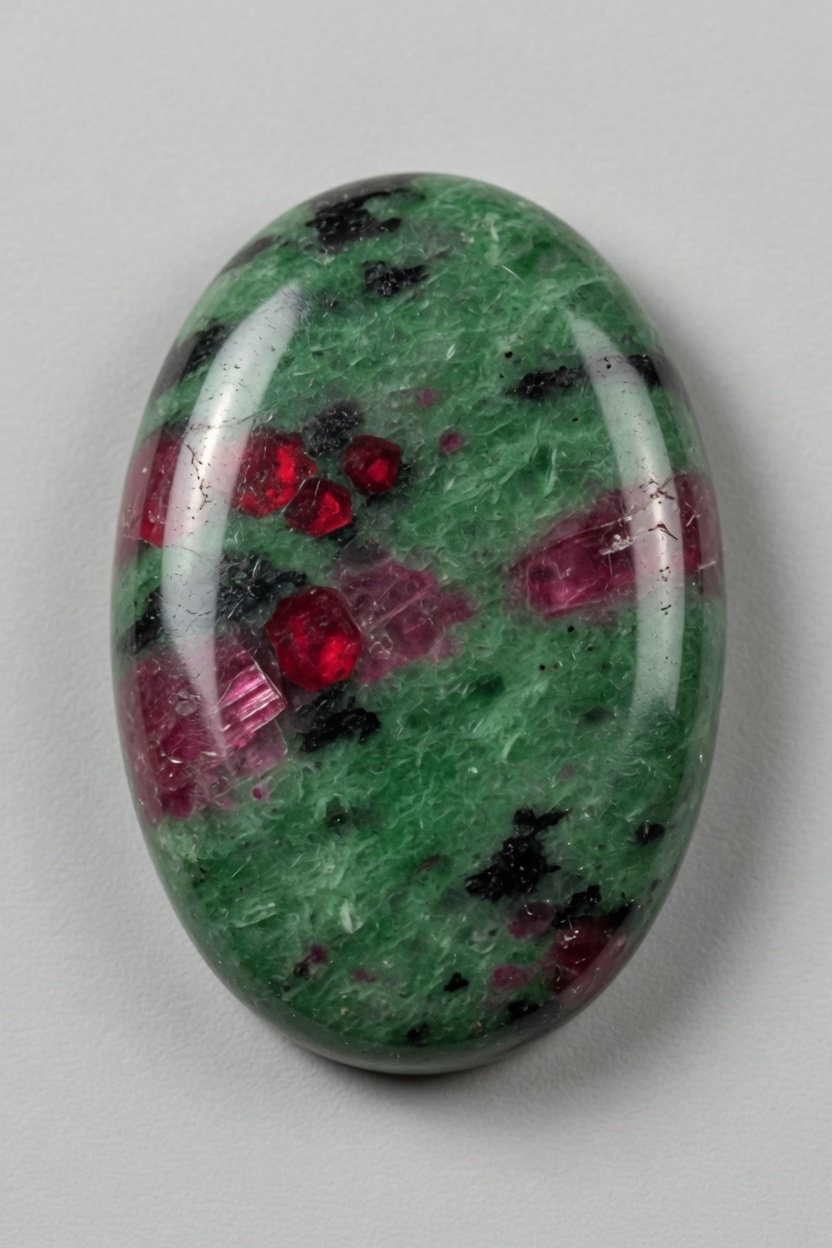
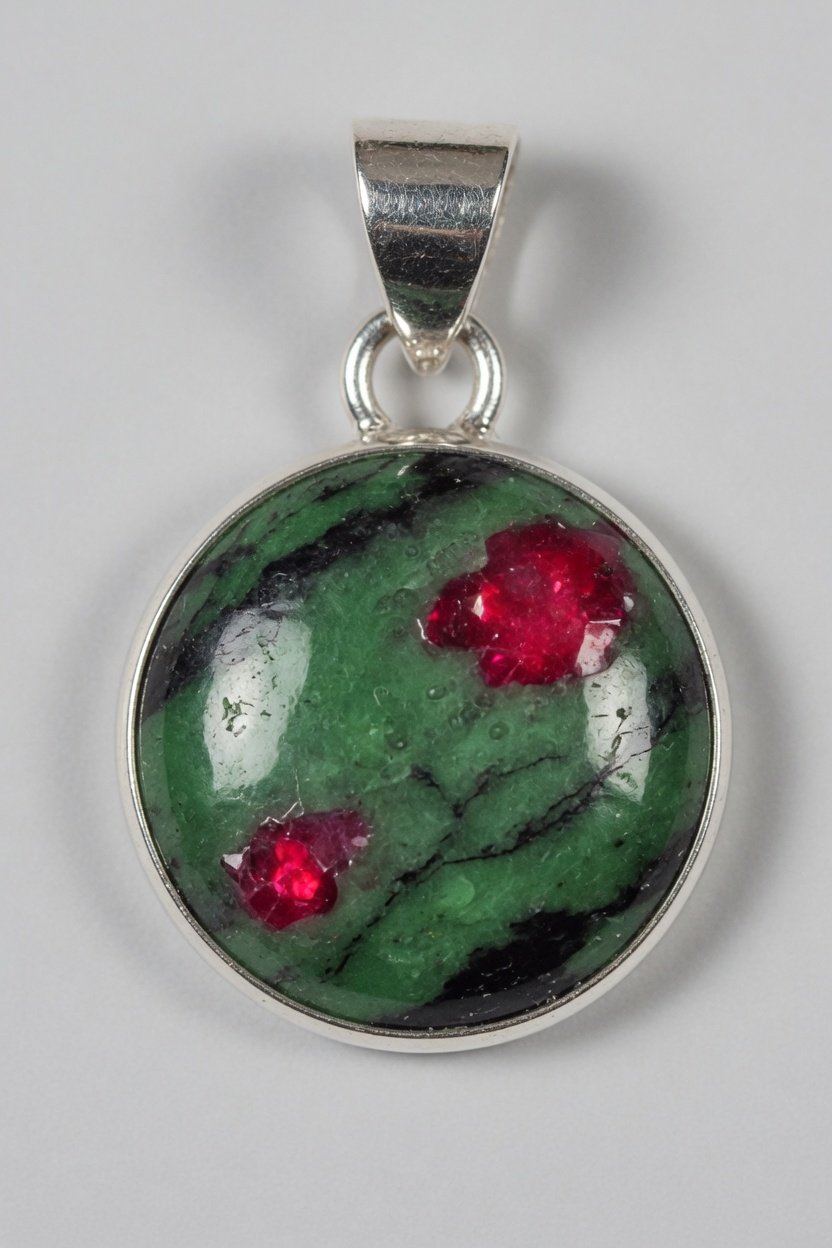
In Jewelry and Silversmithing Anyolite’s opaque character makes it ideal for cabochon cuts that showcase ruby stars within the green matrix. Silversmiths typically choose low-profile bezels or southwestern stamped settings that protect the stone’s edges without competing with its color play. The differing hardness between ruby and zoisite requires slow, even polishing with diamond compounds to prevent pitting. Always set the stone after all soldering is complete. Avoid prolonged exposure to direct sunlight or sudden temperature changes that could stress the composite structure.
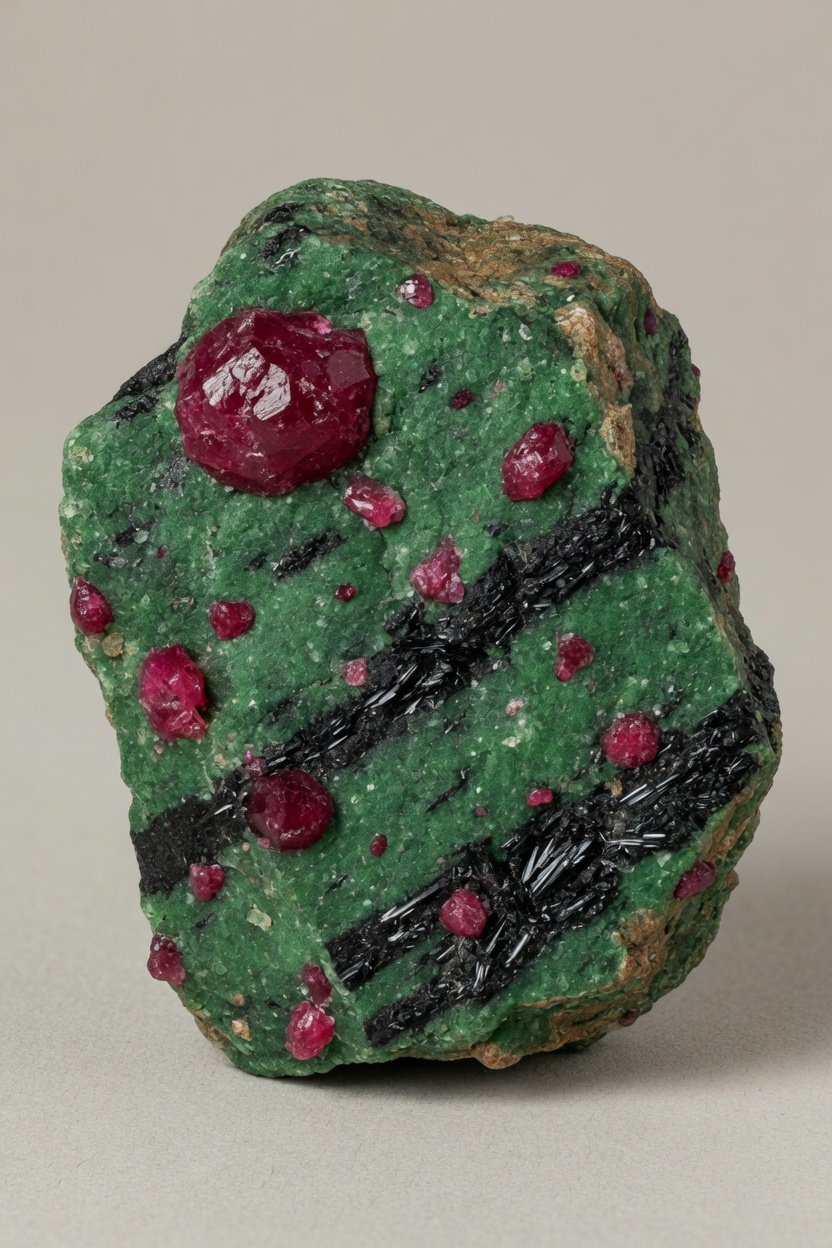
Identifying Anyolite (Ruby-Zoisite) in the Field In rough form the stone appears as dark green rock shot through with bright red crystalline blebs and occasional black veins. A streak test yields white, while a hardness point easily scratches the zoisite but leaves ruby untouched. Under magnification the ruby crystals show hexagonal outlines and glassy fracture surfaces. These visual markers distinguish Anyolite from dyed marble or composite imitations sometimes sold under similar names.
Quick Facts
Common names: Anyolite, Ruby Zoisite, Ruby in Zoisite
Chemical formula: (Ca₂Al₃(SiO₄)(Si₂O₇)O(OH)) + Al₂O₃ (ruby inclusions)
Mohs hardness: 6.5–7 (variable)
Specific gravity: 3.1–3.4
Color: Green matrix with red ruby crystals and black hornblende
Crystal system: Orthorhombic (zoisite) / Trigonal (ruby)
Luster: Vitreous to pearly
Transparency: Opaque to translucent
Common cuts: Cabochon, freeform, beads
Common treatments: None (occasional stabilization)
Best silver setting: Classic Silver Bezel Pendant
Birthstone month (if any): None
Main sources: Tanzania
Meaning & Intentions
VITALITY
Anyolite supports physical energy and endurance by anchoring the wearer to the stabilizing green zoisite while the ruby inclusions supply focused drive. Silversmiths set the stone in protective bezels so the composite remains intact during daily wear, allowing the contrasting colors to serve as a constant reminder of balanced strength.
Chakra: Root — grounding and physical presence CLARITY
The red ruby crystals within green zoisite act as focal points that help wearers distinguish priorities and cut through mental fog. When mounted in silver that frames the natural pattern without distraction, the stone becomes a wearable tool for decision-making and honest self-assessment.
Chakra: Third Eye — insight and perception PROTECTION
Anyolite creates an energetic boundary by combining zoisite’s shielding qualities with ruby’s assertive presence, discouraging unwanted influences. Handcrafted silver bezels that fully enclose the edges keep the stone secure while the visible matrix serves as a visual talisman of personal boundaries.
Chakra: Root — security and resilience Affirmation: "I stand grounded in clear purpose and protected strength." AT A GLANCE: Chakra: Root Element: Earth Energy: Receptive Zodiac: Aries Planet: Mars Affirmation: "I stand grounded in clear purpose and protected strength."
Related Stones
Explore more stones from the Gemstone Library: Mahenge Spinel · Red Jasper · Bixbite (Red Beryl)