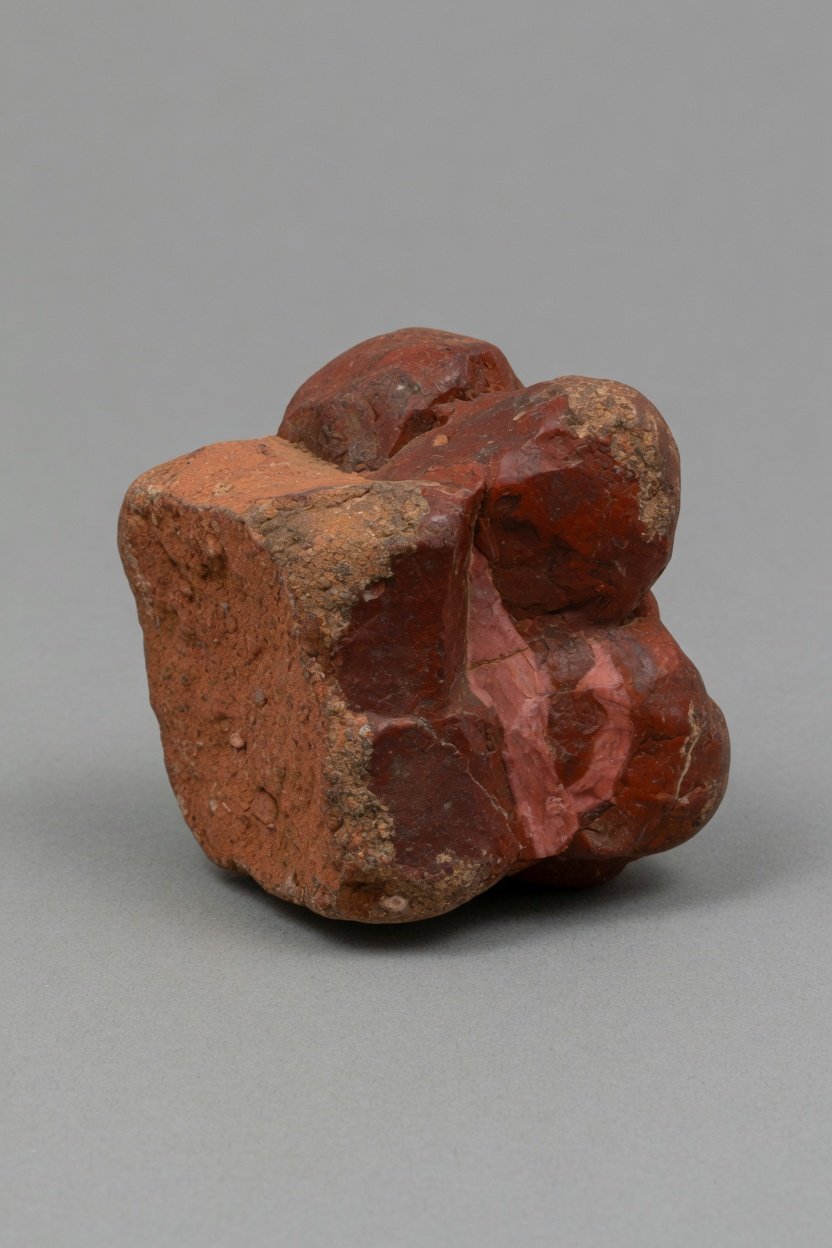
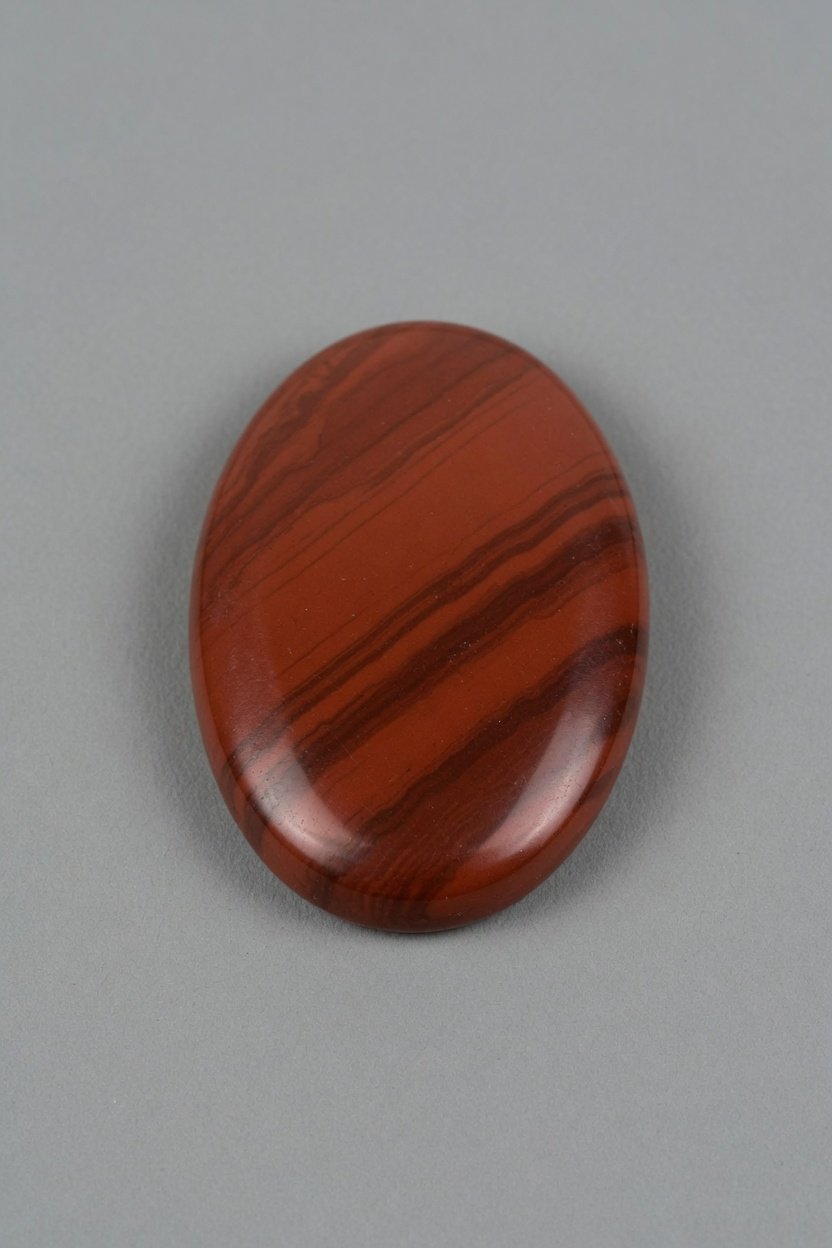
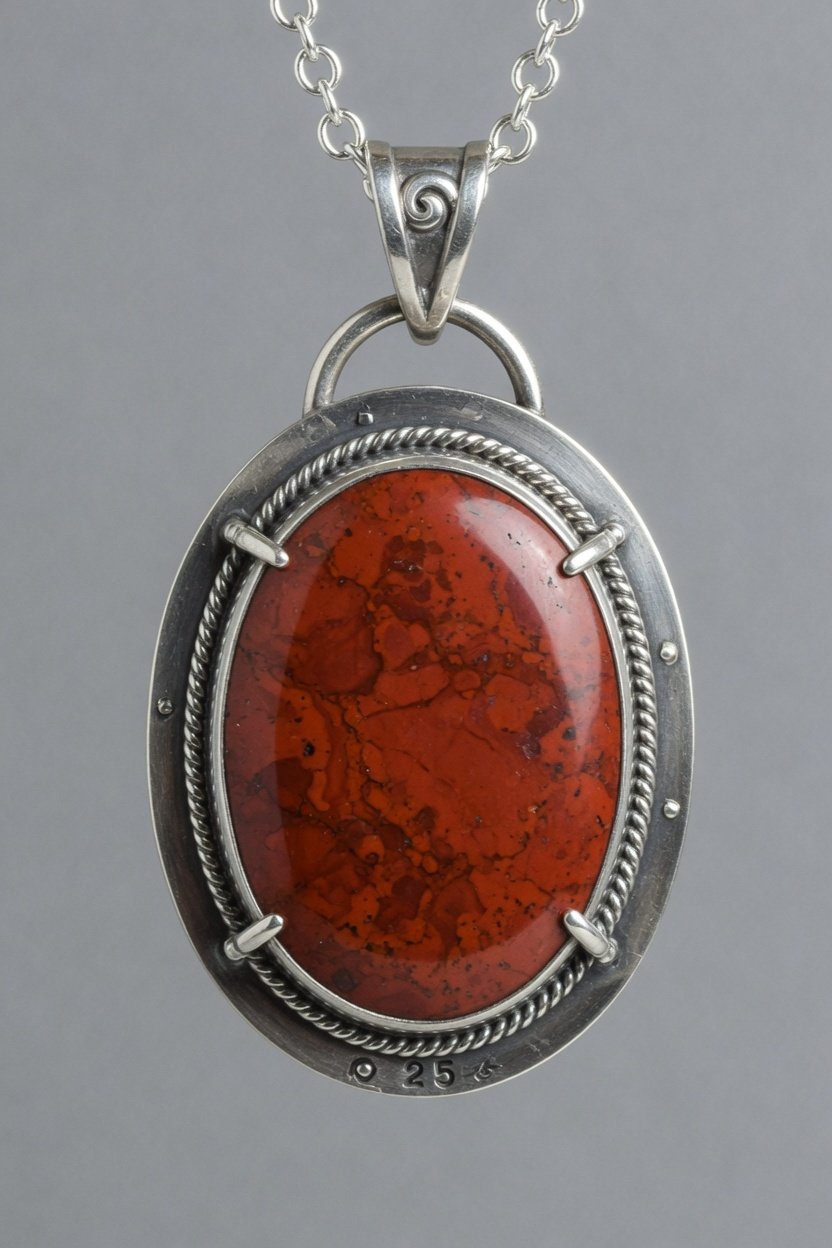
Red Jasper emerges from ancient volcanic and sedimentary layers as a dense, iron-rich quartz that has long drawn silversmiths with its steady red tones and reliable workability. Its opaque body accepts a high polish that reveals subtle zoning and veining without ever becoming transparent, making it an ideal partner for sterling silver in both statement and everyday pieces. Silversmiths always set Red Jasper after all soldering and pickling steps are complete to protect the stone surface.
Physical Properties Red Jasper registers 6.5–7 on the Mohs scale and exhibits a specific gravity between 2.58 and 2.91, properties that place it comfortably among the tougher chalcedony varieties. Its trigonal crystal structure produces a vitreous to dull luster that becomes richly satiny once polished, while remaining fully opaque even in thin sections. The iron oxide inclusions responsible for its signature red color also contribute to a slightly higher density than clear quartz, giving finished pieces a reassuring weight in the hand. Care cautions include avoiding prolonged ultrasonic cleaning and storing pieces separately to prevent abrasion against harder gems.
Origin and Sourcing Major commercial deposits occur in the United States, India, Brazil, and Russia, where Red Jasper forms in veins and nodules within basalt and iron-rich sediments. Open-pit operations and selective hard-rock extraction supply most lapidary material, with miners sorting nodules by color intensity before transport to cutting centers. Consistent supply from these regions allows silversmithing schools to maintain reliable stock for student projects without relying on rare or heavily treated material.
History and Significance Ancient cultures across the Mediterranean and Near East carved Red Jasper into seals, amulets, and architectural inlays, valuing its durability and bold coloration. Medieval European lapidaries recommended it for protective talismans carried by travelers and warriors, while Native American artisans incorporated local varieties into ceremonial objects. Its steady presence in archaeological records underscores a long-standing association with physical endurance and connection to the earth.
In Jewelry and Silversmithing Red Jasper’s toughness allows silversmiths to shape and polish cabochons that sit securely in bezels or flush settings without risk of chipping during final assembly. Because the stone is opaque, designers often orient patterns to follow the curve of a pendant or ring, creating visual flow that complements hand-stamped silver textures. Setting occurs only after soldering, pickle baths, and patina application to preserve the polished surface. Occasional care involves gentle wiping with a soft cloth and avoiding harsh chemicals that could dull the luster over time.
Identifying Red Jasper in the Field In outcrops, Red Jasper appears as dense, red to brick-colored masses with a waxy fracture and occasional white or brown banding from iron segregation. Field tests include scratching a steel knife across an inconspicuous area—true Red Jasper resists the blade—followed by checking for conchoidal fracture patterns rather than the splintery breaks seen in some ironstones. Fresh surfaces show a uniform red interior without the translucency or asterism found in other quartz family members.
Quick Facts
Common names: Red Jasper, Jasper
Chemical formula: SiO₂
Mohs hardness: 6.5–7
Specific gravity: 2.58–2.91
Color: Brick red to deep red, often with banding or veining
Crystal system: Trigonal
Luster: Vitreous to dull
Transparency: Opaque
Common cuts: Cabochon
Common treatments: None
Best silver setting: Bezel
Birthstone month (if any): None
Main sources: United States, India, Brazil, Russia
Meaning & Intentions
GROUNDING
Red Jasper anchors scattered energy and supports steady focus during long silversmithing sessions or daily wear. Artisans place a polished cabochon on the workbench to maintain calm concentration while forming and setting metal around the stone. Its dense iron-rich structure is believed to reinforce physical stamina and connection to the present moment.
Chakra: Root — stability and physical presence INSIGHT
The stone’s layered patterns encourage quiet observation, helping wearers notice subtle details in both their craft and surroundings. Silversmiths sometimes keep a small polished piece nearby while planning designs, allowing its visual rhythms to spark new ideas. Over time the steady red tones are thought to sharpen perception without overstimulation.
Chakra: Sacral — creative awareness and emotional balance STABILITY
Red Jasper is used to build lasting resilience, its solid mass symbolizing endurance through repeated heating, hammering, and finishing cycles in the workshop. Practitioners carry or wear the stone during challenging projects to maintain consistent effort. Its unchanging color through polishing is said to mirror inner steadiness.
Chakra: Root — enduring foundation and security Affirmation: "I remain steady and connected." AT A GLANCE: Chakra: Root Element: Earth Energy: Receptive Zodiac: Aries Planet: Mars Affirmation: "I remain steady and connected."
Related Stones
Explore more stones from the Gemstone Library: Picture Jasper · Moss Agate · Tourmaline