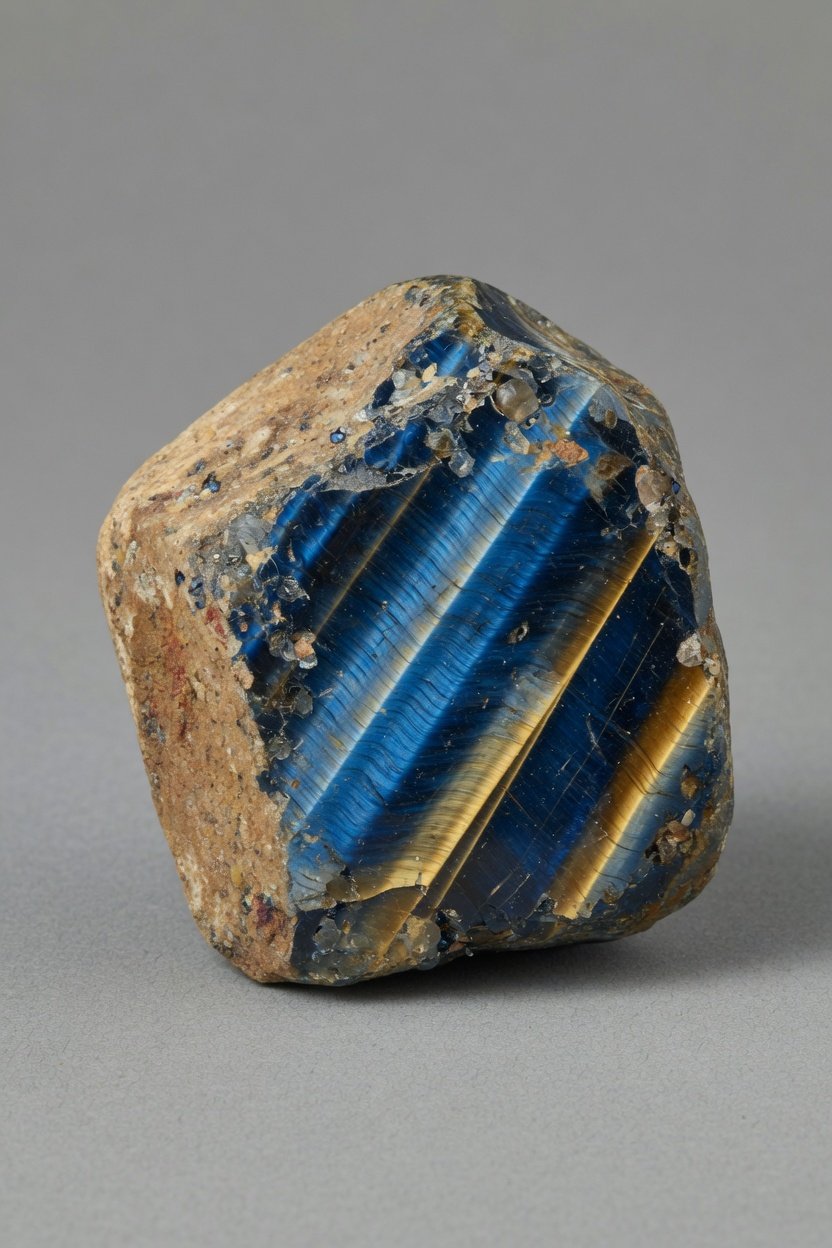
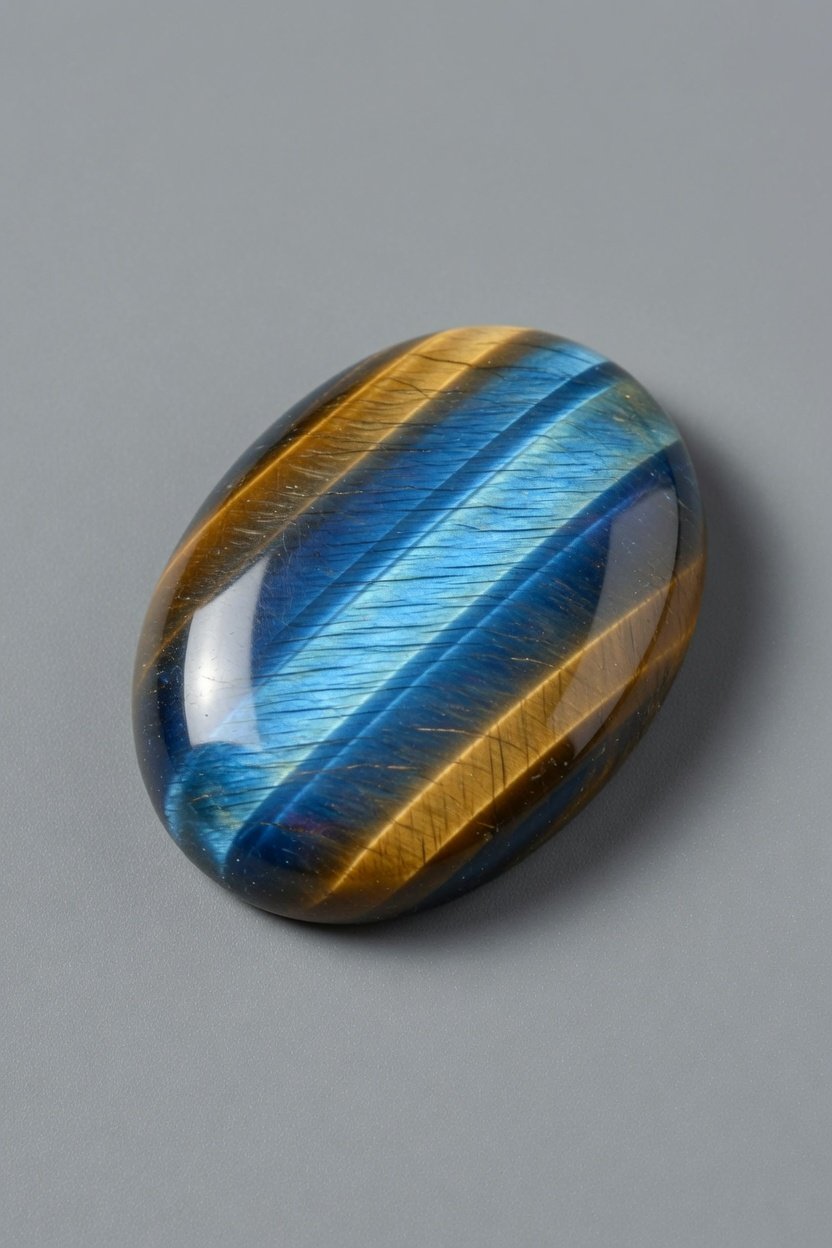
Falcon's Eye (Blue Tiger's Eye) draws the eye with its deep indigo chatoyancy that ripples like silk under light, evoking the sharp focus of a raptor scanning distant terrain. This quartz variety transforms ordinary silversmithing projects into pieces that shift and shimmer with every movement, rewarding careful orientation during setting. Its natural banding and subtle golden highlights create depth that pairs naturally with sterling silver.
Physical Properties Falcon's Eye (Blue Tiger's Eye) is a pseudomorph of quartz after crocidolite, retaining the original fibrous structure that produces its signature chatoyancy. It registers 7 on the Mohs scale, making it durable for daily wear yet requiring a protective bezel to guard the silky surface from scratches. Specific gravity falls between 2.64 and 2.71, and the stone remains fully opaque with a vitreous to silky luster. Always set the stone after all soldering is complete and allow the piece to cool completely before insertion; avoid prolonged exposure to strong detergents or ultrasonic cleaners that could dull the fibrous bands.
Origin and Sourcing Primary deposits occur in South Africa’s Northern Cape, with additional material from Namibia and Western Australia. The blue coloration arises when crocidolite fibers oxidize partially before quartz replacement, creating the distinctive indigo zones that distinguish Falcon’s Eye from golden Tiger’s Eye. Miners extract the stone from hard-rock veins using conventional drilling and blasting, then sort rough by color intensity before transport to lapidary workshops.
History and Significance Ancient cultures valued similar chatoyant quartz for protective amulets, though Falcon’s Eye gained modern recognition only after South African miners began separating the blue variety in the mid-twentieth century. Its cool tone contrasted with the warmer golden form, prompting jewelers to associate it with clarity of vision and calm resolve. Contemporary silversmiths continue this tradition by cutting oriented cabochons that emphasize the stone’s linear banding.
In Jewelry and Silversmithing The stone’s fibrous structure produces a single bright band of light when properly oriented, so cutters align the fibers perpendicular to the cabochon length. Sterling silver bezels provide the best contrast and security, allowing the blue sheen to dominate without competing prongs. Always set the stone after all soldering is complete and allow the piece to cool completely before insertion; store finished work away from direct sunlight to prevent any gradual fading of the golden highlights within the blue matrix.
Identifying Falcon's Eye (Blue Tiger's Eye) in the Field In rough form the stone shows a dull gray-blue exterior with occasional golden streaks where fibers remain exposed. A quick test involves rotating the specimen under a single light source; true Falcon’s Eye displays a sharp, moving band rather than scattered sparkle. Broken surfaces reveal the straight, parallel fibers characteristic of replaced crocidolite, distinguishing it from dyed agate or glass imitations that lack this internal structure.
Quick Facts
Common names: Falcon's Eye, Blue Tiger's Eye
Chemical formula: SiO2
Mohs hardness: 7
Specific gravity: 2.64–2.71
Color: Deep blue with golden chatoyant bands
Crystal system: Trigonal
Luster: Silky to vitreous
Transparency: Opaque to translucent
Common cuts: Cabochon
Common treatments: None typical
Best silver setting: Bezel
Birthstone month (if any): None
Main sources: South Africa, Namibia, Australia
Meaning & Intentions
PROTECTION
Falcon's Eye (Blue Tiger's Eye) is carried to form a quiet energetic shield around the wearer, its fibrous structure believed to deflect scattered attention and maintain focus during demanding tasks. Silversmiths often set the stone in sturdy bezels so the chatoyant band remains intact and the protective quality stays physically anchored.
Chakra: Root grounding and stability INSIGHT
Worn during reflection, Falcon's Eye (Blue Tiger's Eye) sharpens perception by mirroring the stone’s own shifting light, encouraging clear observation of patterns in daily life. The cool blue tone supports calm analysis, making it a favored choice for those who design or negotiate complex work.
Chakra: Third eye intuitive vision STABILITY
The stone’s dense quartz body and linear banding anchor scattered energy, helping maintain steady progress on long-term projects or commitments. When set in silver, the cool metal and blue stone together reinforce a sense of enduring balance.
Chakra: Solar plexus personal power Affirmation: "I see clearly and remain steady." AT A GLANCE: Chakra: Third eye intuitive vision Element: Earth Energy: Receptive Zodiac: Capricorn Planet: Saturn Affirmation: "I see clearly and remain steady."
Related Stones
Explore more stones from the Gemstone Library: Prehnite · Picture Jasper · Tourmaline