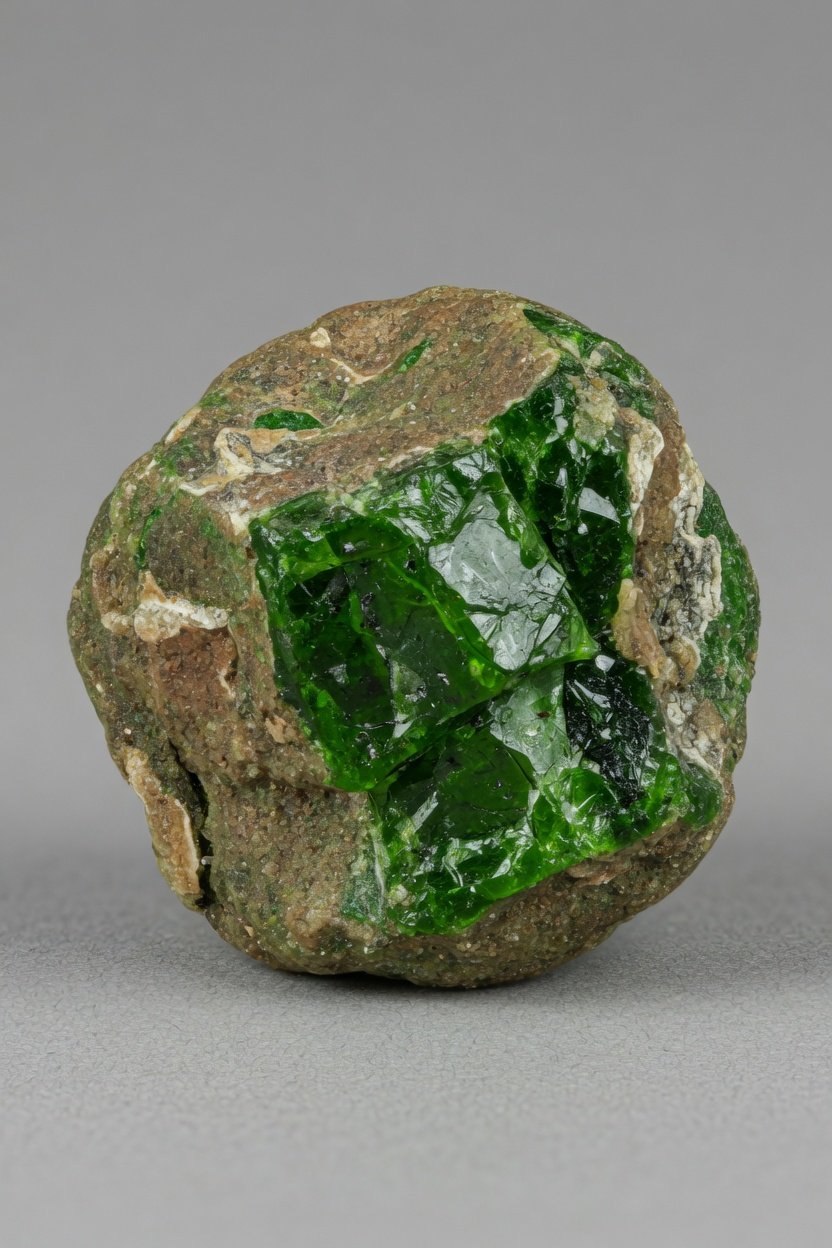
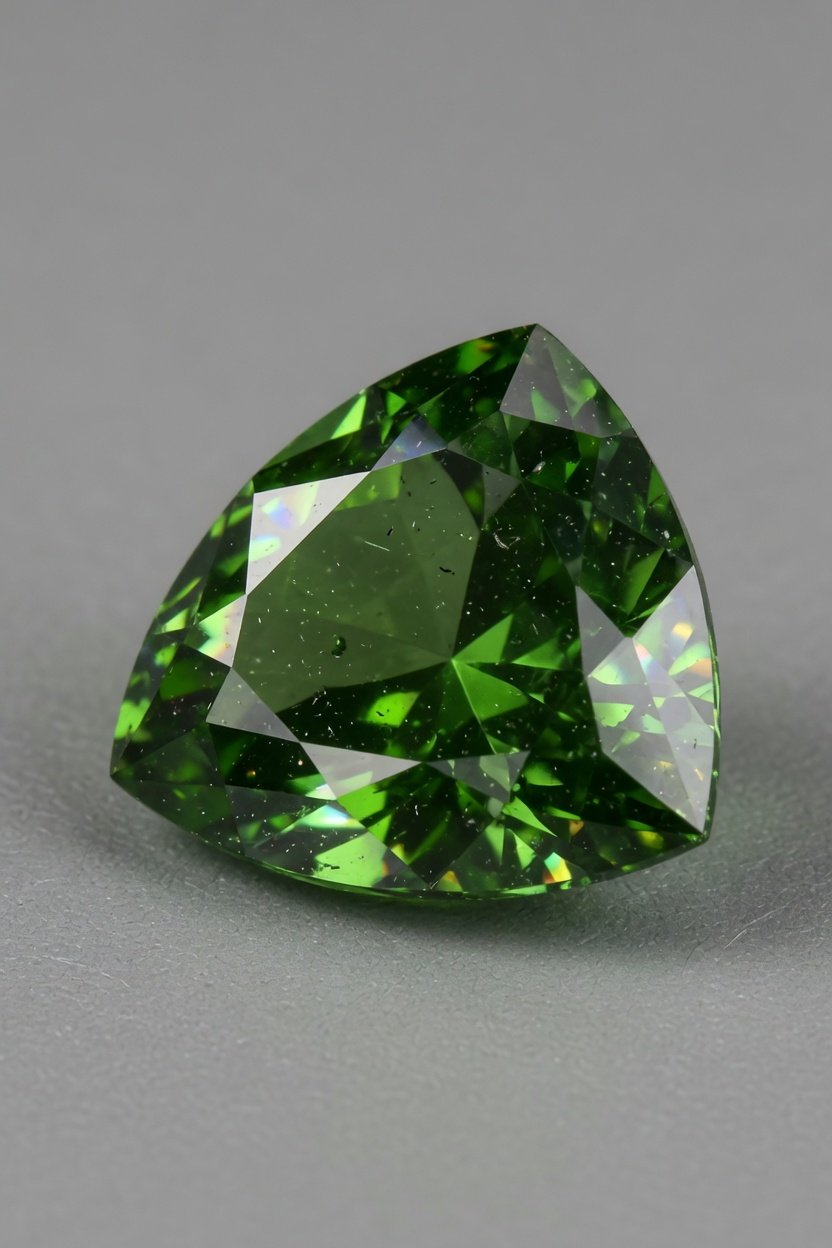
Chrome Diopside emerges from the earth as a vivid emerald-green flash, its chromium-driven color catching light like a hidden forest floor revealed after rain. This silicate mineral forms in metamorphic and igneous settings where chromium substitutes into the diopside structure, producing a stone prized for its intense saturation and moderate durability. Silversmiths value it for its ability to bring a natural, leafy brilliance to handcrafted pieces when handled with care.
Physical Properties Chrome Diopside registers 5 to 6 on the Mohs scale, making it softer than many common jewelry stones yet still workable with proper technique. Its specific gravity hovers near 3.3, and it displays a vitreous to slightly greasy luster in well-polished specimens. The stone shows distinct cleavage in two directions, so cutters orient facets to minimize the risk of splitting. Always set Chrome Diopside after all soldering is complete to avoid heat damage that can cloud or fracture the crystal lattice; ultrasonic and steam cleaners are generally safe once the piece is finished, but avoid prolonged exposure to high heat or sudden temperature changes.
Origin and Sourcing Primary deposits lie in the Ural Mountains and Siberia of Russia, where miners extract the mineral from hard-rock veins using adits and careful blasting. Additional sources include Tanzania, South Africa, and parts of Canada and Finland. Rough material is typically recovered in modest sizes, with the finest chromium-rich crystals coming from metamorphic skarns that yield the deepest green hues. Ethical sourcing emphasizes traceable lots from these regions to ensure minimal environmental impact during extraction.
History and Significance Known since the nineteenth century but popularized in jewelry only in recent decades, Chrome Diopside gained attention when Russian miners began cutting select crystals for the gem trade. Its color links it symbolically to renewal and growth, yet it carries no ancient mythic tradition comparable to emerald. Modern collectors appreciate its natural intensity as an alternative to more expensive green gems, and its appearance in contemporary silversmithing reflects a broader interest in regionally sourced, untreated stones.
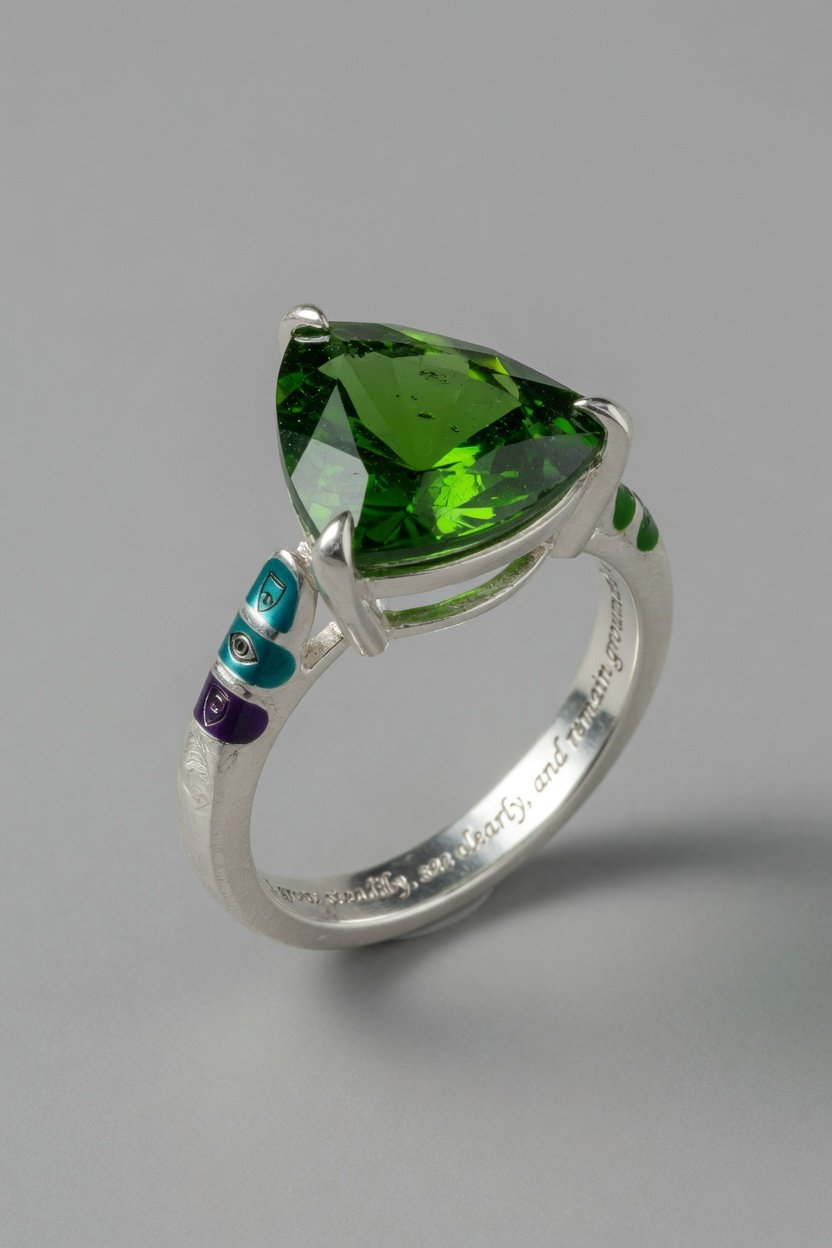
In Jewelry and Silversmithing The stone’s vivid green pairs beautifully with sterling silver, especially in bezel or prong settings that protect its edges while allowing light to pass through the facets. Because of its cleavage and moderate hardness, jewelers set Chrome Diopside only after all torch work is finished, then polish the surrounding metal to a mirror finish. Its strong pleochroism means cutters align the table to the richest green direction, producing a lively play of color that shifts slightly with movement. Care cautions include storing pieces separately to prevent scratches and cleaning with mild soap and warm water rather than harsh chemicals.
Identifying Chrome Diopside in the Field In rough form the mineral appears as short prismatic crystals or granular masses within dark host rock, showing a distinctive bottle-green color even in small fragments. A streak test yields white, and the stone lacks the fibrous texture of serpentine or the higher hardness of tourmaline. Under magnification, chromium-rich specimens may display fine needle-like inclusions aligned with the crystal axes. Field identification is confirmed by the combination of color, moderate hardness, and two-directional cleavage that produces stepped fracture surfaces.
Quick Facts
Common names: Chrome Diopside, Chromium Diopside
Chemical formula: CaMgSi₂O₆ with Cr substitution
Mohs hardness: 5–6
Specific gravity: 3.22–3.38
Color: Vivid emerald green to dark green
Crystal system: Monoclinic
Luster: Vitreous
Transparency: Transparent to translucent
Common cuts: Faceted oval, round, emerald
Common treatments: None (rarely heated)
Best silver setting: Bezel or prong after soldering
Birthstone month (if any): None
Main sources: Russia, Tanzania, South Africa, Canada
Meaning & Intentions
GROWTH
Chrome Diopside is carried or worn to support steady personal expansion and connection to natural cycles. Silversmiths set the stone in simple pendants or rings that rest near the heart, allowing its green flash to serve as a daily reminder of incremental progress. The crystal’s chromium content is said to anchor intentions of renewal without overwhelming the wearer.
Chakra: Heart — centers compassion and balanced growth CLARITY
The stone’s transparent green depths are used to sharpen focus during decision-making or study. Placed on a desk or worn as a pendant, Chrome Diopside is believed to cut through mental fog, helping the user distinguish essential details from distractions while maintaining calm attention.
Chakra: Third Eye — supports insight and clear perception PROTECTION
In silversmithing traditions Chrome Diopside is set into protective talismans that shield against scattered energy. The stone’s solid structure and deep color are thought to create a boundary, allowing the wearer to remain grounded while navigating demanding environments or relationships.
Chakra: Root — grounds and stabilizes personal boundaries Affirmation: "I grow steadily, see clearly, and remain grounded." AT A GLANCE: Chakra: Heart Element: Earth Energy: Receptive Zodiac: Virgo, Capricorn Planet: Venus Affirmation: "I grow steadily, see clearly, and remain grounded."
Related Stones
Explore more stones from the Gemstone Library: Prasiolite · Aventurine · Chrysoprase