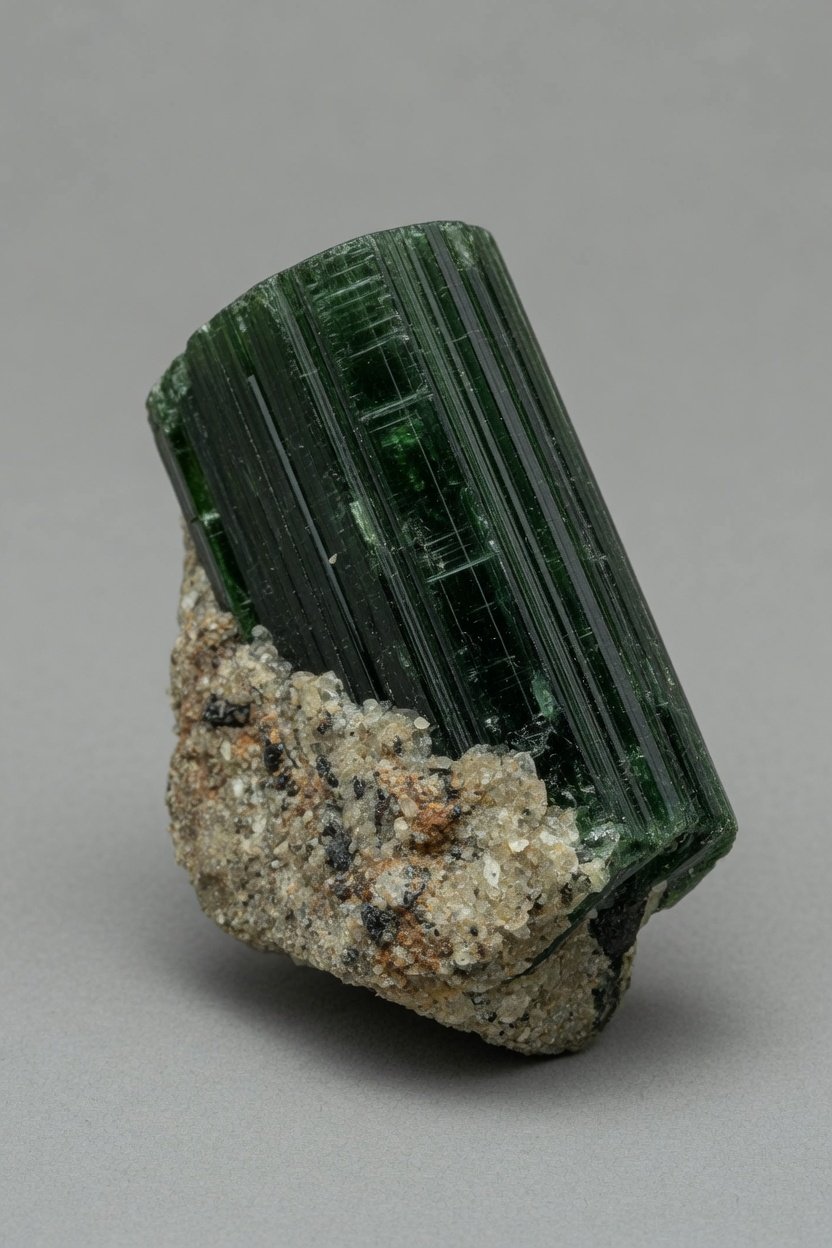
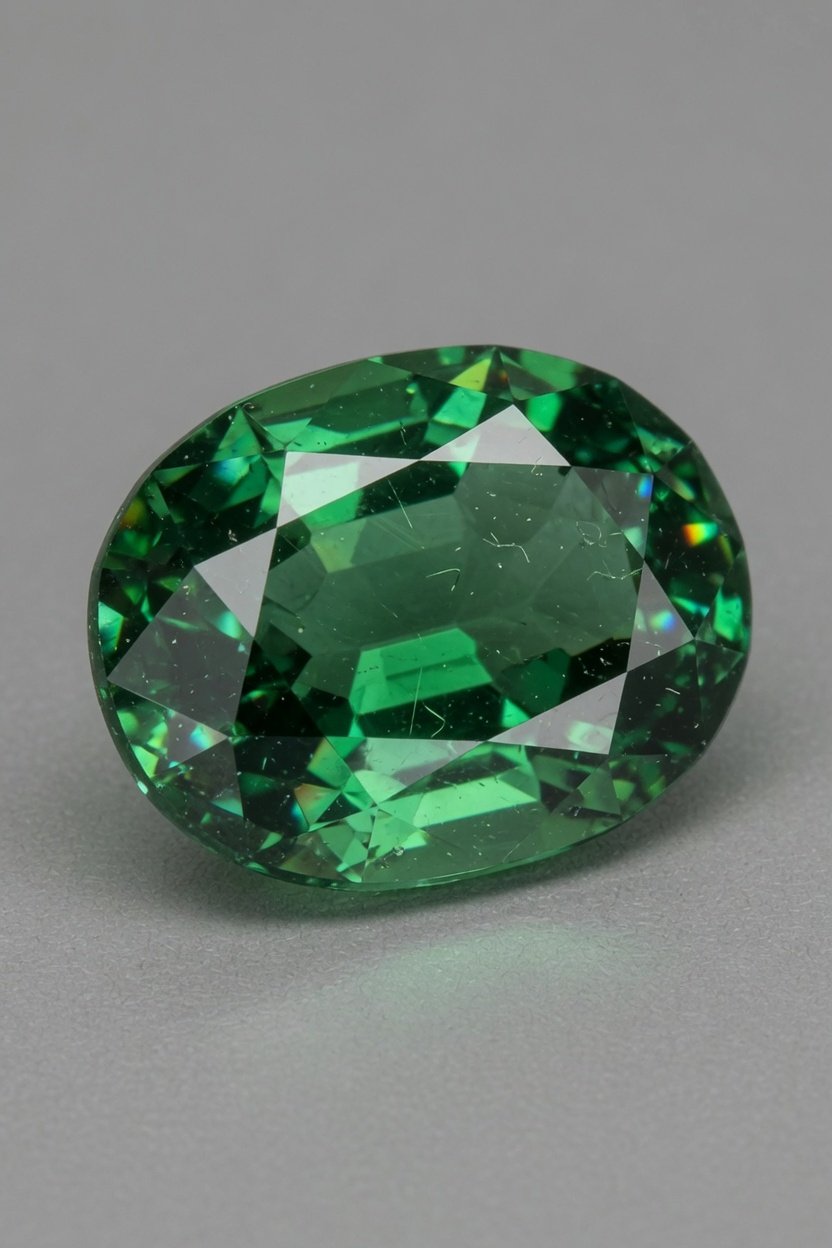
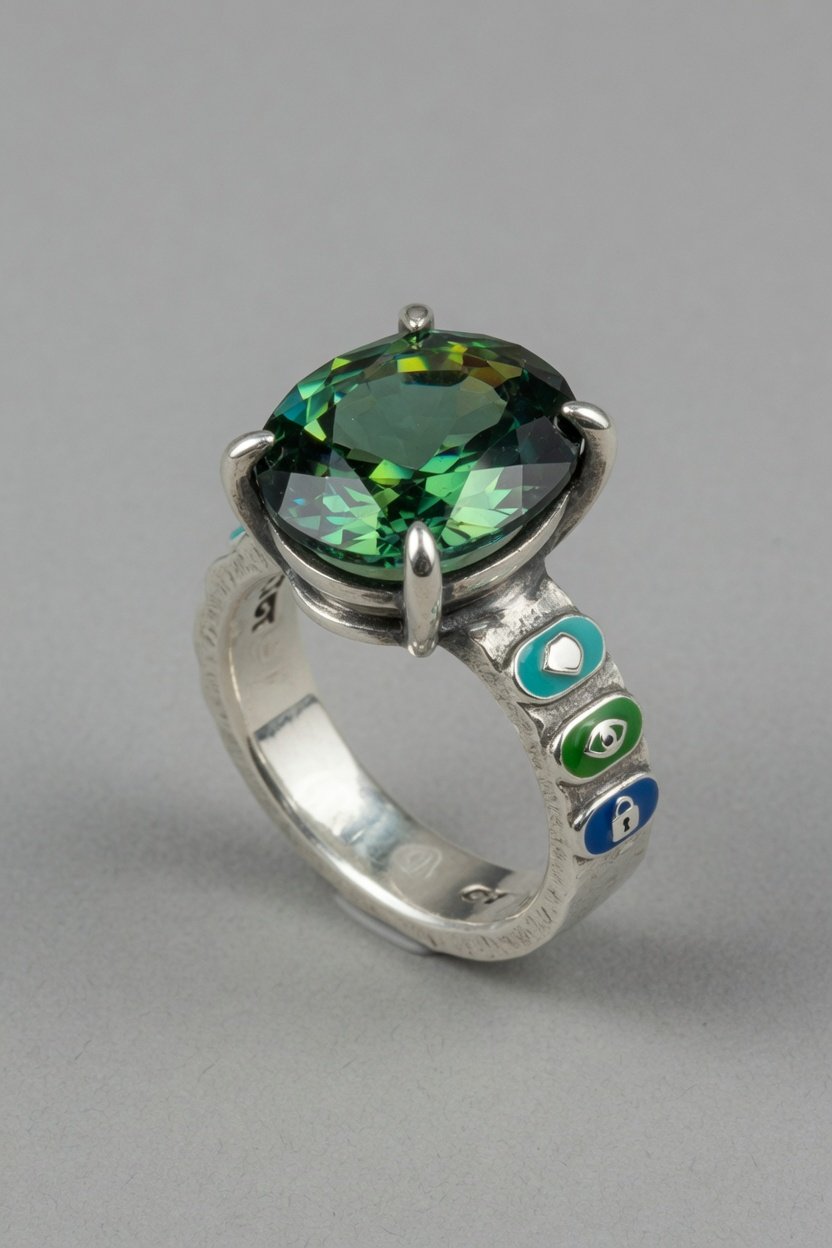
Chrome Tourmaline emerges from the earth as a striking green gem whose saturated color and lively brilliance immediately distinguish it among the tourmaline family. Formed deep within chromium-rich pegmatites, the stone carries an intense emerald-like hue that shifts subtly under different lights, revealing flashes of blue-green and yellow-green that jewelers prize for their depth. Its optical fire and durability make it a favored choice once the metalwork is complete.
Physical Properties Chrome Tourmaline belongs to the elbaite species of the tourmaline group, colored by trace chromium and vanadium. It registers 7 to 7.5 on the Mohs scale and exhibits a vitreous luster with strong pleochroism that produces three distinct color directions in a single crystal. The stone shows moderate birefringence and a specific gravity near 3.06. Because it contains no water of crystallization and tolerates moderate heat, the gem is set into silver only after all soldering and pickling steps are finished; ultrasonic cleaners are avoided to prevent damage to any surface-reaching fractures.
Origin and Sourcing Primary commercial deposits lie in the Merelani Hills of Tanzania, where chromium-rich metamorphic rocks host narrow veins of gem tourmaline. Smaller quantities appear in Kenya’s Voi region and in limited Brazilian pegmatites. Miners extract the crystals from hard-rock tunnels using hand tools and controlled blasting, then sort the rough on-site to preserve color zones. Rough parcels travel to cutting centers where master lapidaries orient each crystal to maximize the rich green face-up color.
History and Significance Although tourmaline has been known since antiquity, the chromium-colored variety was recognized only in the late twentieth century when Tanzanian miners encountered unusually vivid green crystals. The stone quickly earned favor among collectors for its rarity and among designers for its ability to substitute for more expensive emerald in silver settings. Its association with vitality and growth stems from its forest-green color rather than any ancient legend, yet modern lapidaries value it for the same reason earlier artisans prized green gems: it evokes renewal without the fragility of emerald.
In Jewelry and Silversmithing Chrome Tourmaline’s transparency and crisp facets suit contemporary silver designs that emphasize clean lines. Because the stone is set only after soldering is complete, silversmiths prepare bezels or prongs in advance, then carefully seat the faceted gem and burnish the metal to secure it without heat. Its toughness supports everyday wear in rings and pendants, yet care instructions advise removing pieces before heavy impact or prolonged sunlight to prevent gradual fading of the chromium-induced color.
Identifying Chrome Tourmaline in the Field In rough form the mineral shows a distinctive deep green with a slightly oily surface luster and longitudinal striations typical of tourmaline. A simple dichroscope reveals strong trichroism: green, yellowish-green, and bluish-green directions. Specific gravity testing separates it from green beryl, while its lack of cleavage distinguishes it from spodumene. Once faceted, the stone’s high refractive index and vivid saturation confirm its identity even before laboratory analysis.
Related Stones
Explore more stones from the Gemstone Library: Agate · Alexandrite · Amazonite