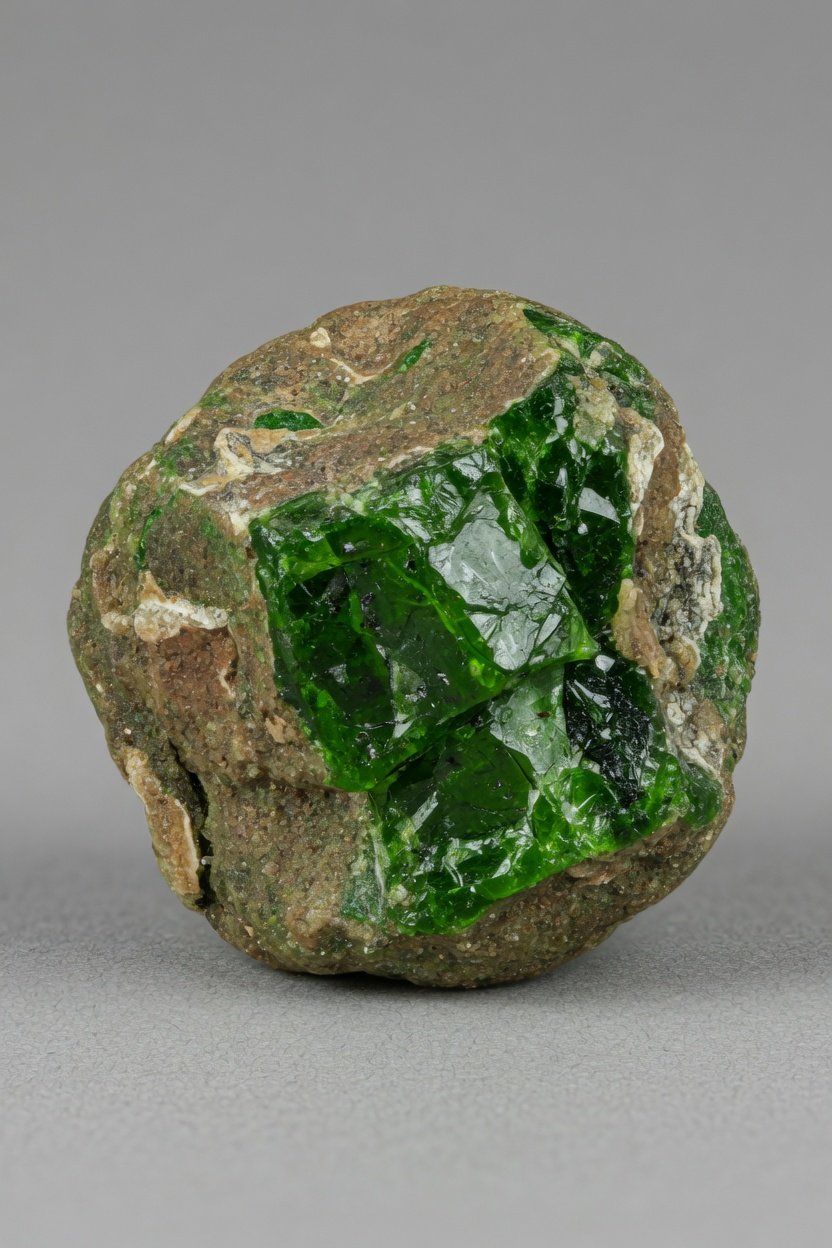
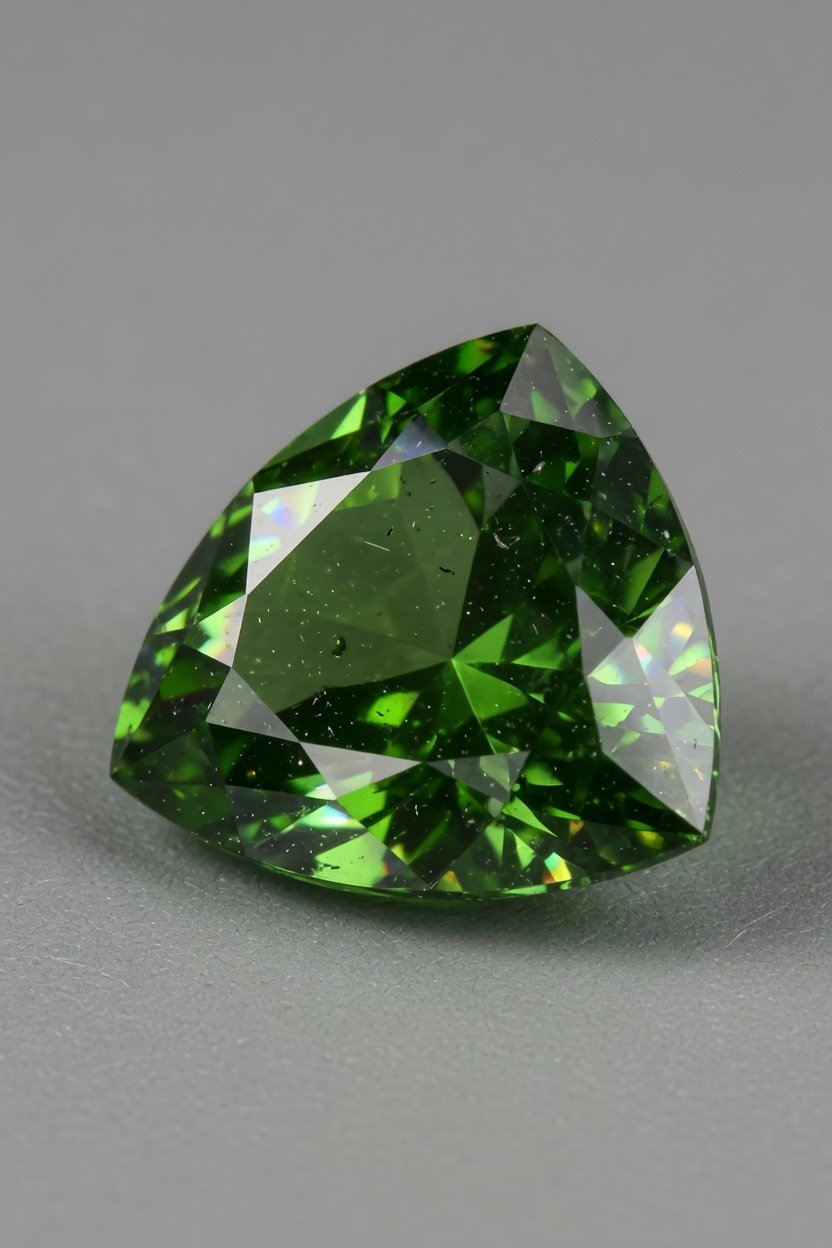
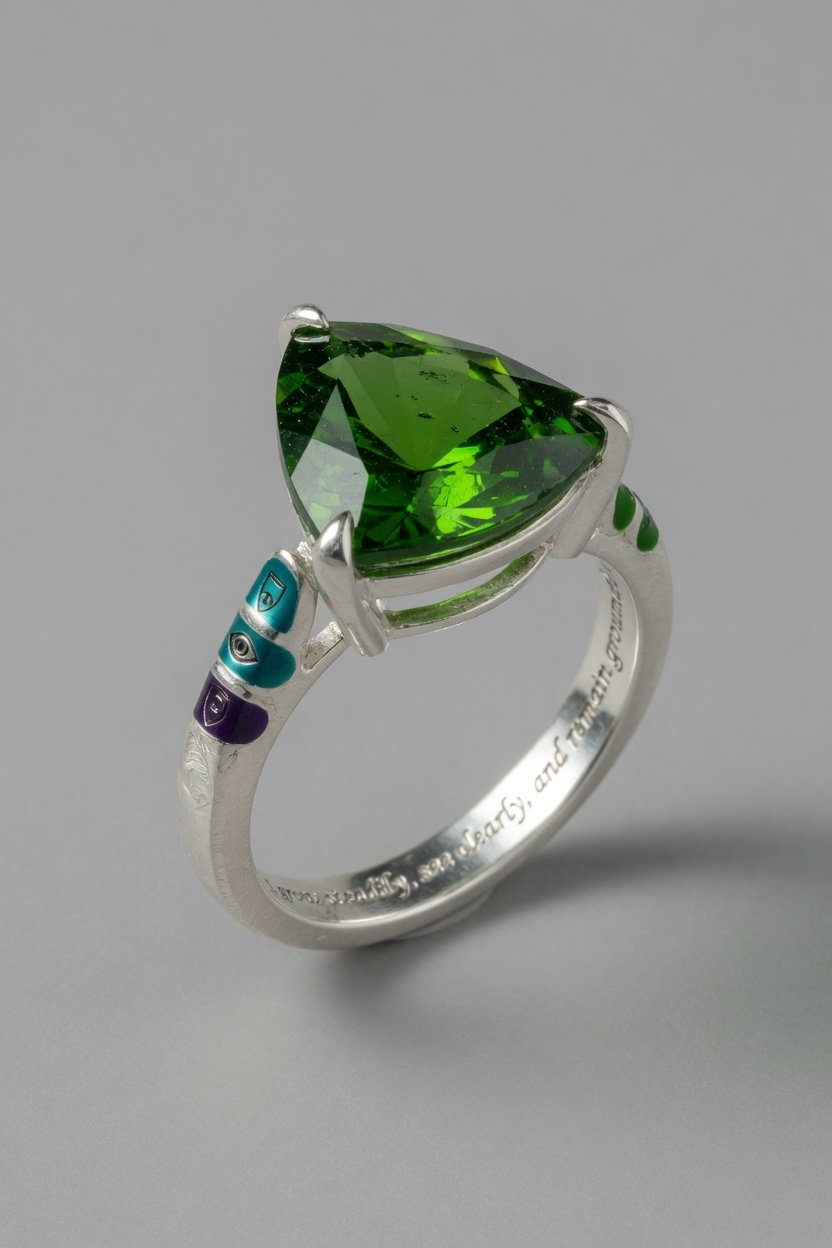
Diopside emerges from the earth in vivid flashes of green that catch the light like forest canopies at dawn. This calcium magnesium silicate forms in metamorphic and igneous environments, producing crystals whose rich color and clarity have drawn the attention of lapidaries for centuries. Its presence in jewelry today reflects both ancient geological processes and modern craftsmanship that honors the stone’s natural character.
Physical Properties Diopside crystallizes in the monoclinic system and typically displays a vitreous to slightly greasy luster. Hardness ranges from 5 to 6 on the Mohs scale, while specific gravity sits between 3.22 and 3.38. Colors span from pale yellowish-green to deep chrome green, with the most valuable material showing intense saturation and transparency. Cleavage is perfect in two directions, producing splintery fracture that requires careful handling during cutting and setting. Always set the stone after all soldering is complete and keep heat sources well away from the finished piece; prolonged exposure to high temperatures can cause cracking along cleavage planes. Clean only with warm soapy water and avoid ultrasonic or steam cleaners that may exploit existing fractures.
Origin and Sourcing Primary commercial sources include Russia’s Ural Mountains, where chrome diopside occurs in association with diamond-bearing kimberlites, as well as deposits in Italy, Canada, and South Africa. Mining is predominantly hard-rock extraction from metamorphic skarns and pegmatites. Miners follow narrow veins through adits, using controlled blasting and hand sorting to recover intact crystals. Rough material is then transported to cutting centers where lapidaries orient the stone to maximize color along the principal optical axis.
History and Significance Ancient Romans and Greeks collected diopside crystals from Mediterranean outcrops, often associating the green hue with fertility and renewal. In the nineteenth century Russian mineralogists formally described the species, noting its occurrence alongside other pyroxenes. During the twentieth century chrome diopside from Siberia entered the gem trade, prized for its emerald-like color at a fraction of the cost. Contemporary silversmiths continue this lineage, selecting diopside for pieces that celebrate both geological rarity and accessible beauty.
In Jewelry and Silversmithing Transparent diopside is routinely faceted into ovals, rounds, and cushions that emphasize its dispersion and color. Because of its moderate hardness and distinct cleavage, the stone is best reserved for earrings, pendants, and occasional rings where impact is limited. Silversmiths set faceted stones in prongs or low bezels after the final polish, ensuring no heat reaches the gem. Its toughness is lower than corundum, so protective settings and careful wear advice are essential. Collectors value well-cut specimens for their vivid green that rivals more expensive gems.
Identifying Diopside in the Field Field identification begins with color and habit: stubby prismatic crystals or granular masses in metamorphic rock. Hardness testing with a steel point yields a scratch, distinguishing it from harder green minerals such as tourmaline. Streak is white and luster vitreous. Under magnification, parallel cleavage traces and occasional twinning confirm the pyroxene structure. Always compare with known specimens and note associated minerals such as garnet or calcite.
Related Stones
Explore more stones from the Gemstone Library: Agate · Alexandrite · Amazonite