Green Aventurine draws the eye with its soft green glow and the quiet shimmer of tiny mica flakes suspended inside the quartz. This stone has long been prized by silversmiths who value its reliable behavior under the torch and its ability to hold a high polish that catches light from every angle. Its calm presence makes it a steady companion for both beginning students and experienced makers who return to it season after season.
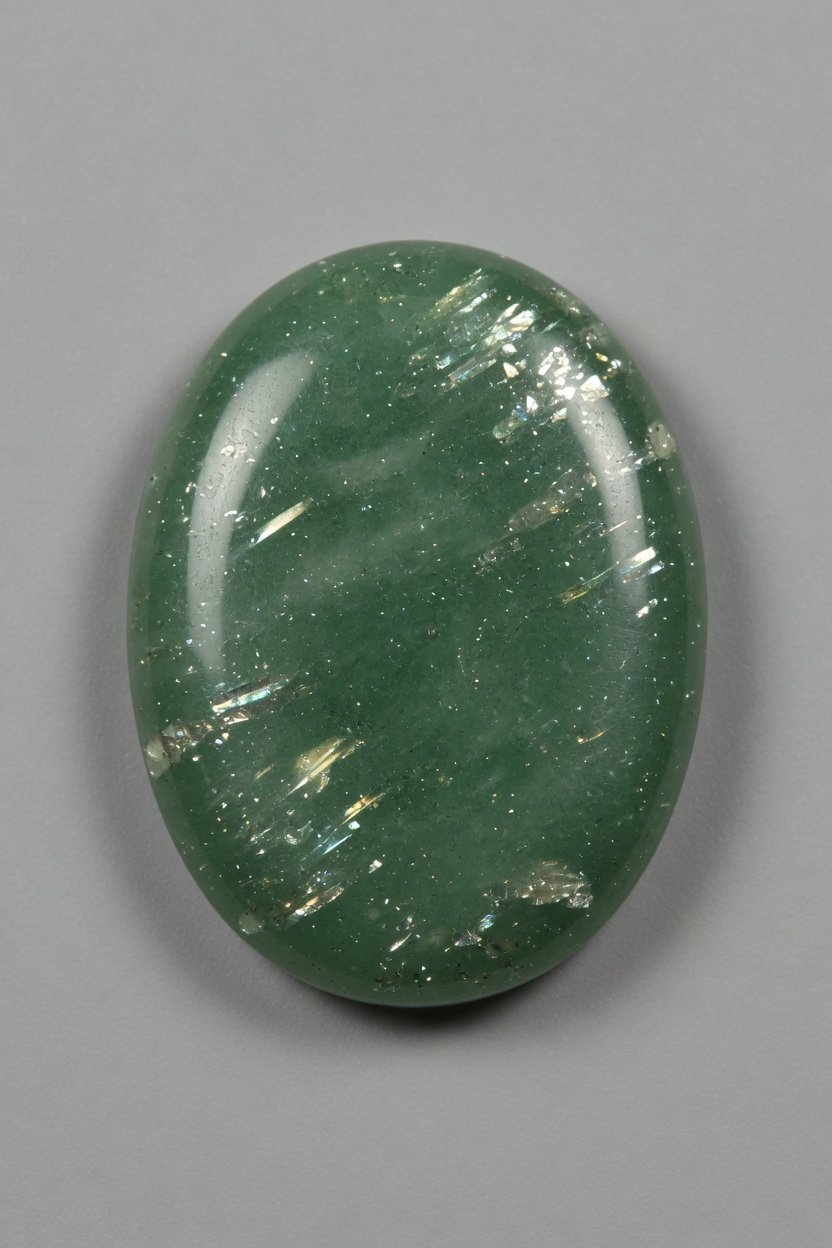
Physical Properties Green Aventurine is a translucent to opaque variety of quartz colored by fuchsite or other chromium-bearing mica inclusions that create its signature aventurescence. It registers 7 on the Mohs scale, giving it good durability for everyday wear while remaining soft enough to cut and polish with standard lapidary equipment. Specific gravity sits near 2.65, and the stone shows a vitreous to slightly silky luster. Because the mica platelets lie in random orientations, the sparkle appears strongest when the stone is viewed at an angle rather than straight on. Silversmiths always set Green Aventurine after all soldering is complete to avoid heat damage to the inclusions; prolonged flame exposure can cloud the sparkle or cause minor fracturing. Gentle ultrasonic cleaning is acceptable, but prolonged soaking in harsh chemicals should be avoided.
Origin and Sourcing Major commercial deposits lie in India, Brazil, Russia, and parts of China. Indian material often arrives in large, clean blocks ideal for cabochon work, while Brazilian stones frequently display a deeper forest green. Alluvial and hard-rock methods are both used; miners extract rough from weathered pegmatites or screen river gravels. Rough is typically sorted by color intensity and sparkle density before export. Silversmithing schools source their stock from reputable dealers who provide locality information so students can learn to recognize regional characteristics.
History and Significance Aventurine takes its name from the Italian “avventura,” meaning chance, after a sparkling glass accidentally created in the seventeenth century. The natural stone, however, has been used far longer in carvings and amulets across Asia and Europe. In traditional Indian lapidary practice the material was fashioned into small ritual objects believed to steady the mind during long meditations. European silversmiths of the nineteenth century incorporated aventurine into mourning jewelry, valuing its subdued green tone against silver. Today the stone remains a teaching staple because its optical effects are easy to demonstrate and its working properties forgiving.
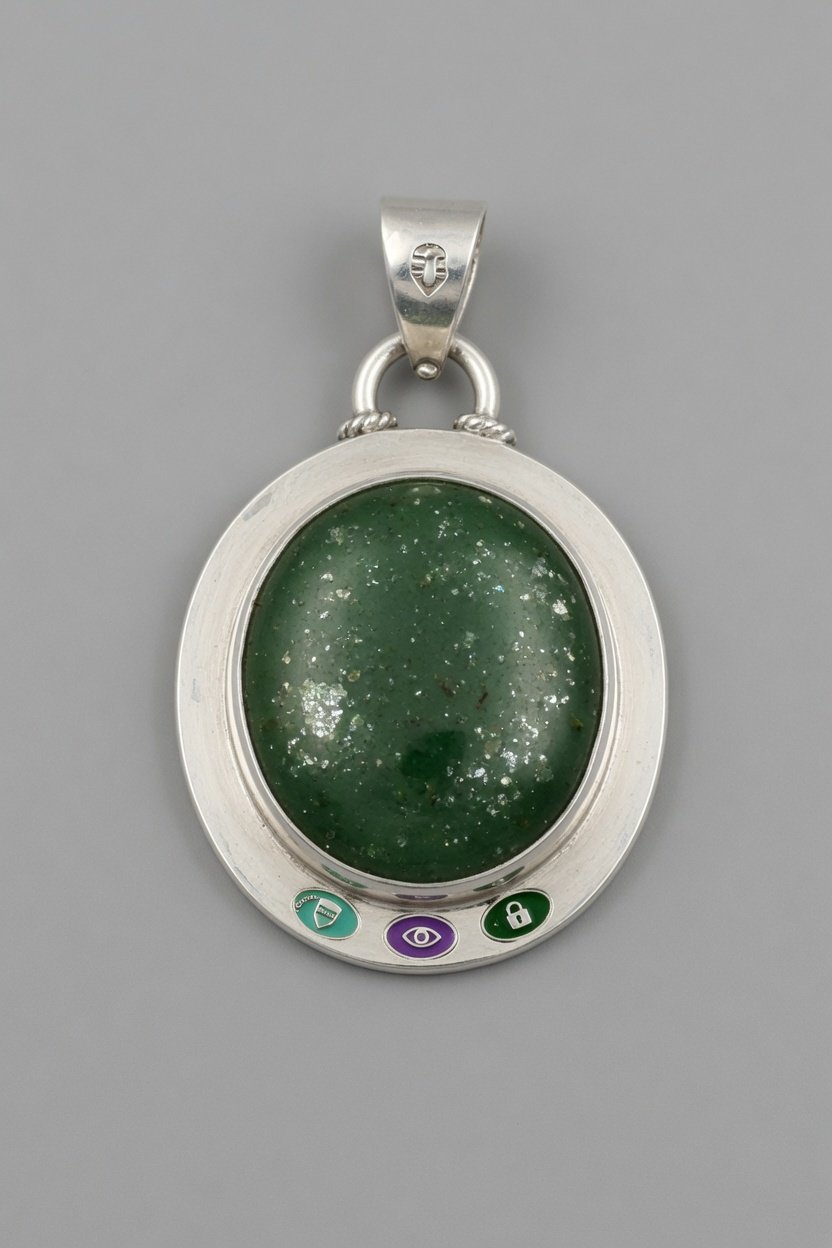
In Jewelry and Silversmithing Green Aventurine performs best in bezel or half-bezel settings that protect its edges while allowing the mica sparkle to remain visible. Its modest hardness means it can be set after all soldering, filing, and polishing steps are finished, reducing the risk of thermal shock. Students learn to orient the cabochon so the strongest aventurescence faces outward, often by testing the stone under a single light source before final placement. The stone pairs especially well with oxidized silver, where the contrast between dark metal and green sparkle creates depth without competing patterns. Care instructions for finished pieces include removing rings before heavy manual labor and wiping with a soft cloth rather than abrasive polishes.
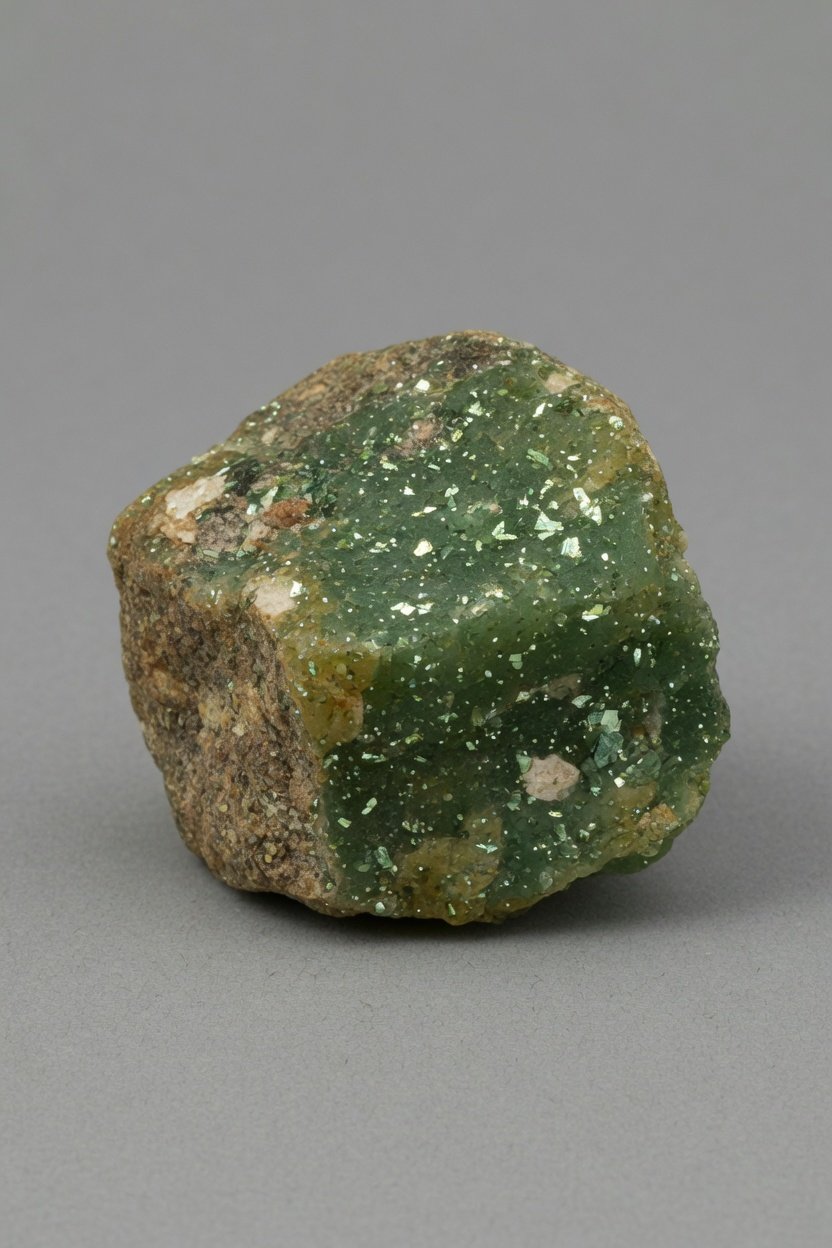
Identifying Green Aventurine in the Field In rough form the stone shows a sugary quartz texture interrupted by flat, reflective mica flakes that catch sunlight even on cloudy days. Fresh breaks reveal a slightly waxy feel distinct from the glassier fracture of clear quartz. Color ranges from pale apple green to deep emerald, usually with uneven distribution of sparkle. A quick hardness test against a steel file confirms it is quartz, while the presence of visible platy inclusions separates it from dyed chalcedony or prasiolite. Always examine the stone under oblique light to judge the density and orientation of the mica before committing to a cut.
Quick Facts
Common names: Green Aventurine, Aventurine Quartz
Chemical formula: SiO₂ with fuchsite/mica inclusions
Mohs hardness: 7
Specific gravity: 2.65
Color: Green with silvery or golden sparkles
Crystal system: Trigonal
Luster: Vitreous to silky
Transparency: Translucent to opaque
Common cuts: Cabochon, tumbled freeform
Common treatments: None
Best silver setting: Bezel
Birthstone month (if any): None
Main sources: India, Brazil, Russia, China
Meaning & Intentions
PROSPERITY
Green Aventurine is traditionally carried or worn to support steady focus on practical goals and to encourage calm persistence when opportunities arise. Silversmiths set the stone in simple pendants so the wearer can keep the gentle sparkle close to the heart during daily work. The mica inclusions are thought to act like tiny mirrors that reflect positive intention back to the user throughout the day.
Chakra: Heart — centers compassion and emotional balance CLARITY
Wearing Green Aventurine near the throat or brow is said to quiet mental static and allow clearer decision-making during complex creative projects. The stone’s steady green tone provides a visual anchor that helps makers step back from overthinking and return to the present task with renewed perspective.
Chakra: Third Eye — supports insight and focused awareness PROTECTION
Many silversmiths choose Green Aventurine for protective talismans because its durable quartz body combined with the shielding symbolism of its deep green color offers a sense of grounded safety. Set in a sturdy bezel, the stone becomes a daily reminder to maintain healthy boundaries while remaining open to new experiences.
Chakra: Root — grounds and stabilizes energy Affirmation: "I move forward with steady purpose and an open heart." AT A GLANCE: Chakra: Heart Element: Earth Energy: Receptive Zodiac: Virgo, Taurus Planet: Mercury Affirmation: "I move forward with steady purpose and an open heart."
Related Stones
Explore more stones from the Gemstone Library: Zoisite (Green) · Aventurine · Emerald