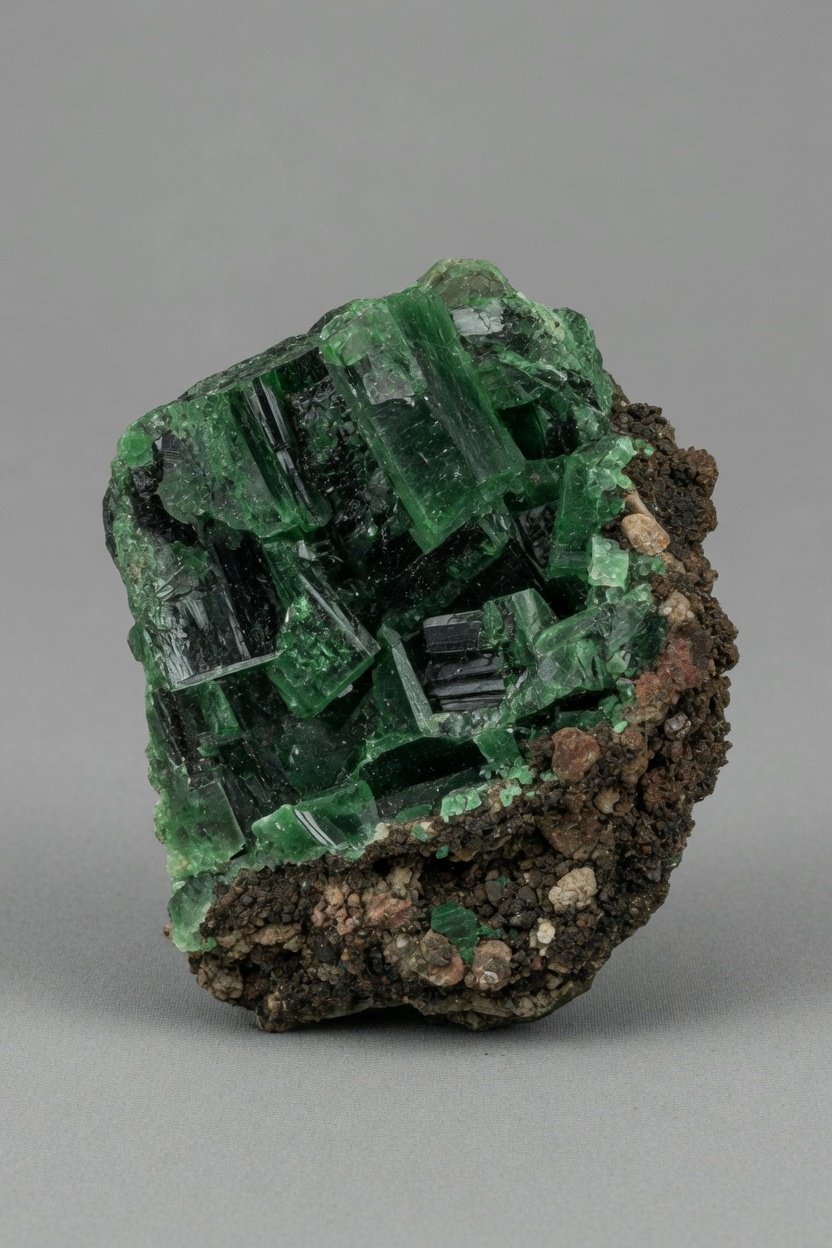
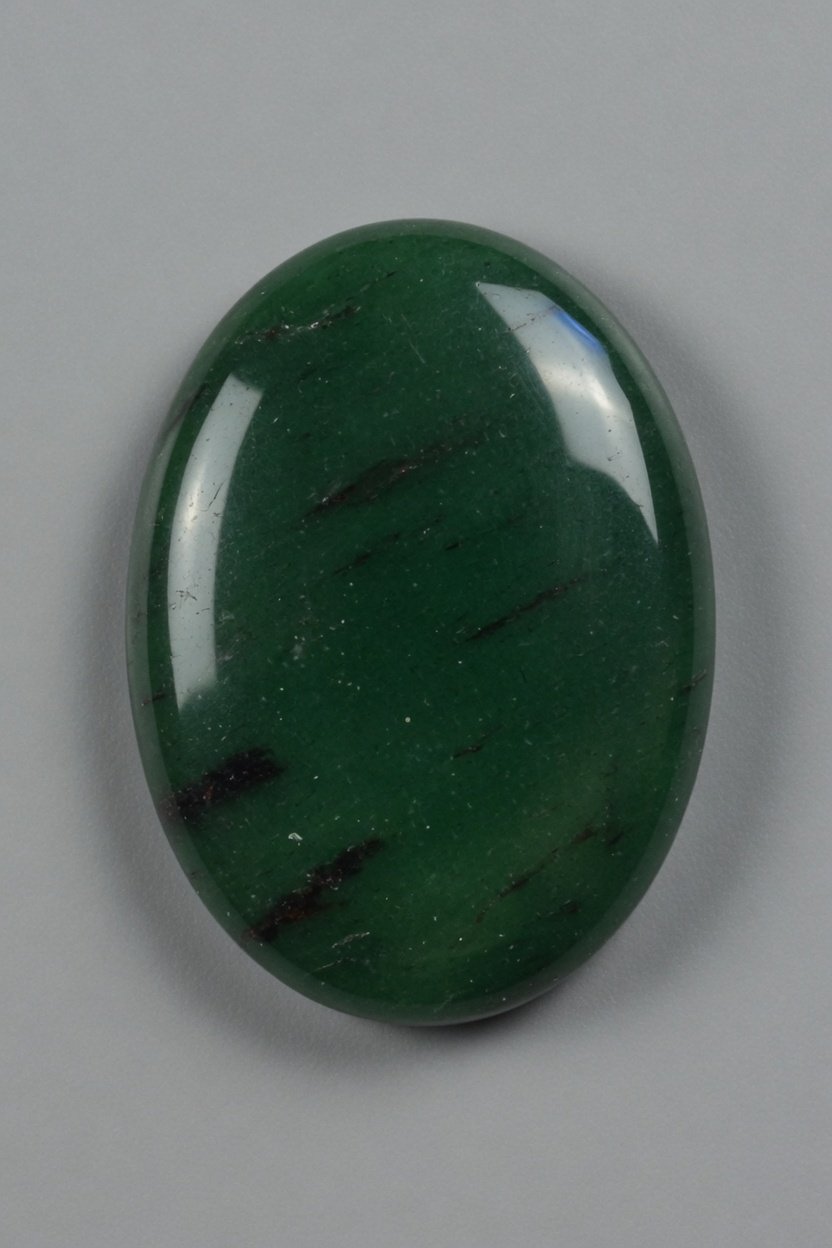
Zoisite (Green) emerges from the earth in deep forest tones that immediately draw the eye, its rich verdant body often threaded with contrasting dark inclusions that speak of ancient geological forces. Formed under intense pressure in metamorphic environments, this stone carries both visual weight and a quiet presence that has long appealed to silversmiths seeking distinctive material for wearable art.
Physical Properties Zoisite (Green) registers 6 to 6.5 on the Mohs scale, placing it in the range of materials that accept a durable polish yet require care during setting. Its specific gravity hovers near 3.35, and the stone exhibits a vitreous to sub-vitreous luster that becomes silky when lightly included. The mineral shows distinct cleavage in one direction, which means any sawing or grinding must respect these planes to avoid splitting. Because the stone can contain hydroxyl groups, prolonged exposure to high heat risks dehydration and surface crazing; therefore silversmiths always complete all soldering and annealing before setting Zoisite (Green). Once set, the piece should be cleaned with mild soap and warm water only, avoiding ultrasonic cleaners or steam that could exploit internal fractures.
Origin and Sourcing The primary commercial source of gem-quality Zoisite (Green) remains the Mererani Hills of northern Tanzania, where the mineral occurs in association with ruby and graphite-bearing schists. Smaller quantities appear in Kenya and parts of Norway, yet Tanzanian material dominates the market because of its saturated color and workable size. Mining is conducted through a combination of open-pit benches and shallow adits; workers follow narrow veins that pinch and swell within the host rock. Rough is sorted on site, then transported to lapidary centers where orientation decisions determine whether the finished stone will display uniform green or retain attractive matrix patterns.
History and Significance Named after Austrian mineralogist Baron Sigmund Zois in the early nineteenth century, green zoisite was known to local Tanzanian communities long before European documentation. In the mid-twentieth century the discovery of ruby-in-zoisite specimens brought international attention, yet pure green material continued to be used locally for small carvings and protective amulets. Its association with growth and renewal appears in several East African oral traditions, where the stone’s color was linked to fertile soils and seasonal rains. Contemporary lapidaries value the mineral both for its historical resonance and for the way its inclusions record the metamorphic events that formed the East African rift system.
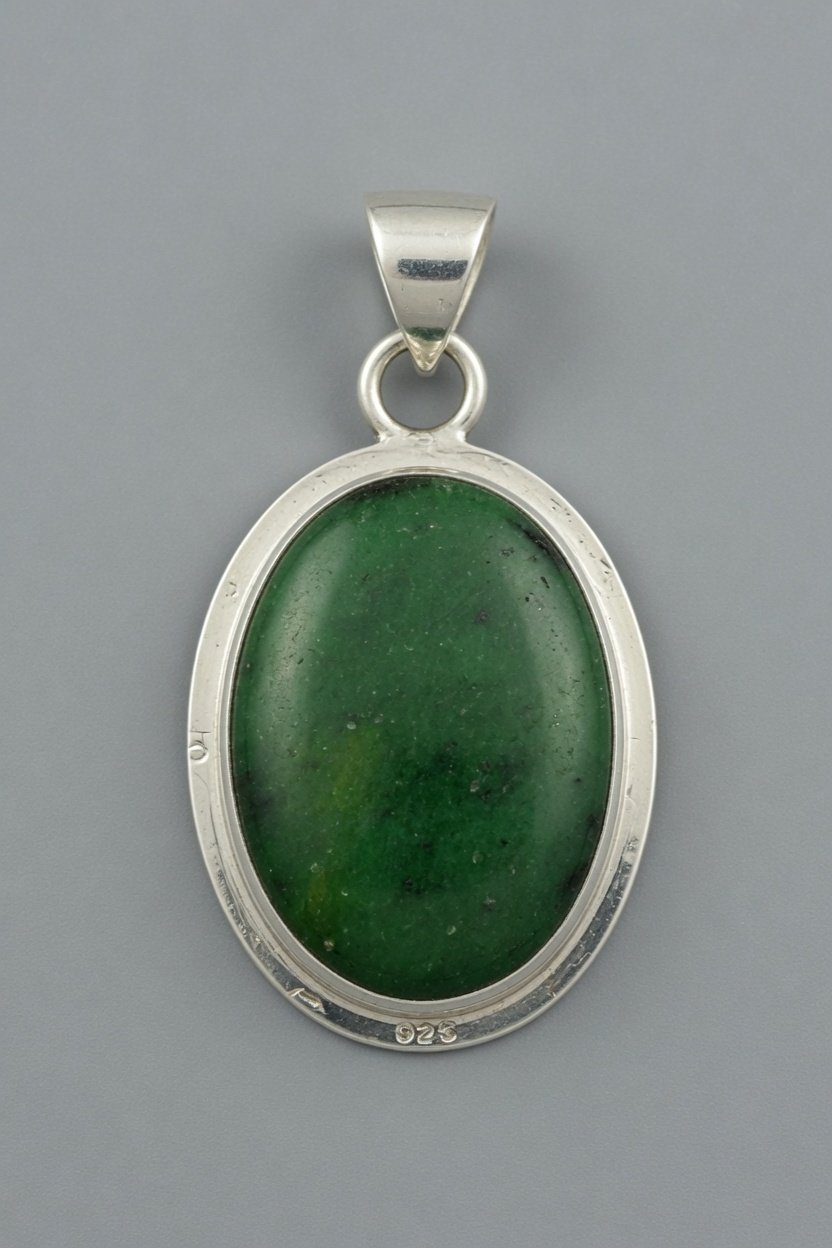
In Jewelry and Silversmithing Silversmiths favor Zoisite (Green) for cabochon work because the stone’s typical translucency to opacity rewards smooth, domed surfaces that catch light softly. The material is usually set after all soldering operations are finished; prongs or bezels are formed and polished first, then the stone is seated and secured with minimal pressure along cleavage planes. A thin layer of black epoxy is sometimes placed behind translucent areas to deepen color, a treatment buyers should know can be detected under magnification. Daily wear is safe in rings and pendants provided the piece avoids hard knocks that could exploit the stone’s directional cleavage. Regular inspection of the setting ensures the cabochon remains secure without needing heat-based adjustments later.
Identifying Zoisite (Green) in the Field In outcrop, Zoisite (Green) appears as medium- to dark-green masses with a slightly greasy feel and occasional white or pink zoisite intergrowths. Hardness testing with a steel point produces a white scratch that does not powder readily, distinguishing it from softer green minerals such as malachite. The presence of associated ruby or graphite is a strong indicator in Tanzanian terrain. Under a hand lens the surface often shows fine parallel striations caused by twinning, and a drop of dilute hydrochloric acid produces no effervescence, ruling out carbonate impostors. Collectors note that freshly broken surfaces may appear paler until oxidation restores the characteristic forest-green hue.
Quick Facts
Common names: Green Zoisite, Zoisite
Chemical formula: Ca₂Al₃(SiO₄)(Si₂O₇)O(OH)
Mohs hardness: 6–6.5
Specific gravity: 3.35
Color: Deep green to forest green, often with dark inclusions
Crystal system: Orthorhombic
Luster: Vitreous to sub-vitreous
Transparency: Translucent to opaque
Common cuts: Cabochon
Common treatments: Occasional stabilization or backing
Best silver setting: Classic Silver Bezel Pendant
Birthstone month (if any): None
Main sources: Tanzania, Kenya, Norway
Meaning & Intentions
GROWTH
Green zoisite supports steady personal development by anchoring intentions in the physical world. Silversmiths set the stone in pendants worn close to the heart so the wearer can feel its reassuring weight during daily routines that reinforce new habits. The mineral’s inclusions act as quiet reminders that progress often includes visible traces of earlier stages.
Chakra: Heart — centers compassion and emotional balance CLARITY
The stone’s deep green body encourages focused observation of patterns in one’s life. When fashioned into a simple bezel pendant, Zoisite (Green) becomes a portable reference point for journaling or decision-making sessions that benefit from calm visual grounding.
Chakra: Third Eye — sharpens perception without overstimulation BOUNDARIES
Zoisite (Green) is carried or worn to reinforce personal limits during periods of change. Its solid presence in a silver setting helps the wearer maintain composure when external demands threaten to blur priorities or drain energy reserves.
Chakra: Root — provides stable foundation for self-protection Affirmation: "I grow steadily within clear and compassionate limits." AT A GLANCE: Chakra: Heart Element: Earth Energy: Receptive Zodiac: Capricorn Planet: Venus Affirmation: "I grow steadily within clear and compassionate limits."
Related Stones
Explore more stones from the Gemstone Library: Prasiolite · Chrome Diopside · Emerald