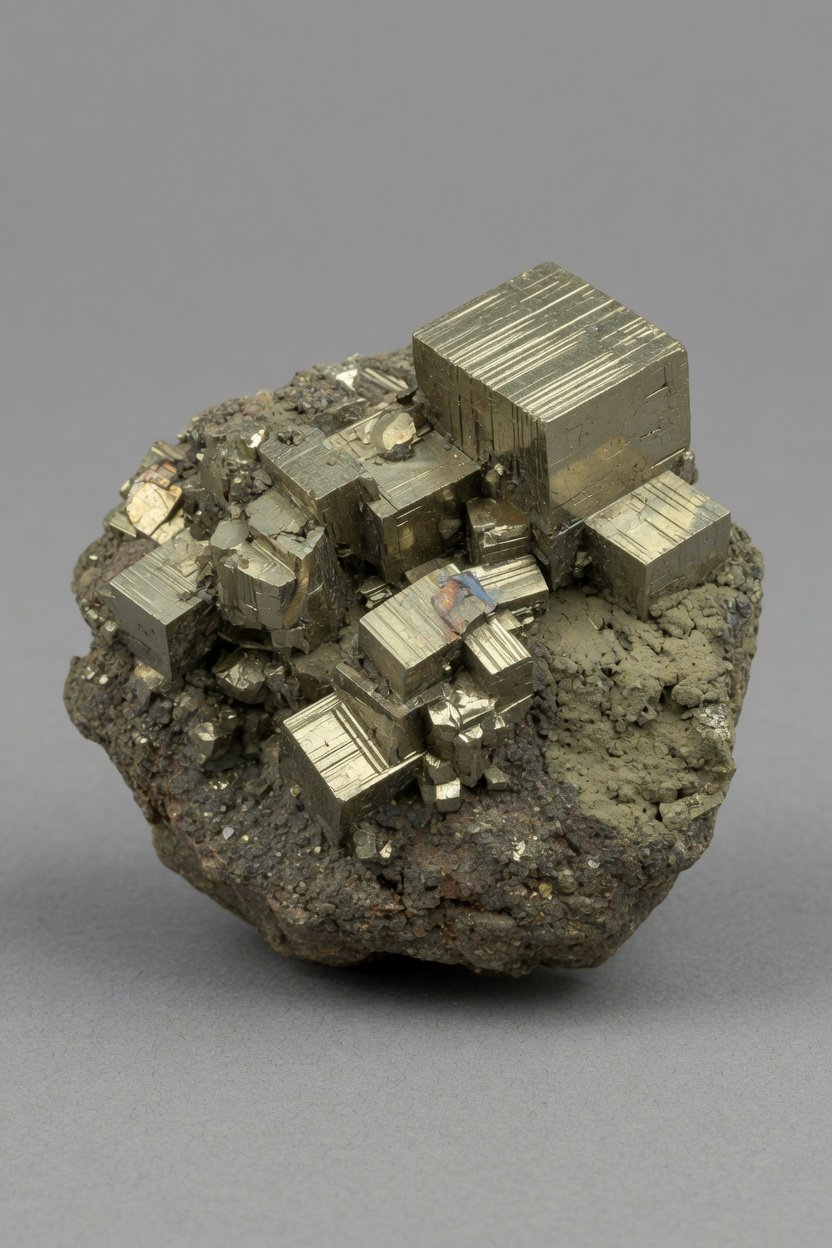
Pyrite gleams with a deceptive metallic sheen that has fooled prospectors for centuries, its brass-yellow surfaces catching light like true gold yet revealing an iron-rich truth beneath. This striking mineral forms perfect cubic crystals that seem almost engineered, drawing silversmiths and collectors alike into its intricate geometric world. In the workshop it demands careful handling, always set after all soldering is complete to avoid cracking its brittle structure.
Physical Properties Pyrite registers 6 to 6.5 on the Mohs scale and possesses a specific gravity near 5.0, giving it substantial heft for its size. Its chemical makeup is iron disulfide, producing the signature brass-yellow color and opaque metallic luster that distinguishes it from softer yellow minerals. The stone exhibits perfect cubic crystal habit with striated faces, yet it remains brittle with distinct cleavage planes that can fracture under pressure. Silversmiths note that pyrite must always be set after all soldering is complete, and care cautions include avoiding prolonged ultrasonic cleaning or harsh abrasives that could dull its reflective surfaces.
Origin and Sourcing Major deposits occur in Spain’s Rio Tinto mines, Peru’s Huanzala district, and the United States’ Illinois and Colorado regions, where hydrothermal veins and sedimentary layers concentrate the mineral. Extraction typically involves hard-rock methods with adits and ore carts, preserving the sharp cubic forms prized by cutters. Ethical sourcing emphasizes reclaimed mine material to reduce environmental impact while maintaining the high-quality crystals favored for jewelry.
History and Significance Ancient Incas and Greeks used pyrite mirrors and amulets, believing the stone captured sunlight and warded off harm. During the California Gold Rush, disappointed miners dubbed it “fool’s gold,” yet its industrial value in sulfur and iron production remained steady through the centuries. Today the mineral symbolizes discernment, reminding wearers that appearances can mislead while inner structure reveals true worth.
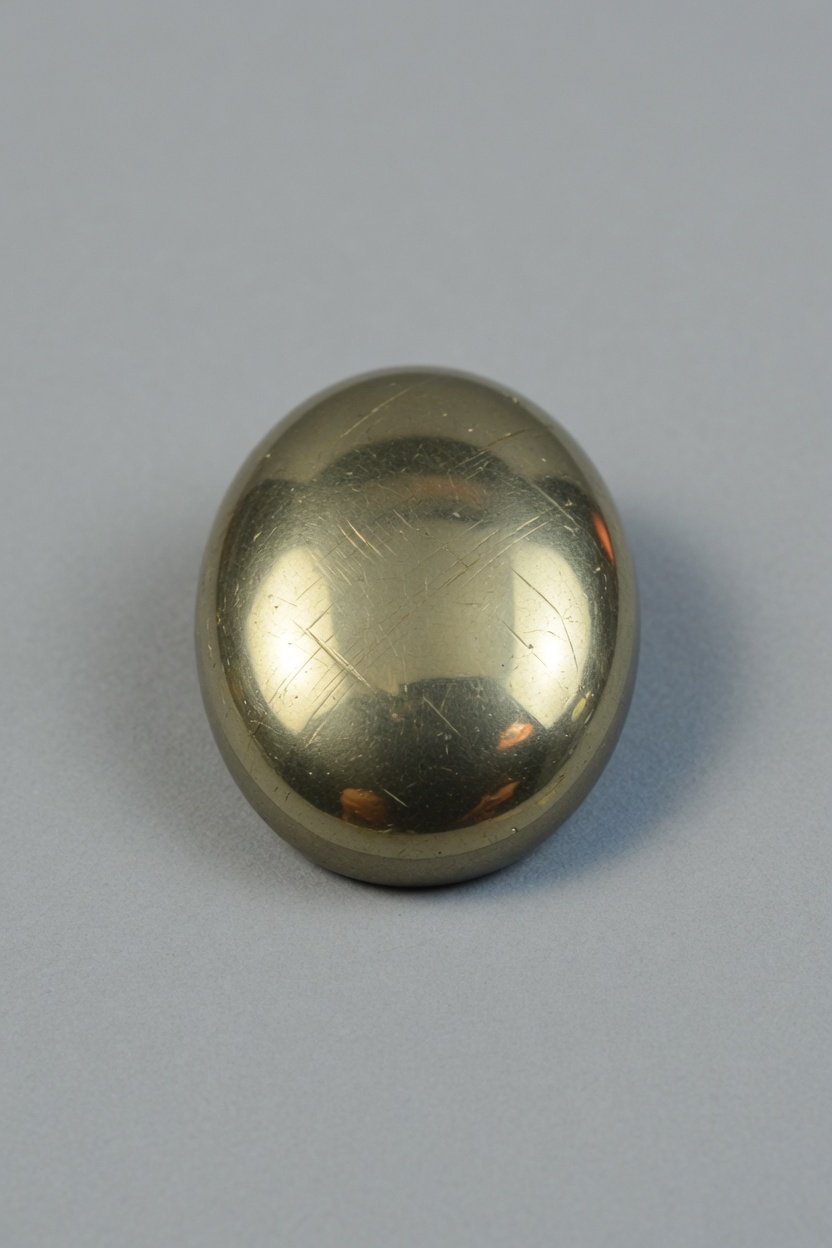
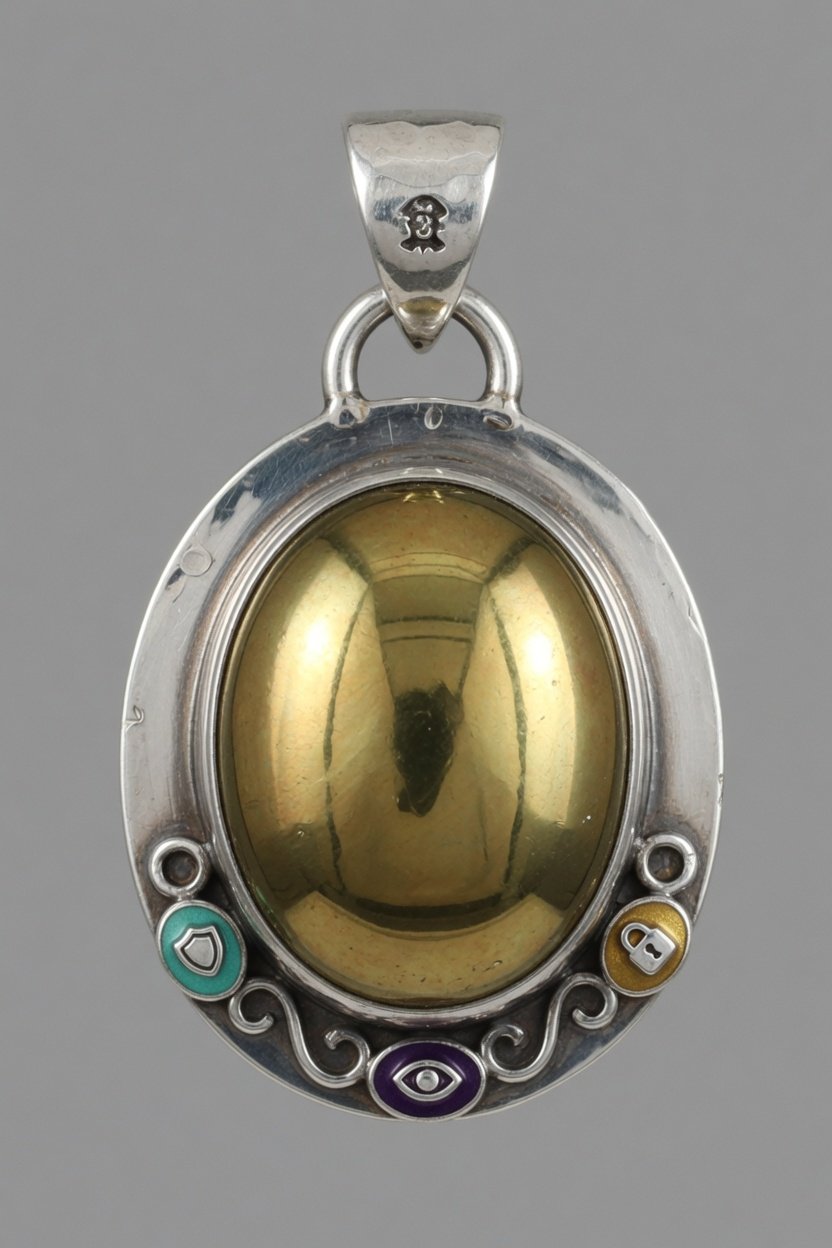
In Jewelry and Silversmithing Pyrite’s metallic flash suits bold silver settings that highlight its geometry without overwhelming the design. Cabochons are preferred for their smooth domes that catch light across entire faces, while natural crystal clusters appear in statement pieces. The stone must always be set after all soldering is complete, and care cautions advise storing pieces separately to prevent scratching softer metals or other gems.
Identifying Pyrite in the Field Field identification begins with the greenish-black streak left on unglazed porcelain, unlike the yellow streak of real gold. Hardness testing shows pyrite scratches glass yet yields to a steel file, and its cubic crystals often display striations absent in similar-looking minerals. A quick magnet test rules out magnetic iron oxides, confirming the specimen’s identity before any lapidary work begins.
Quick Facts
Common names: Pyrite, Fool's Gold, Iron Pyrite
Chemical formula: FeS₂
Mohs hardness: 6-6.5
Specific gravity: 4.95-5.10
Color: Brass-yellow to pale gold
Crystal system: Cubic
Luster: Metallic
Transparency: Opaque
Common cuts: Cabochon, crystal clusters, tumbled
Common treatments: None
Best silver setting: Classic Silver Bezel Pendant
Birthstone month (if any): None
Main sources: Spain, Peru, United States, Italy
Meaning & Intentions
GROUNDING SHIELD
Pyrite forms an energetic barrier that anchors scattered thoughts and shields the wearer from negativity during creative work. Silversmiths set the stone in protective talismans that encourage steady hands and clear focus at the bench, turning potential distraction into productive flow.
Chakra: Root chakra for stability and presence TRUTH VISION
Pyrite sharpens perception so hidden motives and self-deception become visible, supporting honest self-assessment in both personal growth and artistic decisions. Its reflective surface acts as a mirror for inner clarity, helping artisans recognize genuine inspiration amid fleeting trends.
Chakra: Third eye chakra for insight and discernment SECURE MANIFESTATION
Pyrite locks intentions into physical form, transforming abstract goals into tangible results through disciplined action. In jewelry it serves as a reminder that disciplined craft converts raw potential into lasting beauty and achievement.
Chakra: Solar plexus chakra for confidence and will Affirmation: "I recognize true value and build lasting strength." AT A GLANCE: Chakra: Root, Third Eye, Solar Plexus Element: Earth Energy: Protective, clarifying, manifesting Zodiac: Leo Planet: Mars Affirmation: "I recognize true value and build lasting strength."
Related Stones
Explore more stones from the Gemstone Library: Tourmaline · Red Jasper · Andalusite