Tanzanite emerges from the earth as a rare blue-violet treasure whose trichroic flashes shift from deep sapphire to amethyst and burgundy under changing light. Discovered only in 1967 in a single valley in northern Tanzania, the stone carries an immediate sense of geographic exclusivity and modern romance that sets it apart from ancient gems. Its vivid color and limited supply have made it a favorite among jewelers seeking something both fresh and deeply rooted in East African geology.
Physical Properties Tanzanite is a calcium aluminum silicate hydroxide belonging to the zoisite family. On the Mohs scale it registers 6 to 6.5, rendering it softer than quartz yet still workable for careful jewelry use. Specific gravity falls between 3.35 and 3.38, and the stone displays strong pleochroism that produces three distinct colors along different crystallographic axes. Vitreous luster and transparency characterize clean specimens, while fractures and cleavage planes require gentle handling during cutting and setting. Because tanzanite is heat-sensitive due to its hydroxyl content, it must be set into silver only after all soldering and torch work are complete; ultrasonic cleaners and sudden temperature changes should also be avoided to prevent internal cracking.
Origin and Sourcing All gem-quality tanzanite comes from a single narrow zone near Mount Kilimanjaro in Tanzania’s Mererani Hills. The deposit formed through regional metamorphism of vanadium-bearing sediments roughly 585 million years ago. Miners work narrow hard-rock adits where headlamps illuminate folded graphite schists and thin veins of the mineral. Rough is hand-sorted at the surface, then transported to cutting centers in Arusha or exported for further processing. Because the locality is so restricted, supply remains finite and subject to both geological and regulatory constraints.
History and Significance Masai tribesmen first noticed the transparent crystals while herding cattle in 1967. Tiffany & Co. named the material tanzanite and launched an aggressive marketing campaign that introduced it to the world market within two years. The stone quickly became associated with transformation and new beginnings, partly because its color is often enhanced by controlled heating that converts brownish zoisite into the prized blue-violet hue. Today tanzanite symbolizes both rarity and the modern story of gem discovery rather than centuries of folklore.
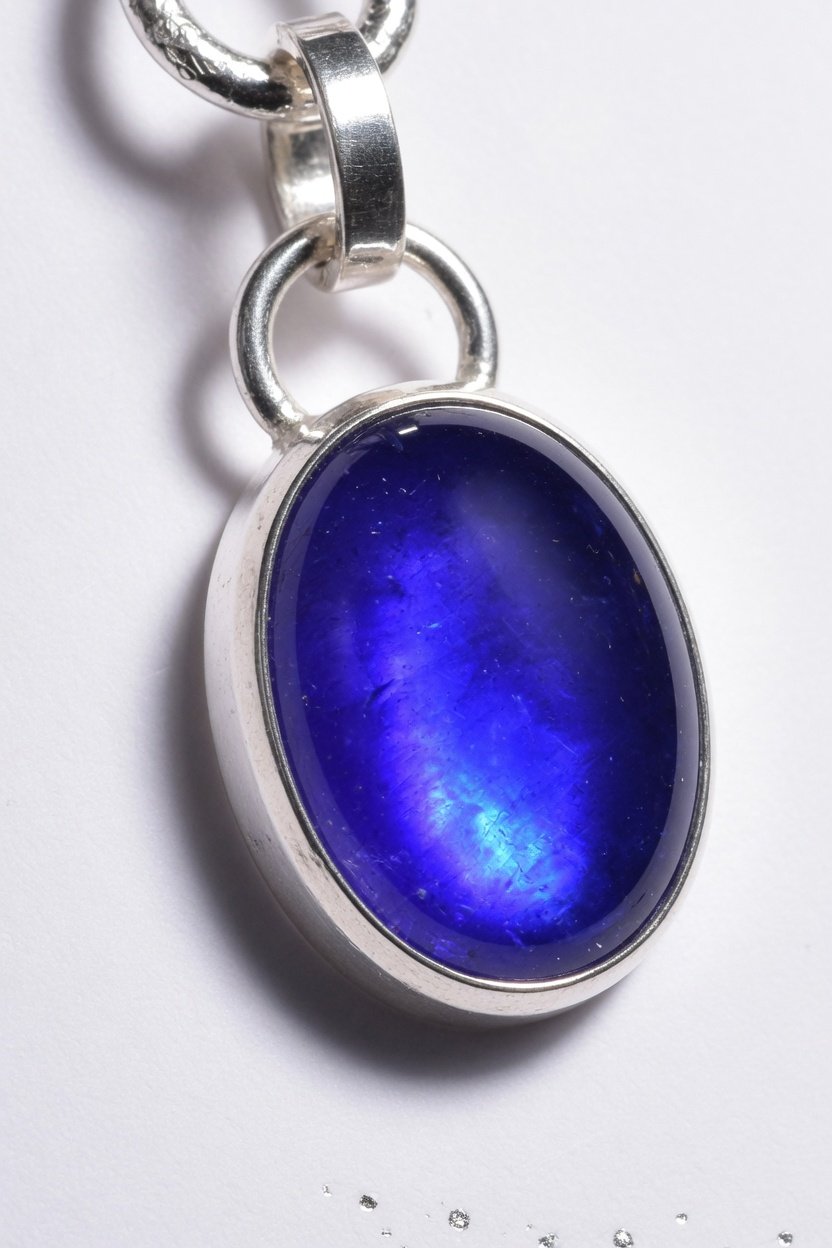
In Jewelry and Silversmithing Silversmiths favor low-profile bezels or protective halo settings that shield the cleavage planes from impact. The cool blue-violet tones pair naturally with oxidized or brushed silver, allowing the stone’s color shifts to dominate the design. Because tanzanite must be set after all soldering, jewelers complete the metalwork first, then carefully seat and burnish the stone into place. Care instructions emphasize storing pieces separately to avoid abrasion and removing jewelry before household chores that involve heat or chemicals.
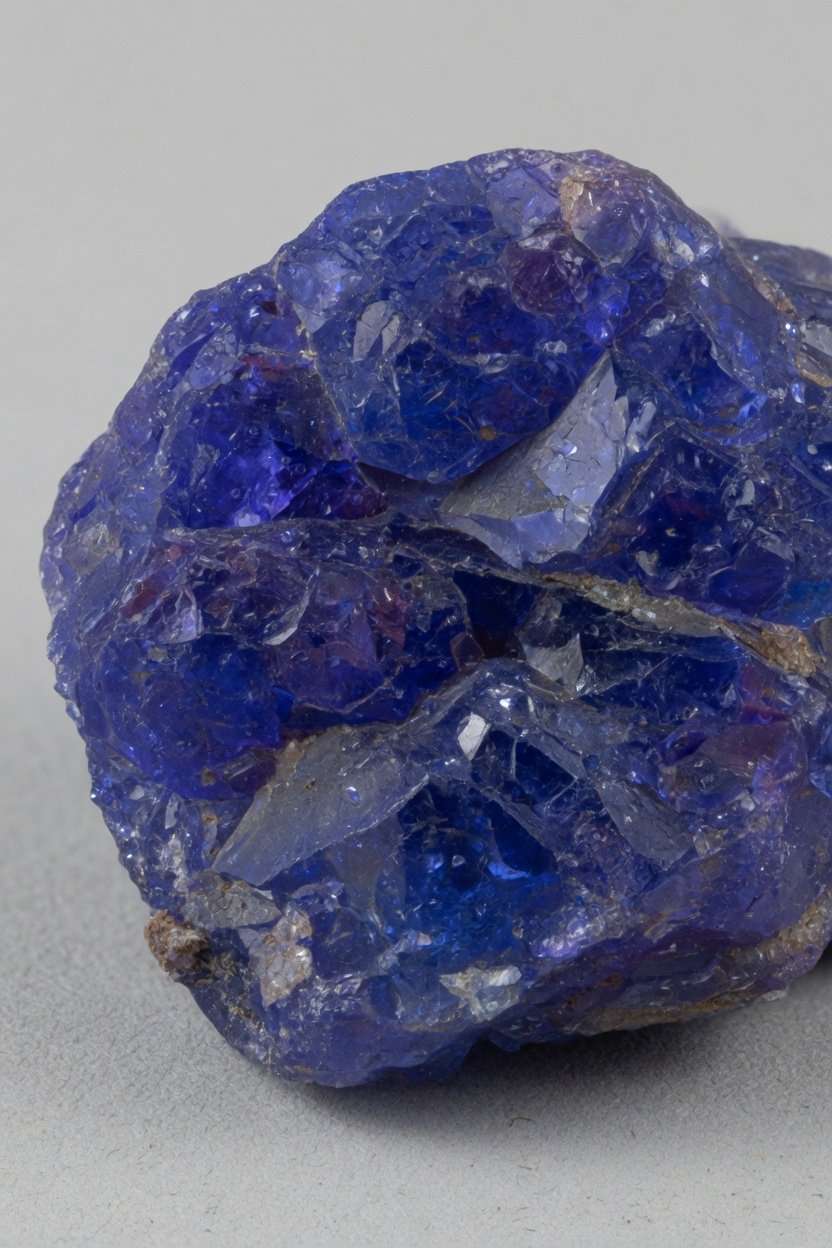
Identifying Tanzanite in the Field In rough form tanzanite appears as elongated, blade-like crystals with a distinctive greasy-to-vitreous luster and pronounced color zoning when viewed through different axes. A simple dichroscope reveals the simultaneous blue and violet rays that separate it from similar-looking iolite or blue corundum. Heated stones show uniform color without residual brown tones, while natural unheated crystals often retain brownish areas. Specific gravity testing and the absence of typical tourmaline striations further confirm identity before any lapidary work begins.
Quick Facts
Common names: Tanzanite
Chemical formula: Ca₂Al₃(SiO₄)(Si₂O₇)O(OH)
Mohs hardness: 6–6.5
Specific gravity: 3.35–3.38
Color: Blue-violet with strong pleochroism to burgundy
Crystal system: Orthorhombic
Luster: Vitreous
Transparency: Transparent to translucent
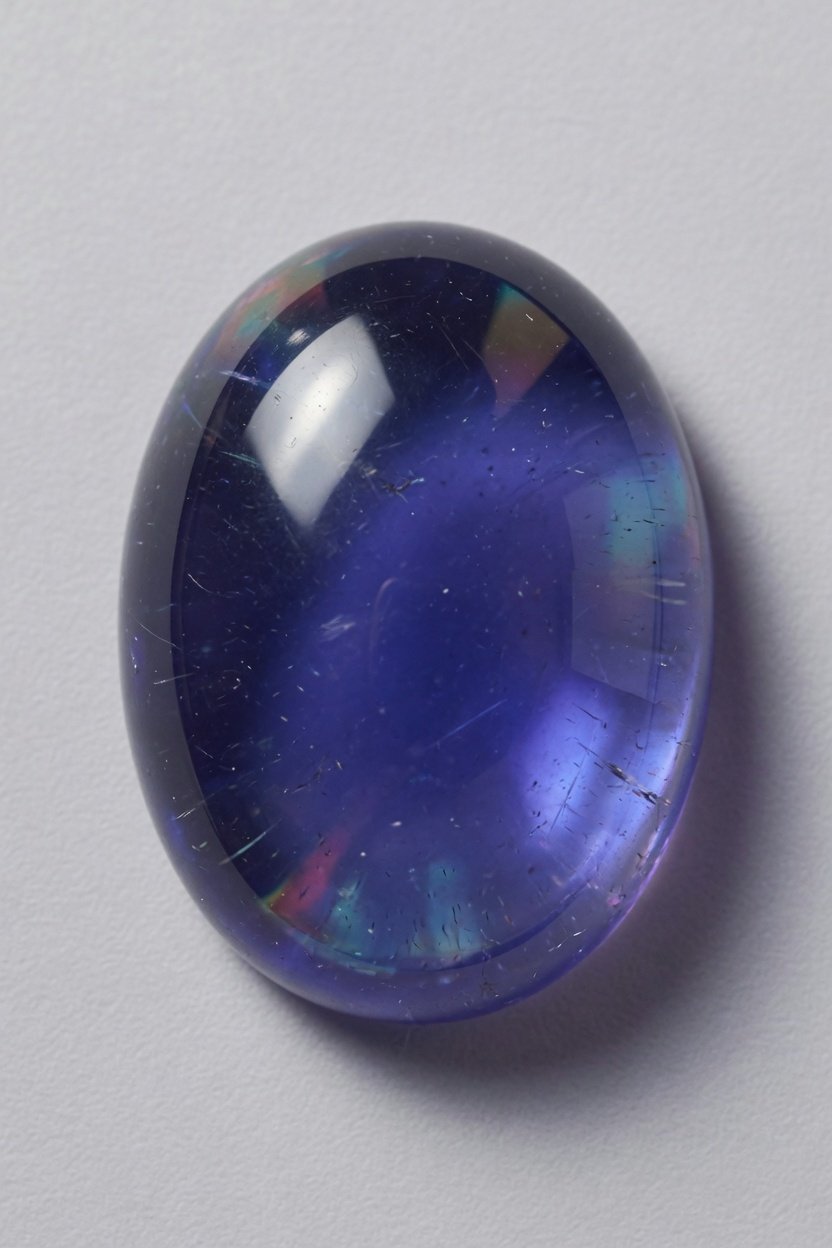
Common cuts: Oval, cushion, trillion, fancy cabochon
Common treatments: Heat treatment to enhance blue-violet color
Best silver setting: Classic Silver Bezel Pendant
Birthstone month: December (alternative)
Main sources: Tanzania (Mererani Hills)
Meaning & Intentions
TRANSFORMATION
Tanzanite supports personal change by encouraging release of outdated patterns while stabilizing the nervous system during periods of growth. Silversmiths set the stone in protective bezels so the wearer can carry its steadying energy close to the skin without fear of damage during daily movement.
Chakra: Throat – clear communication during change INSIGHT
The stone’s trichroic color shifts mirror the way intuition gathers information from multiple angles at once. When worn as a pendant near the heart, tanzanite is said to quiet mental chatter and allow deeper perception to surface during quiet reflection or creative work.
Chakra: Third Eye – inner vision and clarity PROTECTION
Tanzanite forms a subtle energetic boundary that helps sensitive individuals maintain composure in crowded or emotionally charged environments. Its placement in silver, finished entirely before stone setting, creates a durable shield that preserves both the gem and the wearer’s sense of safety.
Chakra: Root – grounded security Affirmation: "I move through change with clear sight and steady protection." AT A GLANCE: Chakra: Throat, Third Eye, Root Element: Air Energy: Receptive Zodiac: Sagittarius, Capricorn Planet: Neptune Affirmation: "I move through change with clear sight and steady protection."
Related Stones
Explore more stones from the Gemstone Library: Amazonite · Aquamarine · Sodalite