Sugilite emerges from the earth in deep, saturated shades of violet and magenta that immediately command attention. Its rich color and rare occurrence make it a prized material for silversmiths seeking distinctive stones that carry both visual weight and quiet mystery. The gem forms in manganese-rich environments where lithium and potassium combine under specific geological conditions to produce its signature hue.
Physical Properties Sugilite registers 6 to 6.5 on the Mohs scale, placing it in the range suitable for protective settings rather than exposed wear. Its specific gravity hovers between 2.7 and 2.9, and the stone typically appears opaque to translucent with a waxy to vitreous luster. Because sugilite contains no significant water of crystallization, it tolerates moderate heat once set, yet silversmiths still set the stone only after all soldering is complete to avoid any risk of thermal shock or surface dulling.
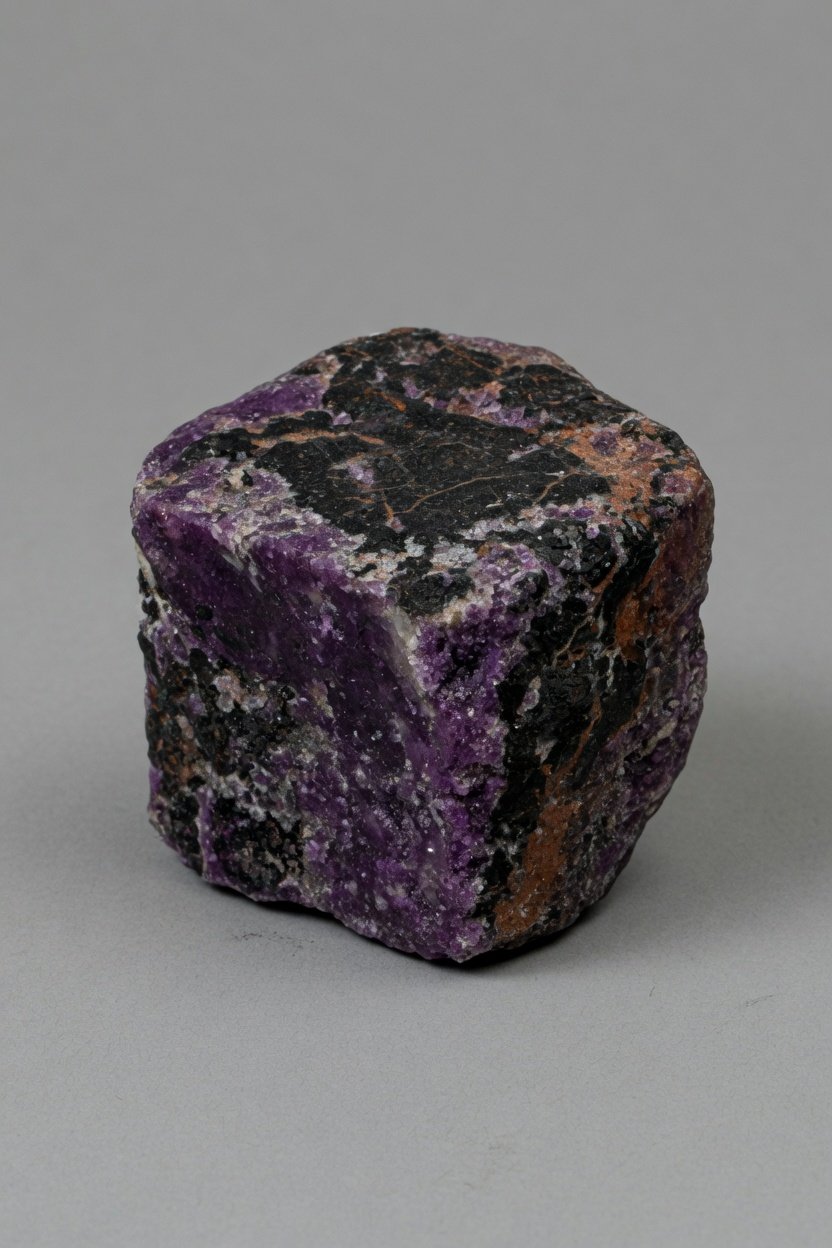
Origin and Sourcing The finest gem-quality sugilite comes from the Wessels Mine in South Africa’s Kalahari Manganese Field, with smaller quantities reported from Japan and Canada. Miners extract the material through hard-rock tunneling where manganese-rich seams are carefully followed. Rough is graded on site for color intensity before being shipped to lapidaries who orient cuts to maximize the most vivid purple zones while avoiding black matrix inclusions that can weaken the stone.
History and Significance Sugilite received its modern name in 1976 after Japanese petrologist Ken-ichi Sugi, though the mineral had been noted earlier in South African manganese deposits. Its sudden appearance on the gem market in the late 1970s coincided with renewed interest in purple stones beyond amethyst. Indigenous communities in the Kalahari region had long collected similar manganese minerals for pigment, but the transparent-to-translucent violet variety suitable for jewelry remained unknown until modern mining operations exposed it.
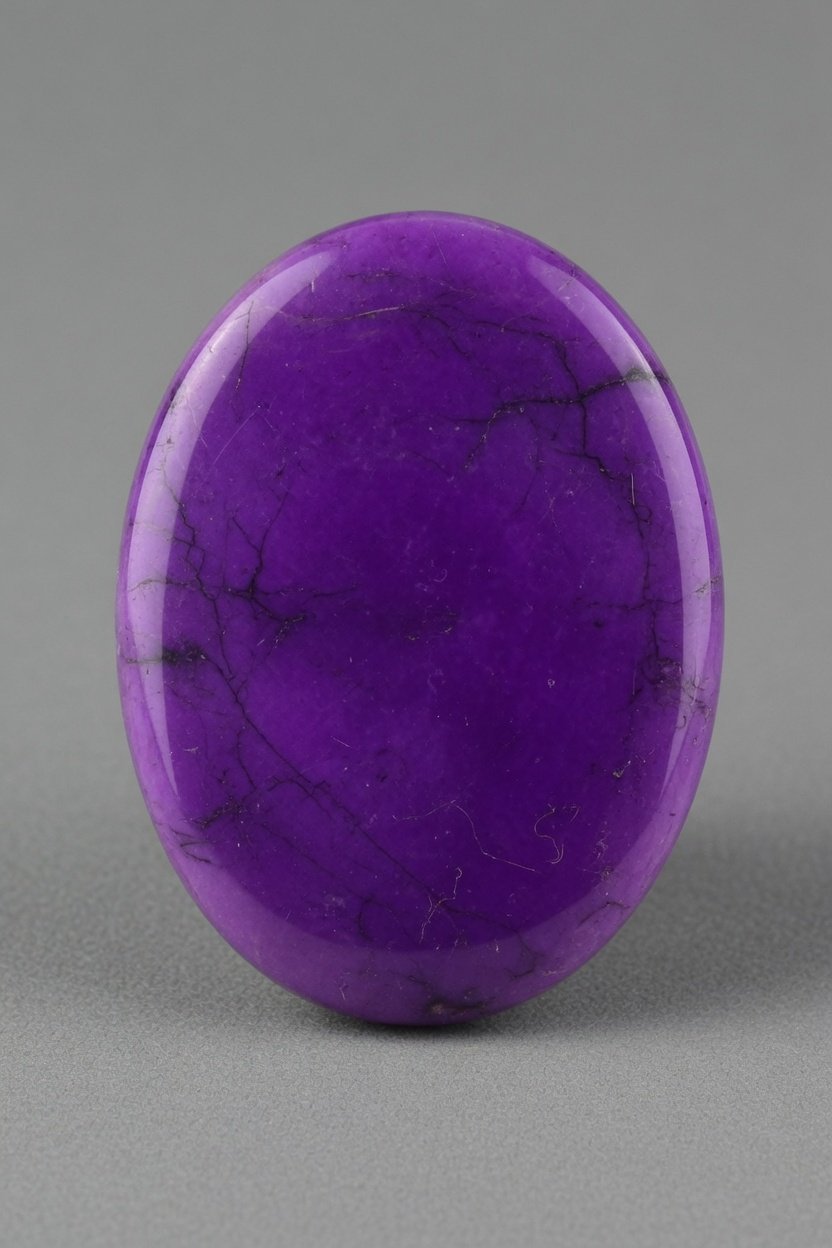
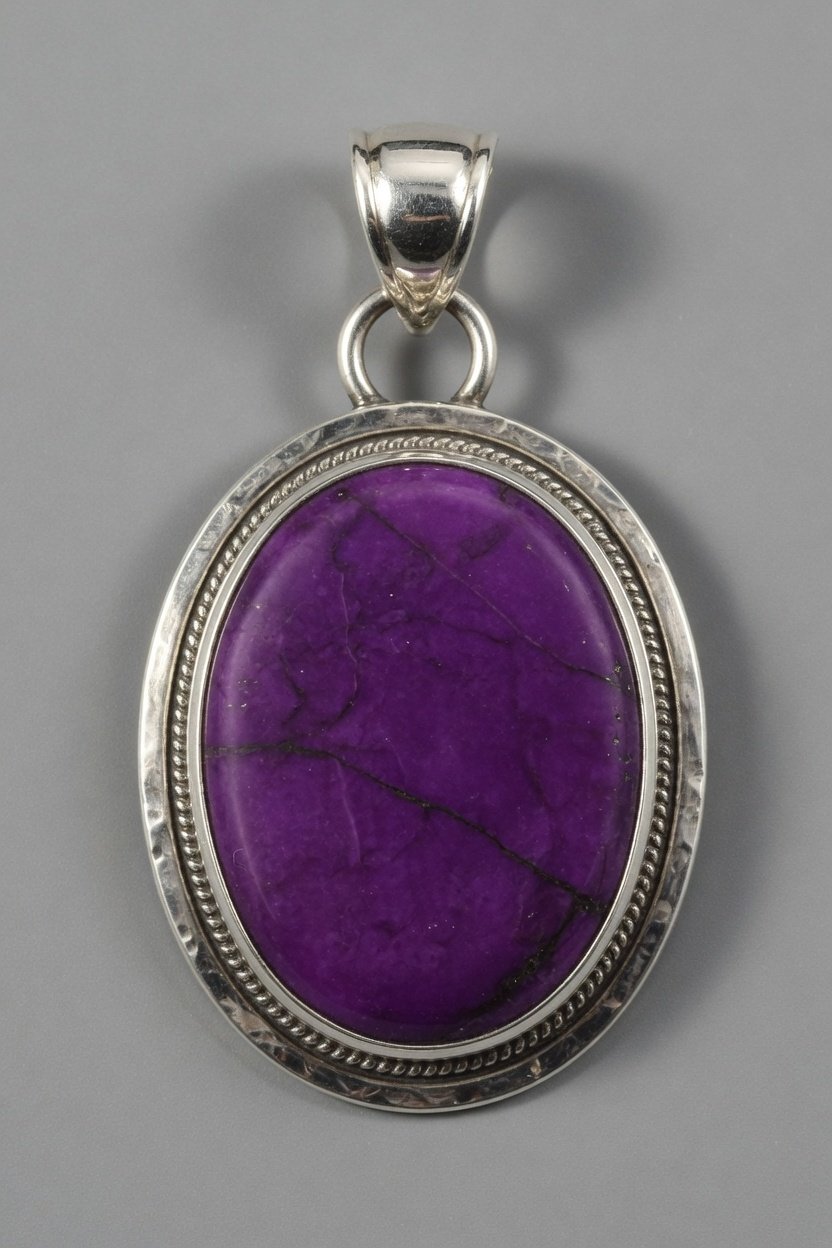
In Jewelry and Silversmithing Sugilite’s opacity and Mohs hardness make cabochon the authentic commercial cut, allowing the color to display as a smooth, domed surface that catches light softly. Silversmiths favor bezel or southwestern stamped bezel settings that fully support the dome and protect the edges. The stone is always set after all soldering and polishing steps are finished; ultrasonic cleaners are avoided because microscopic fractures can propagate along natural cleavage planes. Daily wear in rings is discouraged unless the bezel is high and the wearer accepts occasional surface scuffs.
Identifying Sugilite in the Field In rough form, sugilite appears as massive, sugary-textured pods within black manganese ore, showing no distinct crystal faces. A streak test yields a pale lavender powder, and the material feels slightly soapy compared with surrounding rock. Under strong light, thin edges may transmit a deep rose-purple glow that distinguishes it from similar-looking purple fluorite or dumortierite.
Quick Facts
Common names: Sugilite, Royal Lavulite, Wesselite
Chemical formula: KNa₂(Fe,Mn,Al)₂Li₃Si₁₂O₃₀
Mohs hardness: 6–6.5
Specific gravity: 2.7–2.9
Color: Violet to magenta purple, often with black matrix
Crystal system: Hexagonal
Luster: Waxy to vitreous
Transparency: Opaque to translucent
Common cuts: Cabochon
Common treatments: None (rarely impregnated)
Best silver setting: Classic Silver Bezel or Southwestern Stamped Bezel
Birthstone month (if any): None
Main sources: South Africa (Wessels Mine), Japan
Meaning & Intentions
PROTECTION
Sugilite creates a steady energetic boundary that helps wearers remain centered during stressful encounters or demanding creative work. Silversmiths set the cabochon in a closed bezel so the stone sits flush against the skin, allowing its violet field to act as a personal shield that filters external tension without blocking necessary awareness.
Chakra: Root — grounding and stabilizing presence INSIGHT
The stone’s saturated purple tone is traditionally linked with clear inner vision and the ability to perceive patterns beneath surface events. When worn as a pendant over the heart, sugilite is said to support calm observation during decision-making, helping the wearer notice subtle cues that logic alone might miss.
Chakra: Third Eye — intuitive perception and mental clarity BOUNDARIES
Sugilite reinforces personal limits by encouraging quiet recognition of what belongs to the self and what does not. Set in a simple silver ring or pendant, the stone serves as a tactile reminder to maintain healthy separation between work obligations and private restoration.
Chakra: Throat — honest expression and self-definition Affirmation: "I honor my own rhythm and release what is not mine." AT A GLANCE: Chakra: Third Eye Element: Air Energy: Receptive Zodiac: Sagittarius Planet: Jupiter Affirmation: "I honor my own rhythm and release what is not mine."
Related Stones
Explore more stones from the Gemstone Library: Picture Jasper · Red Jasper · Tourmaline